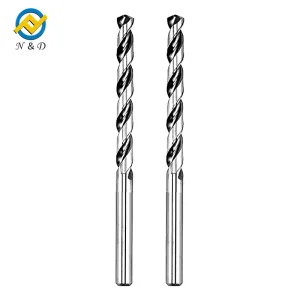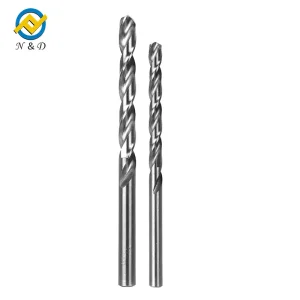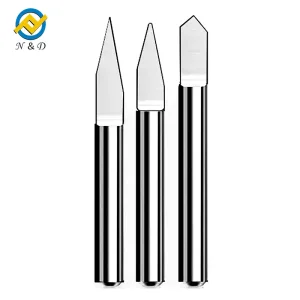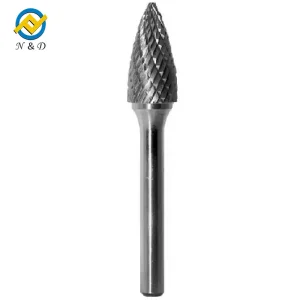
Twist Drill Bits Factory & Factories serving Turkey

High-Precision Tungsten Carbide & Cobalt Metalworking Solutions for Turkish Industrial Hubs

Send Inquiry Now

Whitepaper: Industrial Drill Manufacturing & Global Supply Chain Alignment with Turkey

In the modern manufacturing landscape, the quality of solid-substrate tooling determines the speed and precision of industrial growth. In particular, the demand for high-performance **Twist Drill Bits** has dramatically accelerated. As a cornerstone of metalworking, automotive fabrication, aerospace assembly, and heavy machinery production, high-hardness carbide and cobalt twist drills represent the frontier of tool science. In Turkey, a nation strategically situated at the convergence of Eastern European and Western Asian logistical grids, industrial centers in Bursa, Istanbul, Kocaeli, Ankara, and Izmir are undergoing a massive technological transition. Factories are moving away from standard High-Speed Steel (HSS) components toward ultra-durable Solid Tungsten Carbide and Cobalt-alloyed substrates.

Information Gain: Why Tool Substrates Matter for Turkey's Manufacturing Ecosystem

Turkey's industrial ecosystem is highly competitive, especially as a primary manufacturing hub for European automotive brands and defense components. Operating with outdated drills yields massive efficiency losses due to rapid tool wear and heat checking. Upgrading to ultra-pure micro-grain carbide substrates mixed with specialized cobalt ratios allows Turkish machine shops to achieve up to 300% faster cycle speeds, reducing the overall Cost-Per-Hole (CPH) parameters dramatically.

The Local Industrial Reality in Turkey: Bridging the Supply Chain

Turkey's automotive manufacturing industry, centered in the Marmara Region (particularly Bursa and Kocaeli), stands as a global powerhouse. Machining engine components, transmission housings, and structural frames requires tools that can endure the constant cycle of abrasive wear. Local factories are aggressively optimizing their CNC lines. Concurrently, the booming defense and aerospace sector in Ankara (under organizations like TAI, TEI, and Roketsan) presents extreme micro-drilling requirements for tough-to-machine materials like Titanium alloys (Grade 5 Ti-6Al-4V) and Inconel.

Furthermore, the agricultural and heavy machinery complexes around Konya and Izmir process structural steel castings, which have high silicon inclusions that act like sandpaper on inferior drill bits. A domestic or foreign partner factory serving Turkey must not only supply standard catalog items but also engineer customized geometrical variations. This includes optimizing point angles (such as 135° split points to prevent "walking") and providing specialized heat-resistant coatings like Aluminum Titanium Nitride (AlTiN) and Titanium Silicon Nitride (TiSiN) to offset the extreme friction produced in continuous dry-machining lines.

Global Production Context & Metallurgy Advancements

On a global scale, the tungsten carbide industry is undergoing a consolidation of metallurgical standards. High-purity ammonium paratungstate (APT) is processed into sub-micron tungsten carbide powder with grain sizes under 0.6 microns. By mixing this ultra-pure powder with 6% to 12% Cobalt binder, manufacturers achieve an ideal balance of extreme hardness (up to 92 HRA) and crucial transverse rupture strength (TRS).

As an industry-leading manufacturer founded in 2004 in Guanghan, Sichuan Province, China, our company has integrated these technological breakthroughs. With a dedicated team of over 120 metallurgical experts and CNC engineers, we control the entire lifecycle of tool production—from powder mixing, wet grinding, and vacuum sintering to the final five-axis precision grinding on Swiss and German machine arrays. This rigid quality control matrix is precisely why over 60 countries, including high-tech manufacturing firms throughout Turkey, trust our high-performance drill bits, end mills, and rotary burrs.

2004
Established
120+
CNC & Tool Experts
60+
Exporting Countries
500+
Industrial Praises

Drill Bit Geometry & Micro-Grain Science

The physics of drilling differs fundamentally from milling or turning. The core of a twist drill must withstand immense axial thrust forces, while the outer corners must maintain sharp cutting edge profiles despite experiencing high linear velocities.

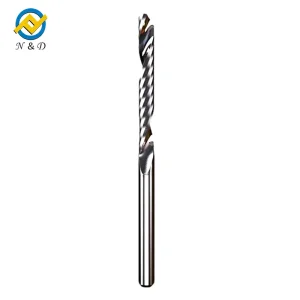
To solve this mechanical challenge, our Twist Drill Bits are developed utilizing advanced dual-angle geometry:

  • 135-Degree Split Point: Eliminates center punching requirements. The drill starts cutting immediately upon contact, reducing structural distortion in sensitive materials.
  • Parabolic Flute Profiles: Optimized for Turkish operations where deep-hole drilling (greater than 5xD) is common. The parabolic curve accelerates chip evacuation, preventing mechanical clogging.
  • Polished Flutes: Super-finished cutting faces decrease friction coefficient, preventing sticky materials like soft aluminum or low-carbon steel from welding to the cutting edges.
Quality Assurance Pipeline

Precision Fabrication Sequence of Our Twist Drill Bits

Every single drill bit shipped to Turkey undergoes a rigorous six-step metallurgical and physical grinding sequence.

1. Wet Grinding

Tungsten carbide, cobalt, and binder metals are mixed in advanced ball mills.

2. Spray Drying

Aviation gasoline and moisture are extracted to achieve pure granulated micro-powder.

3. Press Molding

Powder is compressed into high-density solid cylinder tool blanks.

4. HIP Sintering

Overpressure sintering at 1400°C removes porosity, maximizing metallurgical density.

5. CNC Grinding

Advanced 5-axis tool grinders establish exact helix, point, and clearance angles.

6. Inspection

Rigorous ultrasonic testing ensures zero internal fissures before export packaging.

Partner with our Factory

OEM/ODM Customization Solutions for Turkish Industrial Challenges

Standard tooling frequently fails to address unique high-speed CNC applications. Our manufacturing facility specializes in **OEM/ODM custom tooling solutions**, bridging the gap between metallurgical science and real-world floor production. Whether you require custom flute lengths, optimized helix angles, or customized multi-step drill configurations, we deliver high-performance tooling matching your specific CAD/CAM configurations.

By working with our engineering division, Turkish tool distributors and factory operators can order custom drill batches tailored specifically for local steel grades (such as Erdemir structural steels). Advanced coatings like **TiAlN** or **AlTiN** can be customized down to the nanometer layer thickness, dramatically improving thermal dissipation and extending tool lifetime under heavy friction conditions.

Drilling Parametric Excellence: The Cost-Per-Hole (CPH) Calculation

CPH = (Tool Cost + (Machine Rate * Cycle Time per Hole)) / Total Holes Produced

While standard carbide bits may present a lower initial purchase cost, our micro-grain tungsten carbide structural drills increase the total holes produced before failure by 4-5 times. This drives down the CPH and delivers unmatched cost efficiency to your industrial floor.

Expert Technical Advice

Frequently Asked Technical Questions (FAQ)

In-depth answers to critical machining questions regarding Cobalt & Tungsten Carbide Twist Drills in high-intensity applications.

Why does drilling AISI 316 Stainless Steel in Turkish factories cause rapid corner wear on standard HSS drill bits?

AISI 316 stainless steel is highly prone to work hardening. Standard HSS tools generate significant heat during entry, which work-hardens the material ahead of the cutting edge, leading to rapid corner wear. Utilizing our specialized Cobalt M35/M42 Twist Drills or Solid Tungsten Carbide Twist Drills with AlTiN coating solves this issue. The high hot-hardness threshold of the material combined with sharp 135° split points ensures clean shearing before the material can work harden, dramatically extending tool life.

What is the optimal feed rate and spindle speed for drilling high-grade ductile cast iron using Tungsten Carbide drills?

For high-grade ductile cast iron (such as those processed in Bursa's automotive foundries), we recommend a cutting speed (Vc) of 80 to 120 meters per minute when utilizing coolant-through solid carbide drills. The feed rate (fn) should be maintained between 0.15mm/rev to 0.35mm/rev depending on the drill diameter. Adequate chip evacuation must be maintained to prevent chip recutting, which can lead to micro-chipping along the primary cutting edges.

Does your factory offer customized shipping solutions directly to logistics zones in Turkey?

Yes, our export division manages seamless logistics pipelines directly to all Turkish customs ports and free trade zones, including Istanbul, Ambarli, Izmir, and Mersin. We coordinate complete customs clearance documentation (including Certificate of Origin and custom packing declarations) to ensure swift delivery to your manufacturing floor or central warehouse.

How do the mechanical properties of M35 Cobalt Twist Drills compare with Solid Tungsten Carbide?

M35 Cobalt contains 5% cobalt, providing excellent elasticity and toughness, which prevents chipping under unstable manual drilling or legacy drilling machine set-ups. Solid Tungsten Carbide, conversely, features superior hardness (up to 92 HRA) and extreme rigidity, but is susceptible to chipping if misalignment occurs. Solid carbide is ideal for high-rigidity CNC setups, whereas Cobalt tools are perfect for hand-drilling or semi-automatic machining configurations.