Engineered for Superior Surface Finish and Tool Longevity
Variable Pitch End Mills in the Age of Industry 4.0
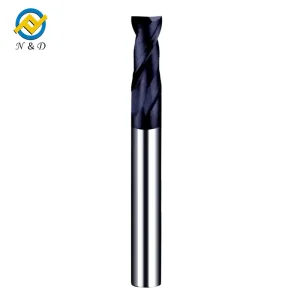
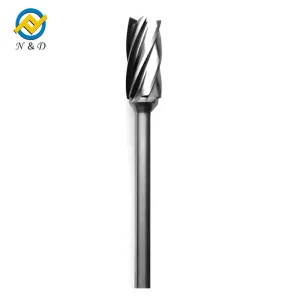
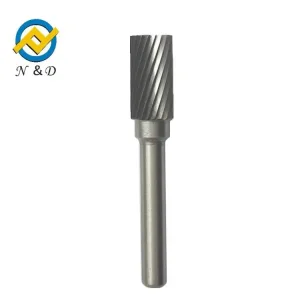
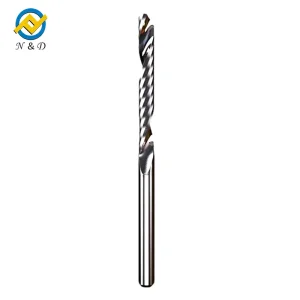
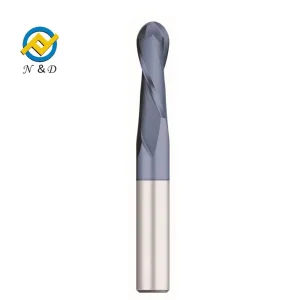
The global precision tooling market is undergoing a seismic shift. As manufacturing requirements move toward difficult-to-machine materials like Titanium alloys, Inconel, and high-hardness Stainless Steels, the traditional end mill is no longer sufficient. Enter the Variable Pitch End Mill. Unlike standard cutters with equidistant flutes, variable pitch geometry intentionally alters the flute spacing to break up harmonic vibrations (chatter).
Currently, the demand for these high-efficiency tools is skyrocketing in the United States, Germany, and Japan, where aerospace and EV (Electric Vehicle) production require high metal removal rates (MRR) without sacrificing surface integrity. European "Variable Pitch End Mill Factories" are increasingly integrating AI-driven design to optimize the helix angles, ensuring that every cut is dampened against resonance.
Variable pitch tools reduce cycle times by up to 40% when machining large structural components in 7075 Aluminum and Ti-6Al-4V.
In the transition to EVs, lightweighting requires intricate milling of thin-walled castings where vibration control is critical.
Small-diameter variable pitch end mills are essential for surgical implants, providing mirror-like finishes directly from the CNC.
The Evolution of Tungsten Carbide Substrates
Our factory, established in 2004, has pioneered the transition from micro-grain to ultra-fine grain tungsten carbide. The "Pricelist" of a variable pitch end mill is often dictated by the quality of the substrate and the complexity of the PVD/CVD coating.
We utilize 10% Cobalt content with sub-micron grain sizes (0.5μm) to achieve a balance between hardness (HRA 92+) and toughness. This prevents edge chipping during interrupted cuts.
Our tools feature AlTiN-Nano and TiSiN coatings, allowing for dry machining at temperatures exceeding 900°C. This is a key trend in sustainable "Green Manufacturing."
Precision is maintained via German-made 5-axis grinders, ensuring concentricity within 0.005mm. The variable helix design (e.g., 35°/38°) is calculated to disrupt frequency patterns perfectly.
Established
Experts
Countries Served
Global Partners
Beyond the Tool: Systemic Machining Optimization
Our variable pitch end mills allow for higher spindle speeds and feed rates. By reducing chatter, we extend the life of your CNC spindle bearings, reducing long-term maintenance costs.
Machining molds and dies up to 65 HRC requires tools that won't deflect. Our variable pitch geometry provides the rigidity needed for deep pocketing and fine finishing.
From North American aerospace standards to Southeast Asian electronic manufacturing, we provide OEM/ODM services tailored to regional material grades.
Expert Insights into Variable Pitch Technology
Variable pitch breaks the harmonics generated during cutting. Standard pitch tools create a consistent frequency that can lead to resonance, causing chatter marks on the workpiece. Variable pitch ensures each flute enters the material at a slightly different interval, effectively "dampening" the vibration.
A variable helix (where the angle changes along the flute) further enhances chip evacuation and reduces lifting forces. Combining variable pitch with variable helix is the gold standard for high-performance milling.
Pricing is typically tiered based on: 1. Carbide Grade (Micro vs. Ultra-fine), 2. Coating Type (Standard TiAlN vs. Premium TiSiN), and 3. Tolerance levels. Investing in a higher-tier tool often results in a lower "cost-per-part" due to increased tool life.
Yes. One of the greatest advantages of high-quality variable pitch end mills is their versatility. They are rigid enough for heavy roughing cuts and precise enough to provide a superior finish, often eliminating the need for tool changes.
From Raw Powder to Precision Instrument
Our ISO-certified facility follows a rigorous 6-stage process to ensure every tool in our "Pricelist" meets international standards.
Homogenizing tungsten carbide and cobalt in aviation gasoline for maximum alloy stability.
Using high-pressure sintering to eliminate micro-porosity, ensuring 100% density.
Utilizing ANCA or Walter machines for precise variable flute geometry.
Micro-prepping the cutting edge to increase strength and prevent premature failure.
Applying Balzers-quality PVD coatings for heat and wear resistance.
100% laser-scan inspection for dimensional accuracy and flute concentricity.
Direct from the Factory - Quality Guaranteed
Get a customized quote for bulk orders and OEM requirements today.
Contact Factory Now N&D Carbide