Engineered for extreme wear resistance, high-speed dimensional accuracy, and extended service life across heavy mechanical and aerospace manufacturing.
Evaluating modern supply chains, strategic alloy compositions, and material degradation mechanics.
In the hyper-competitive global manufacturing sphere, modern procurement heads, mechanical engineers, and metallurgical directors face the mounting challenge of optimizing production efficiency while aggressively reducing operational expenditures. The selection of a Tungsten Carbide Burr Set supplier directly influences the down-stream cycle times of casting deflashing, heavy weld preparation, aerospace component chamfering, and mold fabrication. Sourcing professionals must look past simple price-per-unit constraints, evaluating tools through the rigorous prism of E-E-A-T (Experience, Expertise, Authoritativeness, and Trustworthiness), technical grain uniformity, and advanced material-wear lifecycles.
Across key high-volume manufacturing hubs in Germany, the United States, Japan, and South Korea, procurement managers routinely navigate the complex trade-offs between cobalt-binder ratios (Co wt%) and the corresponding micro-hardness levels measured via the Rockwell A (HRA) scale. Our facility, drawing on two decades of proprietary metallurgical research, maintains extreme control over sintering micro-porosity. This ensures that every tool is manufactured using a pristine, high-density grain matrix that easily mitigates micro-chipping, thermal expansion stresses, and premature shank shearing under heavy torque.
"Sourcing high-performance rotary burrs is no longer a localized logistical decision; it is a global engineering calculation. Utilizing a sub-micron tungsten carbide matrix (WC) bound with customized cobalt levels guarantees stable runout tolerances below 0.02mm, dramatically increasing machine spindle health and technician operating efficiency."
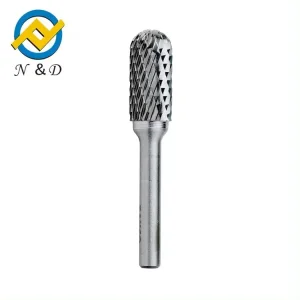
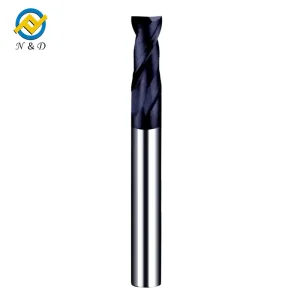
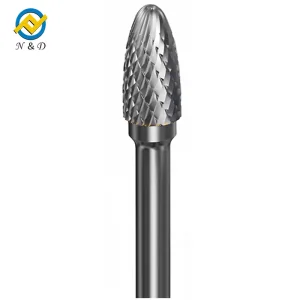
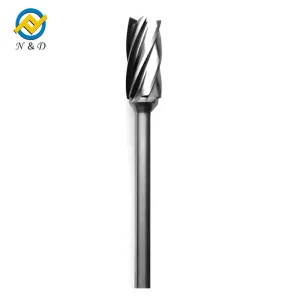
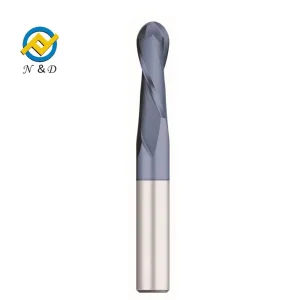
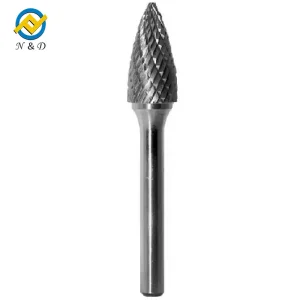
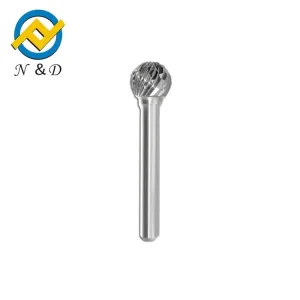
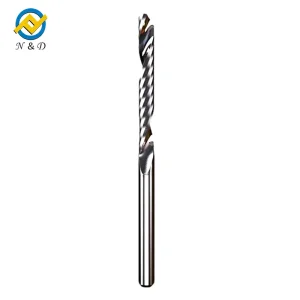
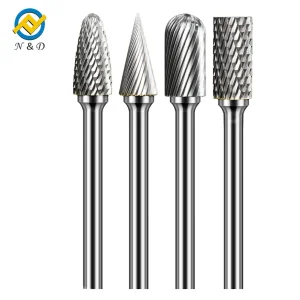
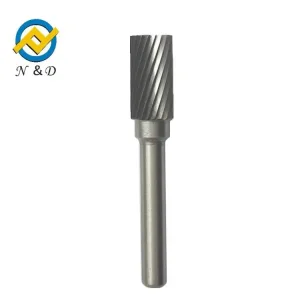
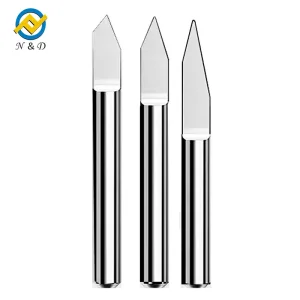
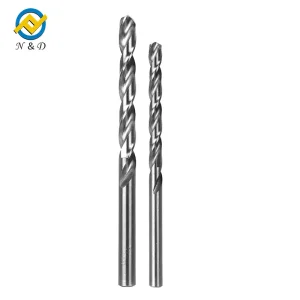
Our tailored tungsten carbide product lines are optimized for critical industrial workflows:
Uncompromising quality control backed by rigorous molecular engineering and automated high-speed grinding.
We leverage a proprietary 0.6µm - 0.8µm WC-Co powder mixture that balances extreme hardness (91-92.5 HRA) with superior transverse rupture strength, preventing edge crumbling under dynamic load.
Engineered using automated 5-axis CNC grinding centers, our double-cut and single-cut configurations feature perfectly balanced chip-breaker clearances for rapid chip evacuation.
By executing sintering runs inside state-of-the-art Sinter-HIP furnaces at 1,450°C and 100 bar pressure, micro-pores are entirely crushed, yielding density levels near theoretical limits (14.5-15.0 g/cm³).

Headquartered in the industrial corridor of Guanghan, Sichuan Province, China, our specialized manufacturing plant has evolved into a formidable global force in cemented tungsten carbide technology. Over two decades, we have constructed a highly vertical production model—integrating raw refractory metal powder formulation, sintering metrology, and high-precision CNC tool grinding.
We operate in strict alignment with ISO 9001:2015 standards, catering to intensive industrial demands in over 60 countries. Supported by a committed workforce of over 120 technical experts, metallurgists, and field support engineers, we pride ourselves on providing high-yield OEM/ODM contract production with uncompromised dimensional consistency.
How we process raw minerals into high-toughness, dynamic-balanced rotary burr instruments.

Homogeneous mixing of pure tungsten carbide, structural cobalt binder, rare metal additives, and processing solvents inside high-energy horizontal ball mills.

Closed-loop nitrogen spray drying process to extract solvents, yielding spherical, highly flowable micro-granular carbide powders without oxidation.

Cold isostatic pressing and precision steel die mold pressing consolidate loose powder into uniform, dimensionally precise green compact blanks.

Thermal transformation at 1,450°C and high argon gas pressure to solidify the blank, securing zero-void physical structural characteristics.

Fully automated Swiss and German CNC grinding stations generate high-accuracy flute geometries, ensuring cutting edge symmetry and sharp cutting geometries.

Ultrasonic crack detection, metallurgical phase checking, tool runout measurements, and micro-hardness profiling of finished lots.
Understanding surface treatments, thermal barrier chemistry, and strategic supplier due diligence.
As modern CNC centers push rotational speeds past 35,000 RPM, the mechanical stresses acting on cutting flutes grow exponentially. At these high velocities, temperatures at the cutting zone frequently exceed 800°C. Sourcing managers must evaluate modern surface treatment technologies to prolong tool life. Our research and development center actively integrates premium chemical vapor deposition (CVD) and physical vapor deposition (PVD) coatings, such as Titanium Aluminum Nitride (TiAlN) and Aluminum Titanium Nitride (AlTiN), to form dynamic thermal barriers that prevent carbide substrate degradation.
For enterprise purchasing operations, evaluating high-capacity factories involves several key considerations:
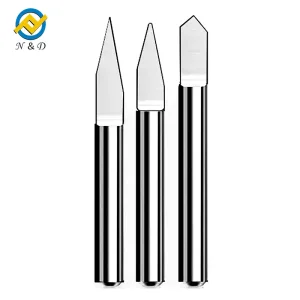
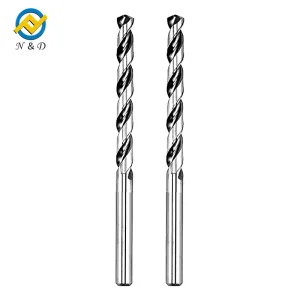
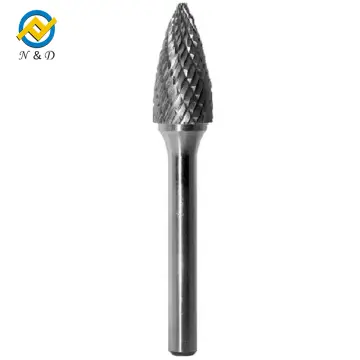
Explore our complete catalog of industrial-grade tools, engineered with strict structural tolerances.
Navigating environmental directives, material safety compliance, and robotic tool runouts.
The manufacturing landscape is undergoing a massive shift towards fully autonomous machining. Automated 6-axis robotic deburring systems require exceptional dimensional consistency and predictable tool wear lifecycles. Traditional hand-finished carbide burrs, which often feature minor human variances, are being replaced by high-precision, fully automated CNC production lines.
Our factory is actively executing a modern technical roadmap focused on:
Sourcing from an offshore production facility requires strict compliance with international trade and safety guidelines. We ensure all our exported products are fully certified, meeting all major global trade standards:
Clear, direct metallurgical answers for engineering leads and international sourcing managers.
For most high-speed steel and stainless steel applications, a Cobalt content between 6% and 8% by weight provides the ideal balance between hardness (91-92 HRA) and impact strength. For heavy-impact applications like ship construction or weld cleaning, a slightly higher Cobalt content (approx. 10%) is recommended to minimize micro-chipping under dynamic stress.
Double-Cut (Diamond Cut) features intersecting flutes that quickly produce small, easily managed chips, making it the ideal choice for hard ferrous metals. Single-Cut profiles feature a single spiral flute that prevents soft, gummy materials like aluminum, copper, or soft plastics from clogging the tool, ensuring consistent material removal.
Standard vacuum sintering can leave behind microscopic voids and air pockets inside the carbide matrix. During Sinter-HIP processing, high pressure (approx. 100 bar) is applied at high temperatures, completely collapsing these micro-pores. This increases the material's rupture strength by up to 30%, preventing structural failure under heavy workloads.
Automated robotic spindles require incredibly tight runout tolerances (below 0.02mm) to prevent vibration and uneven tool wear. They also require highly consistent tool diameters and flute angles across production batches to prevent errors in pre-programmed CNC paths.
Standard geometric shapes are kept in stock and can be shipped quickly. Custom OEM/ODM requests (such as custom flute profiles, specialized shanks, or branded sets) are processed through our vertical manufacturing chain in 15 to 30 days, including material mixing, sintering, 5-axis grinding, and rigorous quality inspection.
 N&D Carbide