In modern high-precision subtractive manufacturing, standard milling cutters and rotary burrs function as the literal cutting edge of industrial growth. As global manufacturing transitions toward Industry 4.0, the demands placed upon cutting tools have changed drastically. Machining environments now run at higher spindle speeds, deal with tougher multi-phase composite alloys, and demand unprecedented tight tolerances. According to global industrial tooling forecasts, the demand for high-grade tungsten carbide substrates is rising by 6.4% annually, driven by aerospace structural component design, electric vehicle (EV) cast-aluminum powertrains, and heavy energy generation sectors.
Tungsten carbide (WC-Co) composite materials are at the heart of this revolution. Combining the extreme hardness of ceramic tungsten grains with the ductile tenacity of cobalt binders, these products offer a combination of tool life and thermal dissipation that traditional High-Speed Steel (HSS) simply cannot match. For global procurement teams, sourcing from leading manufacturers who balance advanced micro-grain metallurgy with modern multi-axis CNC grinding technology is crucial to reducing total cycle times and optimizing operational expenses.
"Procurement is no longer just about searching for the lowest price per unit. The modern approach focuses on Total Cost of Ownership (TCO), tool wear predictability, feed-rate optimization, and guaranteed batch consistency across complex supply chains."
Achieving extreme dimensional stability and long wear life requires strict adherence to raw material processing and thermal sintering protocols. Below is our six-stage production process, which ensures every carbide blank and ground tool delivers consistent, high-performance results.

High-energy ball milling blends pure tungsten carbide powder with fine cobalt and rare metallic grain growth inhibitors inside an aviation gasoline medium. This yields a highly homogeneous slurry, preventing phase segregation at the microscopic scale.

Using advanced closed-loop spray drying towers, the slurry is atomized and dried, filtering out the aviation gasoline safely. The resulting granules have excellent flowability and density, laying the foundation for uniform press molding.

Automatic hydraulic and isostatic presses mold the powdered mixture under high pressures. This produces green compacts with highly uniform density, eliminating inner void risks before the high-temperature sintering step.

Using advanced overpressure sintering furnaces at temperatures up to 1500°C, the cobalt liquefies and binds the tungsten carbide particles. This process eliminates residual micro-porosity, maximizing material density and structural integrity.

Sintered carbide blanks are ground on advanced 5-axis CNC machines. Precise wheel paths shape the flutes, relief angles, and ball end geometries with sub-micron accuracy, ensuring clean cutting edges and smooth chip evacuation.

Finished tools undergo comprehensive inspection, verifying dimensional tolerances, runout, and surface finishes using optical comparators. Only batches that pass these strict checks are approved for global shipment.
Selecting the right tool geometry and grade directly impacts machining performance and cost-per-part efficiency. The table below details the performance envelopes of our standard solid carbide and rotating cutter products:
| Product Category | Primary Substrate Grade | Hardness Range (HRA) | Typical Industry Application | Key Performance Advantages |
|---|---|---|---|---|
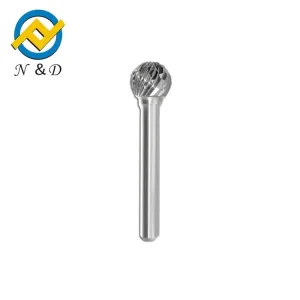
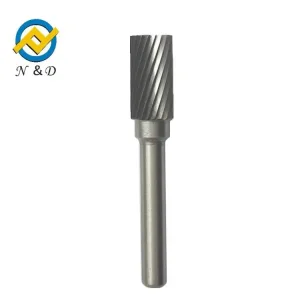
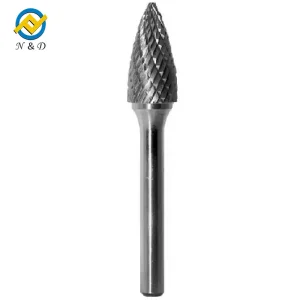
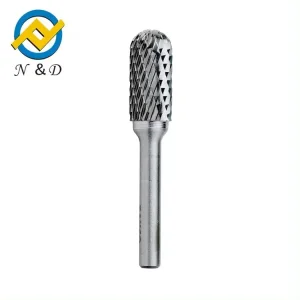
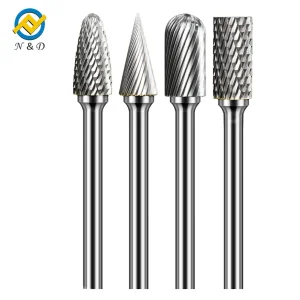
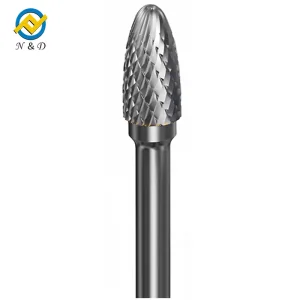
| Tungsten Carbide Rotary Burrs (Type A, G, F, E) | Sub-micron WC (6%-10% Co) | 90.5 - 92.5 HRA | Shipbuilding, Heavy Weldment Prep, Die Grinding | Excellent chip evacuation, robust tooth profiles, high stock removal rates |
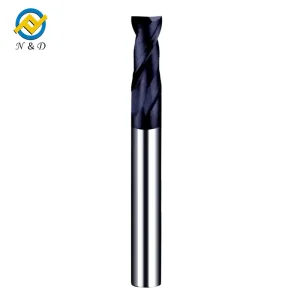
| 2-Flute Solid Carbide End Mills | Ultra-fine WC (10%-12% Co) | 91.8 - 93.5 HRA | Non-ferrous milling, deep slotting, aerospace aluminum | Large flute space, minimal chip re-cutting, superior vertical plunging |
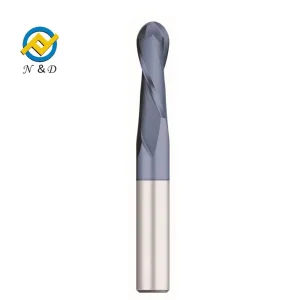
| Ball Nose End Mills (High Precious) | Nano-grain WC (9%-11% Co) | 92.0 - 94.0 HRA | 3D profiling, injection mold cavities, medical orthopedic parts | Sub-micron radius tolerances, smooth surface finishes, high thermal stability |
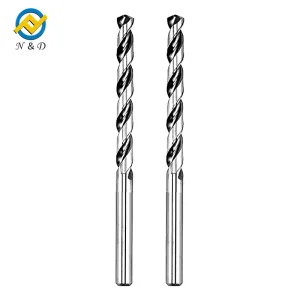
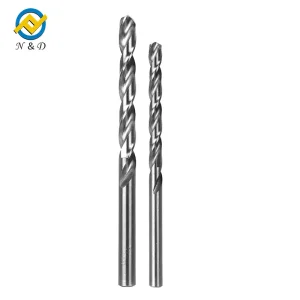
| Solid Carbide & Cobalt Twist Drills | M35 Cobalt HSS / Premium Carbide | 86.5 HRA / 91.5 HRA | Alloy steels, titanium drilling, stainless fasteners | Excellent heat dissipation, high centerness accuracy, reduced exit burrs |
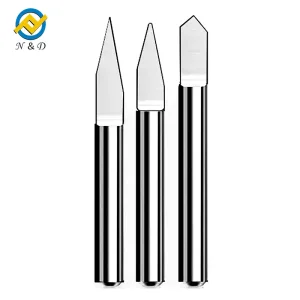
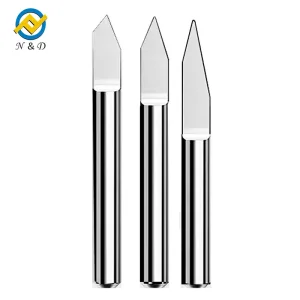
| CNC Engraving Bit Cutters | Micro-grain structural carbide | 91.0 - 92.8 HRA | Electronic PCB routing, 2D/3D signage, fine detail art | Extremely sharp tips, minimized cutting force, clean engraving channels |
Founded in 2004, our production facility is located in Guanghan, Sichuan Province, China. This location offers key strategic advantages for the tungsten carbide industry. Sichuan sits at the heart of China’s major mineral reserves, providing direct, secure access to high-purity tungsten concentrates, cobalt powders, and critical refractory metals. Controlling the raw material supply chain at its geographic source insulates our operations from the volatile fluctuations of global commodity markets, allowing us to offer stable, cost-effective pricing to international buyers.
Beyond raw materials, Sichuan has developed into a major industrial center for high-tech manufacturing and aerospace engineering. This regional ecosystem provides access to a highly skilled, experienced workforce in powder metallurgy and CNC grinding. With over 120 dedicated employees at our Guanghan facility, our team possesses deep technical expertise in tungsten carbide production. Additionally, our location is well-connected to international shipping ports via efficient rail and road networks, ensuring reliable logistics and timely delivery to customers in over 60 countries.
Our Strategic Advantage: By combining regional material resources, advanced 5-axis CNC grinding technology, and comprehensive quality control, our Sichuan facility provides reliable supply-chain stability and competitive pricing for manufacturing projects worldwide.
Creating complex injection mold cavities requires excellent dimensional consistency and clean surface finishes. Our high-precision Tungsten Carbide Ball Nose End Mills are specifically designed to handle these demanding applications. By using sub-micron carbide grades with high cobalt content, these tools resist chipping along the cutting edges during prolonged 3D toolpaths in hardened tool steels (such as H13, D2, and P20). The round-nose geometry ensures smooth transitions across complex contours, significantly reducing the manual bench-polishing time needed after machining.
In foundries and shipyards, workers constantly deal with uneven weld seams, tough slag inclusions, and large casting flashes. Standard tools often fail prematurely due to high mechanical shock. Our Type G Tree Shape and Type F Ball Nosed Tree Shape Rotary Burrs provide the durability needed in these environments. Engineered with optimized double-cut flutes, these burrs generate small, easily disposable chips rather than long, sharp spirals. This reduces vibration, protects operator safety, and speeds up weld finishing on structural steels, high-strength cast iron, and nickel-base alloys.
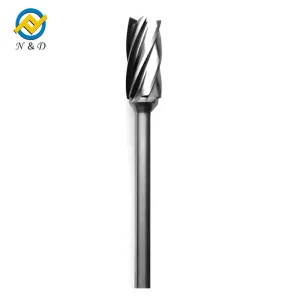
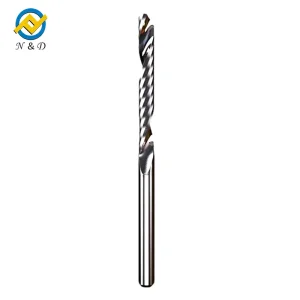
EV chassis designs and aerospace bulkheads make extensive use of structural aluminum (such as 6061-T6 and 7075). Aluminum tends to stick to cutting edges at high temperatures, causing built-up edge (BUE) and catastrophic tool failure. Our Tungsten Carbide Aluminum Rotary Burrs and Single Flute Spiral End Mills are designed with wide flute profiles and polished rakes to solve this. These features ensure rapid chip removal, preventing heat buildup and maintaining clean cuts under high feed rates.
As mechanical manufacturing processes evolve, the technology behind cutting tools must advance alongside them. Our R&D department focused on three primary areas to improve tool performance and extend service life:
Every manufacturing facility operates under unique parameters, including varying spindle capacities, workholding rigidities, and cycle targets. A standard, off-the-shelf cutting tool may not always deliver the best results. Our comprehensive OEM & ODM Customization Services are designed to address this. Our engineering team collaborates directly with our customers' technical departments to modify tool geometry, adjust helix angles, design custom flute counts, and formulate specialized carbide substrates tailored for specific machining tasks.
Our commitment to quality extends to international regulatory and quality compliance standards. Our manufacturing processes conform to ISO 9001:2015 quality management principles, ensuring traceabilities from the incoming raw tungsten powder to the final packaged tool. We also ensure full compliance with RoHS and REACH regulations, guaranteeing our materials meet safety and environmental standards. From small specialty orders to high-volume contracts, we provide consistent quality, reliable delivery schedules, and complete technical support.
Tungsten carbide grain size determines the balance between hardness and toughness in the tool. Sub-micron and nano-grain sizes (0.2–0.8 µm) increase overall hardness and wear resistance, making them ideal for machining hardened steels and aerospace alloys. Coarser grain sizes (exceeding 1.5 µm) improve impact toughness, which is preferable for heavy-duty rotary burrs handling interrupted cuts or rough castings.
Traditional vacuum sintering can leave behind microscopic gas voids and structural defects. Overpressure sintering (commonly known as HIP or Hot Isostatic Pressing) applies high gas pressure (up to 100 bar) at high temperatures. This pressure collapses any remaining internal voids and micro-porosity, increasing density and resulting in a highly uniform, fracture-resistant tool.
Machining materials like copper, aluminum, and plastics requires sharp cutting edges and polished flutes to prevent chip packing and built-up edge (BUE). Using specialized tools like single-flute end mills or aluminum-specific rotary burrs provides large flute spaces and smooth paths for chip evacuation, ensuring stable performance and longer tool life.
Our standard tools are usually in stock and ready for immediate shipment. For custom OEM/ODM tool geometries, the minimum order quantity generally ranges from 10 to 50 pieces per custom specification, depending on the tool dimensions. Custom tooling lead times typically range between 2 to 3 weeks, including CAD/CAM approval cycles.
 N&D Carbide