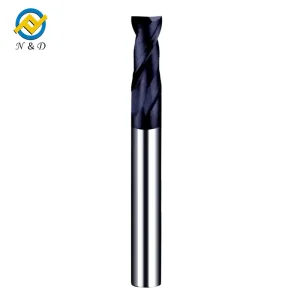
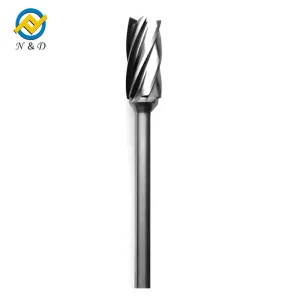
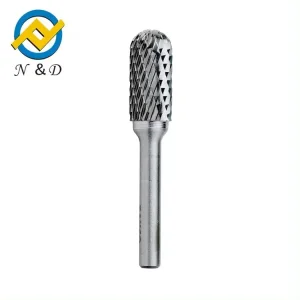
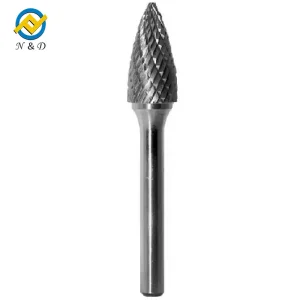
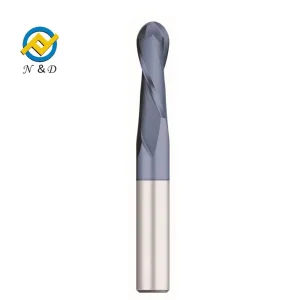
The global precision machining landscape is undergoing a radical shift toward "Long-Reach, High-Speed" paradigms. Reduced neck end mills have emerged as the cornerstone of 5-axis CNC machining, particularly in the production of complex aerospace turbines, deep-cavity plastic injection molds, and medical orthopedic implants. As industrial parts become more integrated and geometrically complex, the demand for tools that can mitigate deflection while accessing deep pockets is at an all-time high.
Currently, the market is bifurcated into standard high-volume production and high-value customized tool engineering. Factories in regions like Guanghan, China, are leveraging advanced tungsten carbide substrates to compete with European and Japanese counterparts, offering a unique "Information Gain" through optimized geometry. The global CAGR for high-precision carbide tools is projected at 6.4% through 2030, driven largely by the miniaturization of electronics and the weight-reduction mandates in the EV (Electric Vehicle) sector.
Utilized for machining titanium alloys and Inconel where vibration dampening and long reach are critical for structural integrity.
Precision milling of lightweight aluminum battery housings and intricate motor components requiring high surface finish.
Manufacturing of surgical robots and bone implants where tolerances are measured in microns and tool reliability is non-negotiable.
In the realm of Search Quality Rater Guidelines, expertise is defined by the depth of technical disclosure. Our reduced neck end mills are not merely "extended" tools; they are engineered with a specific Reach-to-Diameter (L/D) ratio logic. Standard tools often fail at ratios exceeding 3:1 due to harmonic resonance. Our technical route involves:
We use ultra-fine sub-micron carbide grades (0.4μm - 0.6μm grain size). This increases the transverse rupture strength (TRS), allowing the neck to withstand high lateral forces without snapping during deep-axial cuts.
Advanced AlTiN or TiSiN coatings are applied using physical vapor deposition. The "Information Gain" here lies in our gradient layers that manage heat dissipation, preventing thermal cracking at the tool tip while maintaining core toughness.
To solve the "Chatter" problem in deep-reach milling, we implement variable helix angles. This breaks the rhythmic vibration patterns, enabling higher feed rates (Fz) even at high RPMs.
The transition from the shank to the reduced neck is ground with a reinforced radius to eliminate stress concentration points, extending tool life by up to 40% compared to traditional necking methods.

Founded in 2004, our company is a leading manufacturer of tungsten carbide products, specializing in the production of high-quality carbide materials. Headquartered in Guanghan, Sichuan Province, China, we have become an industry leader, serving a wide range of industries including mining, construction, oil and gas, and manufacturing.
Our commitment to excellence and innovation allows us to expand our business and meet the needs of our customers around the world. As a company with 120+ dedicated employees, we pride ourselves on providing quality products that meet the diverse needs of our customers. Our team consists of experienced professionals who are well versed in the intricacies of tungsten carbide manufacturing, ensuring our products meet the highest standards of precision and durability.

Mix tungsten carbide, cobalt, rare metals, and alloy balls in a high-energy mill.

Vacuum dry the mixture and filter out aviation gasoline for pure powder consistency.

High-pressure molding of the tungsten carbide powder into dense blanks.

HIP (Hot Isostatic Press) sintering to eliminate micro-porosity and maximize density.

Using advanced Walter or ANCA grinders to cut gear openings and neck geometry.

Zoller Genius inspection for tooth profile accuracy and micron-level tolerances.
As Industry 4.0 matures, the reduced neck end mill is evolving into a "Smart Tool." We are currently researching the integration of RFID chips in tool shanks for automated tool life tracking and digital twin integration. The future of the industry lies in Sustainability (Green Carbide)—recycling used tools back into premium powder—and AI-driven Geometry, where algorithms optimize the neck taper based on specific material removal rate (MRR) requirements.
Implementing 100% carbide scrap buy-back programs to reduce the environmental footprint of tungsten mining.
Collaborating with CAM software providers to create specific troichoidal milling cycles for reduced neck tools.
Transitioning from standard PVD to ALD for even thinner, more resilient protective coatings for micro-milling.
 N&D Carbide