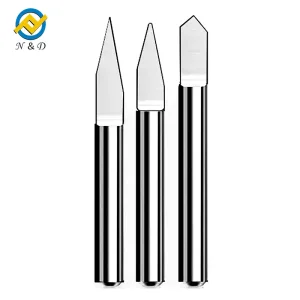
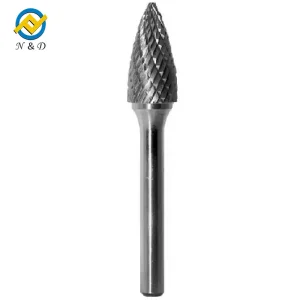
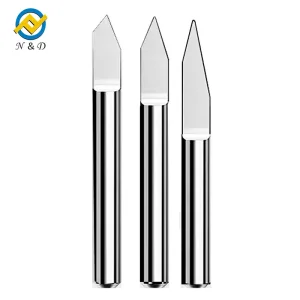
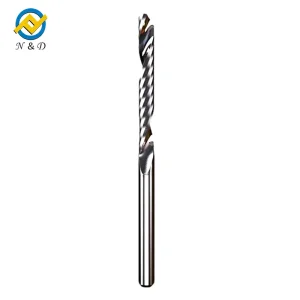
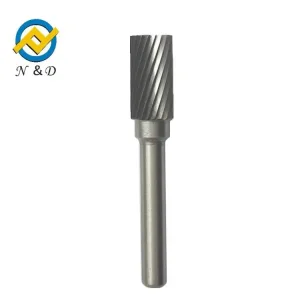
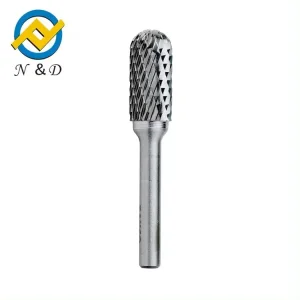
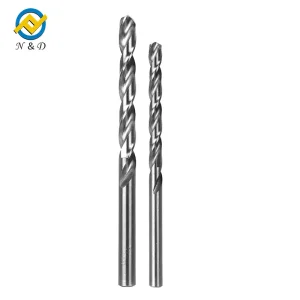
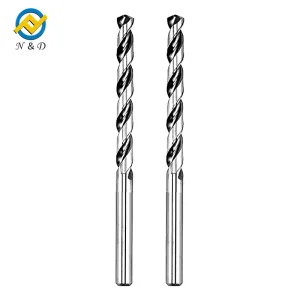
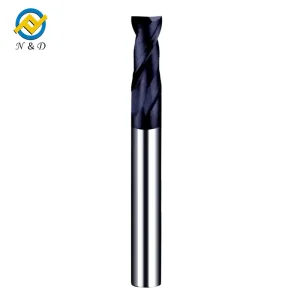
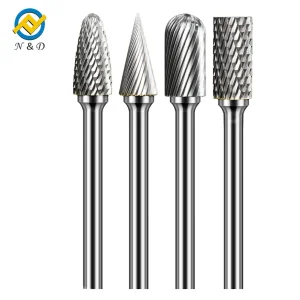
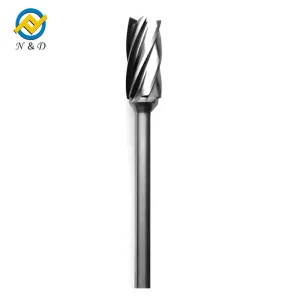
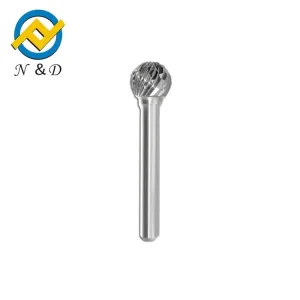
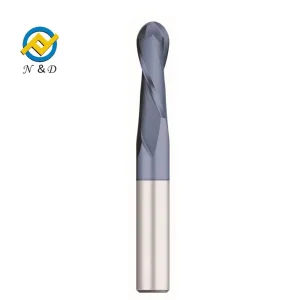
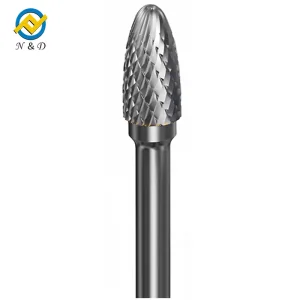
In the contemporary industrial era, the transition from traditional metals to advanced polymers has redefined manufacturing. High-quality plastic cutting end mills have become the linchpin for industries ranging from aerospace optics to medical prosthetics. Unlike metalworking, machining plastics—such as PMMA (Acrylic), PEEK, Polycarbonate, and POM—requires a sophisticated understanding of thermodynamics and material deformation.
Semantic Insight: Effective plastic machining isn't just about sharp edges; it’s about "Chip Evacuation Dynamics." Single-flute (O-flute) designs are engineered to prevent material re-welding, a common failure in high-speed polymer routing.
Globally, the demand for precision plastic tools is surging. With the rise of 5G infrastructure (requiring specialized dielectric plastics) and electric vehicles (using lightweight polymer housings), the plastic cutting end mill factory ecosystem is evolving to provide tools that offer mirror-like finishes without the need for secondary polishing.

Established Year
Expert Employees
Countries Served
CNC Precision
Located in Guanghan, Sichuan, we leverage the proximity to raw tungsten resources and high-tech logistics hubs, ensuring that our carbide cutting tools are produced with the highest purity materials at unbeatable lead times.
Our facility utilizes advanced 5-axis CNC gear grinding machines. This automation allows for microscopic consistency across thousands of units, a feat that smaller plastic cutting factories cannot match.
We don't just manufacture; we innovate. Our team analyzes material heat-deflection temperatures (HDT) to design custom flute geometries that dissipate heat 30% faster than standard mills.

Precise mixing of tungsten carbide, cobalt, and rare metals in aviation gasoline for optimal homogeneity.

High-pressure molding of the tungsten carbide powder into tool blanks with exact density specifications.

Sintering at extreme temperatures to transform blanks into ultra-hard solid carbide tools.

Utilizing advanced gear opening cutting to ensure razor-sharp edges specifically for soft and hard plastics.

Rigorous quality control on tooth profiles and material content to exceed ISO standards.

Efficient distribution network serving 60+ countries with custom packaging and OEM labeling.
Understanding the specific search intent of engineers: they aren't just looking for "tools," they are looking for "solutions to burr-free edges in Polycarbonate."
Acrylic (PMMA) fabrication requires high-polished flutes to prevent "clouding" on the cut edge. Our single-flute end mills are the industry standard for this.
Machining PEEK for spinal implants requires zero contamination and extreme dimensional stability. Our factory provides medical-grade carbide tooling for these critical needs.
From interior dashboards to light housings, our tungsten carbide end mills handle reinforced plastics with ease, maintaining sharp edges even against abrasive glass fibers.
The industry is moving toward Micro-Machining and Sustainable Manufacturing. As a pioneer High-Quality Plastic Cutting End Mills Factory, we are integrating AI-driven tool geometry optimization. By simulating the cutting force on different polymer molecular structures, we can predict tool wear and optimize the lifespan of every mill.
While most carbide tools are uncoated for plastics to maintain sharpness, we are developing sub-micron DLC (Diamond-Like Carbon) coatings that reduce friction further, allowing for 20% higher spindle speeds without melting the substrate.
A: Plastics are sensitive to heat. A single flute (O-flute) provides a much larger valley for chip evacuation. This prevents the "hot chips" from remaining in contact with the material, which would otherwise cause melting and re-welding.
A: Yes. Since 2004, we have provided comprehensive OEM solutions. We can customize the shank diameter, flute length, and coating based on your specific industrial application or brand requirements.
A: Solid tungsten carbide offers 10-20x the lifespan of HSS tools. In non-abrasive plastics like POM, our tools can maintain precision for hundreds of hours of continuous machining, provided the speeds and feeds are optimized.
A: Every batch undergoes a 5-step inspection process, including ultrasonic material testing and laser-micrometer tooth profile verification, ensuring our 60+ countries of clients receive zero-defect products.
 N&D Carbide