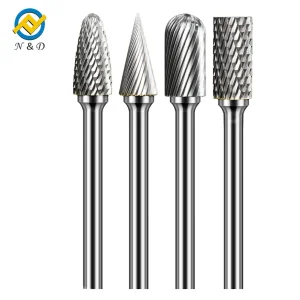
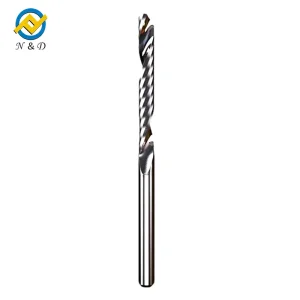
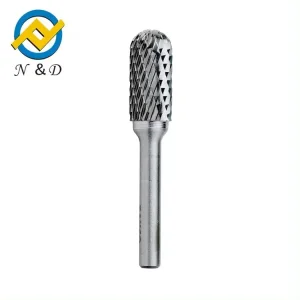
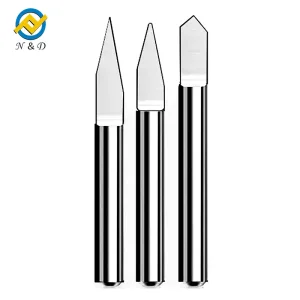
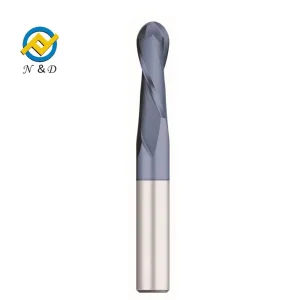
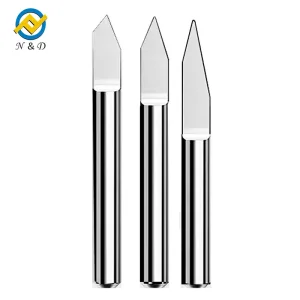
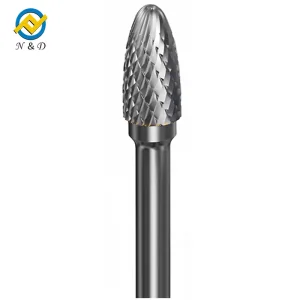
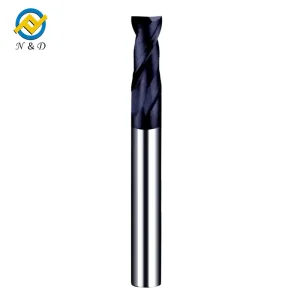
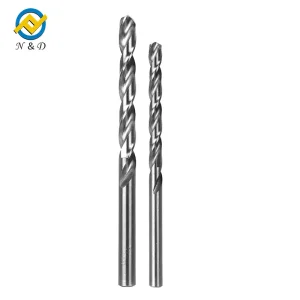
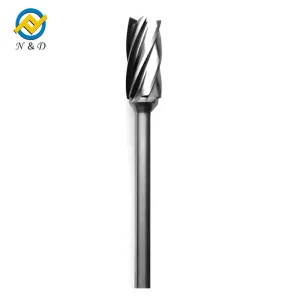
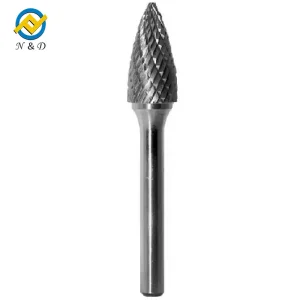
In the modern landscape of subtractive manufacturing, the demand for High-Quality PCD (Polycrystalline Diamond) Ball Nose End Mills has transcended traditional boundaries. As aerospace, automotive, and medical industries shift toward lightweight, high-strength composites and non-ferrous alloys, the limitations of standard tungsten carbide become apparent. This guide explores the technical roadmap, procurement strategies, and macroeconomic factors driving the adoption of PCD technology.
PCD tools offer hardness levels approaching 8000 HV, far exceeding the 1600-2000 HV of standard carbide cutters, ensuring minimal tool wear in abrasive environments.
Allowing for cutting speeds up to 10 times higher than carbide, PCD ball nose end mills drastically reduce cycle times in large-scale production lines.
The superior thermal conductivity of PCD prevents heat accumulation at the tip, preserving the metallurgical integrity of the workpiece surface.
Today's global enterprises are no longer just looking for the lowest "Pricelist." They are searching for Total Cost of Ownership (TCO) advantages. Procurement directors in 2024 are prioritizing supply chain resilience and technical support over unit price. For instance, a PCD ball nose end mill that costs 5x more than carbide but lasts 50x longer provides a massive ROI through reduced downtime and tool-change labor costs.
Key procurement metrics now include:
From the silicon valleys of the electronics sector to the carbon-fiber wings of the next-generation aerospace industry, PCD ball nose end mills provide specific macro-solutions:

Founded in 2004, our company is a leading manufacturer of tungsten carbide products, specializing in the production of high-quality carbide materials. Headquartered in Guanghan, Sichuan Province, China, we have become an industry leader, serving a wide range of industries including mining, construction, oil and gas, and manufacturing.
With over 120 dedicated employees and continued investment in research and development, we strive to be at the forefront of technological advancement, allowing us to provide our customers with cutting-edge solutions like the high-precision PCD series.
The next decade of PCD ball nose end mill development is focused on three pillars: Nano-polycrystalline structures, Laser-ablation geometry, and Smart Tooling (IoT Integration). As CNC machines become more sophisticated, the tooling must keep pace with real-time wear monitoring and ultra-high-frequency vibration resistance.
Transitioning from mechanical grinding to laser-cut edges for PCD, achieving a radius accuracy of ±0.002mm.
Development of diamond-like coatings (DLC) on PCD substrates to further reduce friction coefficients in dry machining.
Generative design of flute geometries based on specific material removal rate (MRR) simulations.

Precision blending of tungsten carbide, cobalt, and rare metals in aviation gasoline to ensure molecular-level homogeneity.

Controlled evaporation process to remove volatiles while maintaining the structural integrity of the carbide powder.

High-tonnage hydraulic molding to create the initial "green" tool shape with consistent density distribution.

Hot Isostatic Pressing (HIP) at extreme temperatures to eliminate porosity and achieve maximum material hardness.

Utilizing state-of-the-art 5-axis gear grinding machines to cut complex ball nose profiles and PCD chip breakers.

Comprehensive laser and ultrasonic testing to verify tooth profile, balance, and PCD-to-carbide bonding strength.
 N&D Carbide