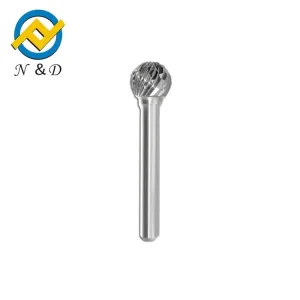
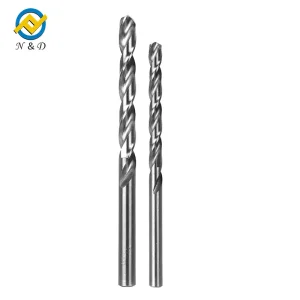
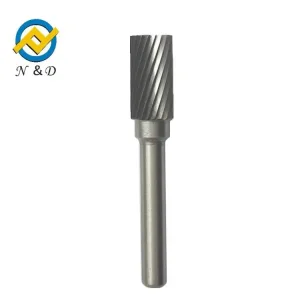
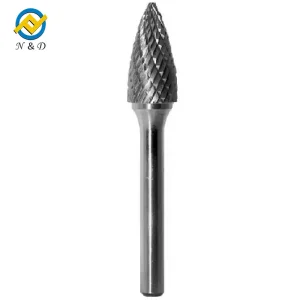
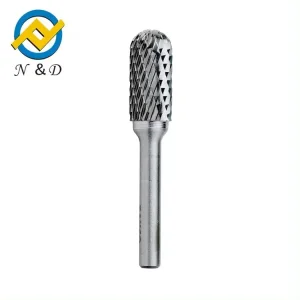
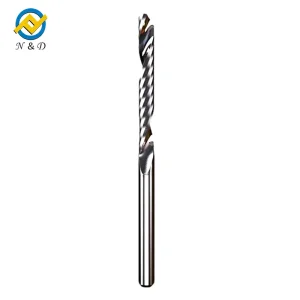
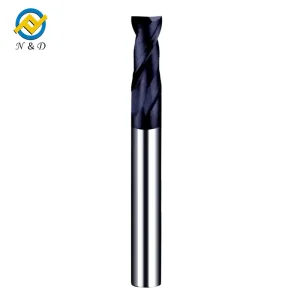
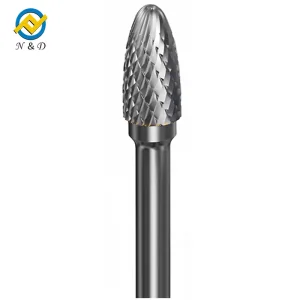
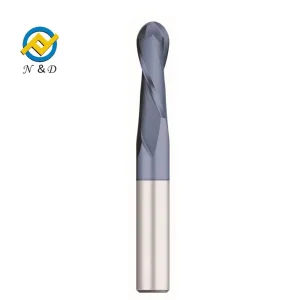
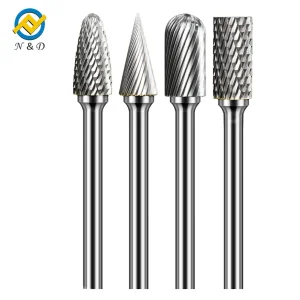
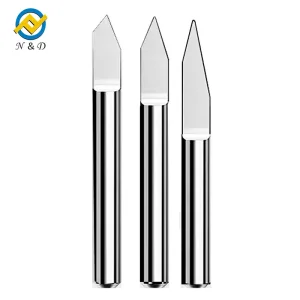
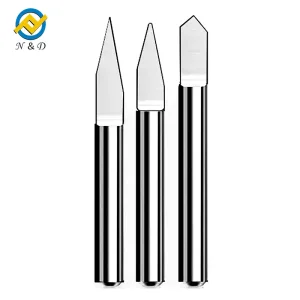
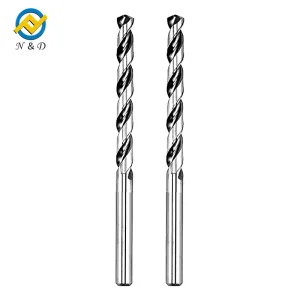
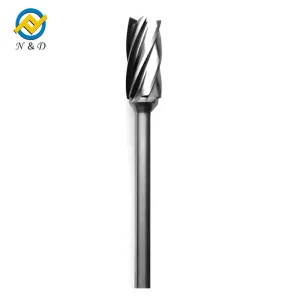
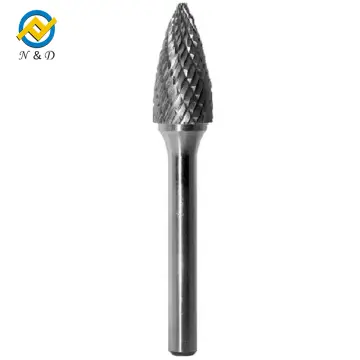
In the high-precision landscape of global manufacturing, Long Reach Carbide Burrs have evolved from niche tools to critical components in the aerospace, automotive, and energy sectors. Unlike standard rotary burrs, the "Long Reach" variant—typically featuring shanks extending from 150mm to over 300mm—addresses the complex challenge of material removal in deep, narrow, and obstructed geometries where conventional tools fail to navigate.
The global market for industrial rotary tools is experiencing a CAGR of 5.4%, driven by the resurgence of high-precision metalworking. Long reach burrs are particularly dominant in MRO (Maintenance, Repair, and Overhaul) for jet engines and gas turbines.
Modern burrs utilize micro-grain tungsten carbide (WC-Co) which provides the necessary rigidity to prevent "whipping" or vibration at extended lengths—a common failure point in inferior products.
From finishing shoe molds to cleaning engine blocks, these tools act as the "surgical instruments" of the heavy industry, enabling finesse in massive casting environments.
When searching for a manufacturer, buyers often encounter generic specifications. However, "Information Gain" in this context refers to understanding the Shank Deflection Coefficient and the Impact of Concentricity on tool life. A high-quality long reach burr is not just a standard burr with a longer stick; it is a balanced assembly where the shank is often induction-hardened to maintain flexibility without permanent deformation, while the head retains maximum Rockwell hardness (HRA 90-92).
Headquartered in Guanghan, Sichuan Province, our facility epitomizes the "China Efficiency" model. This region has emerged as a global hub for metallurgical excellence, leveraging localized supply chains for raw tungsten powder and advanced CNC machinery. Our 120+ dedicated employees operate under a lean manufacturing framework that reduces lead times for custom long reach burrs by up to 40% compared to European competitors.
Deburring internal cooling passages in turbine blades and structural components where accessibility is limited.
Porting and polishing cylinder heads to optimize airflow and fuel efficiency in internal combustion engines.
Finishing complex metal cavities, such as those used in large-scale plastic injection shoe molds and automotive body panels.
Our production process integrates the best of both worlds: premium raw materials and cutting-edge 5-axis CNC gear grinding. This ensures that every long reach burr maintains a concentricity within 0.05mm, significantly reducing operator fatigue and tool breakage during high-speed operation (up to 30,000 RPM).
Our manufacturing philosophy follows a rigorous six-step protocol to ensure the structural integrity of every tool:

Molecular mixing of tungsten carbide, cobalt, and rare metals in aviation gasoline to ensure a homogeneous alloy structure.

Removal of solvents and addition of binding agents to prepare the powder for high-pressure molding.

The "Green State" molding of the carbide powder into the foundational tool shape.

Ultra-high temperature vacuum sintering to achieve maximum density and hardness.

The final tooth profile is ground using automated 5-axis systems, ensuring absolute geometric accuracy.

Digital tooth profile opening analysis and alloy composition verification.
The industry is moving toward Adaptive Geometry and Nano-Coatings (like TiAlN or DLC). These advancements allow long reach burrs to operate at higher feed rates without thermal degradation. As automation in deburring via robotic arms becomes standard, the demand for "zero-defect" concentricity in long-shank tools has become a baseline requirement rather than a premium feature.
When requesting quotes for Long Reach Carbide Burrs, procurement teams should prioritize:
For a 1/4" shank at 6 inches, we recommend staying between 12,000 and 18,000 RPM. Exceeding this can cause the shank to flex or "whip," leading to tool breakage or injury. Always start at a low speed and gradually increase.
We use a specialized dual-tempering process. The head is hardened for maximum wear resistance, while the long shank is tempered to a lower HRC to provide "toughness" and elasticity, allowing it to absorb vibration without snapping.
Absolutely. Our "Double-Cut" geometry is specifically designed for tough materials like stainless steel (304, 316), providing smaller chips and preventing clogging.
Yes, as a factory-direct manufacturer, we offer tiered pricing models based on volume. We also support OEM branding for global distributors.
 N&D Carbide