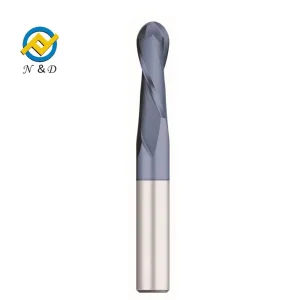
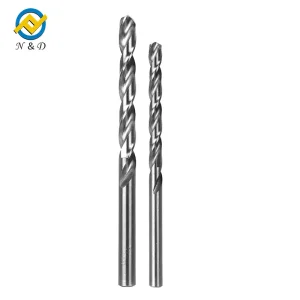
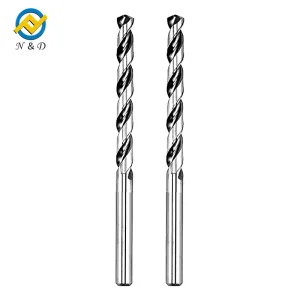
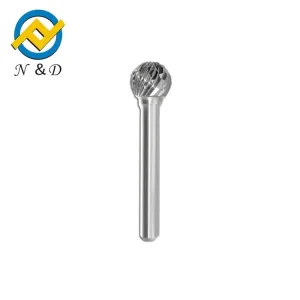
The global tungsten carbide industry is undergoing a paradigm shift, driven by the demands of Industry 4.0 and the rapid growth of high-precision sectors such as aerospace, medical device manufacturing, and electric vehicle (EV) production. As a leading End Mill Cutter Carbide Manufacturer, we recognize that tungsten carbide—often referred to as "industrial teeth"—is the backbone of modern subtractive manufacturing. The market is currently witnessing a transition from traditional tool steels to submicron and nano-grain carbide substrates, which offer superior hardness (up to 94 HRA) and thermal stability.
The Asia-Pacific region remains the largest producer and consumer, while North American and European markets are focusing on specialized high-performance coatings and custom geometries for hard-to-machine alloys like Titanium and Inconel.
Advancements in powder metallurgy allow for more precise control over cobalt binder distribution, resulting in tools that can withstand higher spindle speeds without edge chipping.
The roadmap for carbide tool development is defined by three key pillars: Coating Technology, Geometry Optimization, and Digital Twin Integration.
Modern end mills are no longer just metal sticks; they are engineered systems. Trends include the application of AlTiN and DLC (Diamond-Like Carbon) coatings that reduce friction and heat buildup. Furthermore, the industry is moving towards Variable Helix and Unequal Indexing flute designs to suppress vibration during high-speed milling (HSM), ensuring a mirror-like surface finish on complex molds.
Founded in 2004, our company is a premier manufacturer of tungsten carbide products. Headquartered in Guanghan, Sichuan Province, China, we have become an industry leader serving sectors like mining, aerospace, and construction. Our team of 120+ dedicated professionals combines traditional craftsmanship with cutting-edge 5-axis CNC technology to deliver tools that redefine durability.

Different industries require highly specific tool profiles. As a high-quality End Mill Cutter Carbide Manufacturer, we provide macro industry solutions tailored to these challenges:
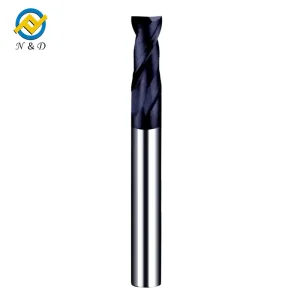
Machining titanium and nickel-based superalloys requires high thermal resistance. Our solution involves 4-flute carbide end mills with specialized AlTiN coatings that prevent work hardening.
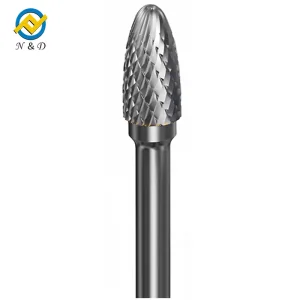
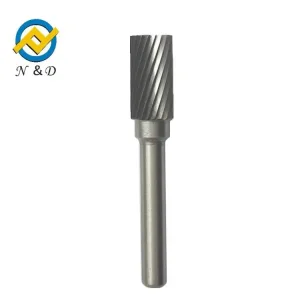
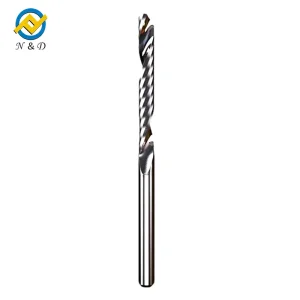
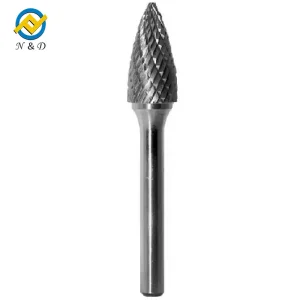
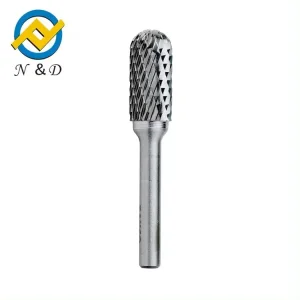
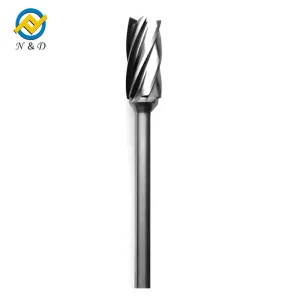
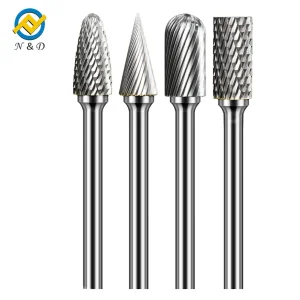
The shift to aluminum engine blocks and battery casings demands high-speed aluminum rotary burrs and single-flute end mills to prevent chip welding.
Ball nose end mills with high concentricity are essential for finishing complex geometries in H13 or D2 tool steel (up to 65 HRC).
Mixing WC, Cobalt, and rare metals in aviation gasoline.
Converting the mixture into granulated powder for pressing.
High-pressure molding to ensure uniform density.
1400°C sintering to eliminate porosity.
CNC precision grinding for the final cutting geometry.
Laser measurements for tolerance verification.
Tungsten carbide maintains its hardness at much higher temperatures than HSS. This allows for significantly higher cutting speeds and longer tool life, especially in mass production and machining of hard materials.
Fine-grain and submicron carbide substrates provide a better balance of hardness and toughness. Smaller grain sizes allow for sharper edges, which are crucial for micro-machining and achieving superior surface finishes.
Fewer flutes (2-3) are ideal for soft materials like aluminum because they offer larger chip space. More flutes (4-6) are used for harder materials where increased tool rigidity and finer feed rates are required.
Yes, as a production-oriented factory, we specialize in custom geometries, specific coating requirements, and private labeling to help clients build their own tool brands.
 N&D Carbide