Explore our core catalog of professional tungsten carbide tooling options, manufactured with state-of-the-art Swiss machinery for maximum longevity.
Understanding fluting vectors, chip load parameters, and operator safety characteristics in precision metalworking.
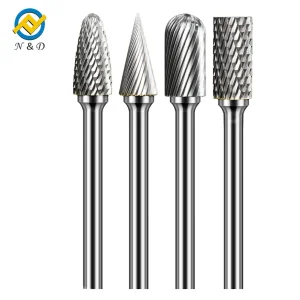
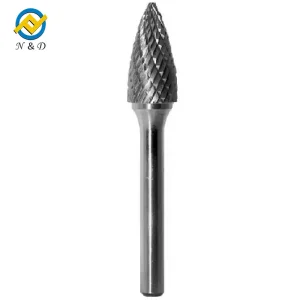
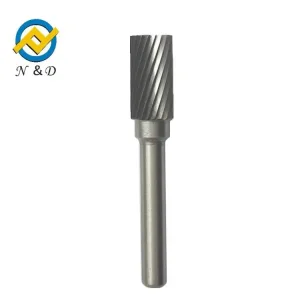
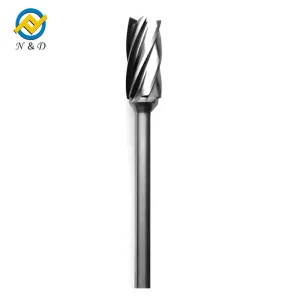
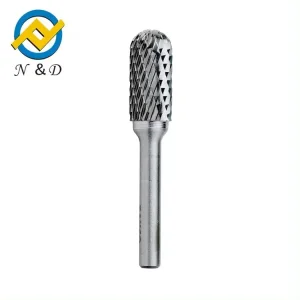
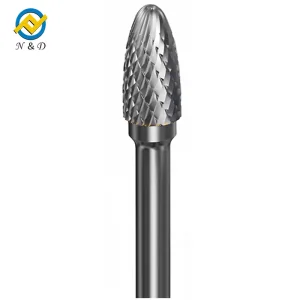
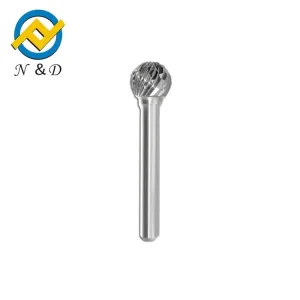
Unlike single-cut (standard spiral) burrs that create long, razor-like ribbon shards, double-cut burrs feature a dual-angle fluting pattern. The primary flute spirals upward, while secondary transverse flutes are ground at an opposing helix angle. This intersection functions as a built-in chip breaker.
A major safety and precision advantage of double-cut tooling is the balancing of rotational forces. By splitting material resistance into two cutting directions, the burr reduces "climb-cutting" pull, preventing the tool from skipping or walking across the workpiece surface.
The micro-sized chips produced by the double-cut design carry heat away from the workpiece cutting zone much more effectively than larger shavings. This prevents localized heat build-up, preserving the binder matrix of the carbide tool tip.

Founded in 2004, our facility in Guanghan, Sichuan Province, China, has transitioned to a highly automated Factory 4.0 infrastructure. We combine advanced metallurgy engineering with robotic grinding processes to deliver outstanding consistency across thousands of batches. By managing the supply chain from raw cobalt and tungsten powders to finished product geometries, we minimize quality variances and guarantee direct-to-factory cost savings.
Our facility houses custom-designed, multi-axis automated lines and maintains a strict environmental footprint. Our metallurgy laboratory closely monitors the chemical composition of raw inputs to prevent carbon deficiency or grain enlargement during the high-temperature sintering phases.
A technical preview of how we are pushing boundaries to meet the challenges of superalloys and automated robotic deburring cells.
| Feature Parameter | Standard Carbide Burrs | Next-Gen Cobalt-Rich Formulations | Ultra-Fine Grain Nano-Burrs (Factory 4.0) |
|---|---|---|---|
| WC Grain Size | 1.2 μm - 2.5 μm | 0.8 μm - 1.2 μm | < 0.4 μm (Ultra-Fine Grade) |
| Binder Ratio (Co) | 6% - 8% | 10% Cobalt-Nickel Co-Matrix | Customized 9% High-Toughness Binder |
| Thermal Threshold | Up to 650°C | Up to 850°C (Uncoated) | Up to 1100°C (with AlTiN-Nano Coating) |
| Primary Application | General steel, iron castings | Nickel Superalloys, Aerospace Alloys | Robotized CNC Deburring, High Hardness Hardened Tool Steels |
By refining the Tungsten Carbide grain matrix to sub-micron levels, we maximize the available surface area of the binder matrix, resulting in a dramatic increase in hardness without making the tool brittle.
We are applying advanced PVD coatings like Titanium Aluminum Nitride (TiAlN) and Chrome-based nanocomposites. These coatings generate an aluminum oxide layer at high heat, protecting the carbide substrate during dry cutting.
We are optimizing flute geometry to accommodate the constant feed speeds of robotic arm end-effectors, replacing manual deburring with consistent automated cycles.
How raw materials are transformed into industrial-grade cutting tools under strict quality controls.

Tungsten carbide, cobalt binder, and rare metal additives are mixed with aviation gasoline and carbide balls to achieve a homogeneous blend.

The slurry mixture is dried under controlled temperature settings. Ginseng gum binder is added, and the aviation gasoline is carefully filtered out.

The formulated powder is compacted in high-precision hydraulic dies, forming green-state blanks that match target dimension parameters.

Green blanks undergo high-pressure Sinter-HIP cycles at temperatures exceeding 1,400°C, compressing the powder into fully dense carbide.

Carbide blanks are ground on advanced Swiss 5-axis CNC grinding machines to cut high-precision double-cut flutes and geometry features.

Every single rotary burr undergoes laser micrometric scans and run-out tests to guarantee compliance with strict quality standards.
How major manufacturing sectors utilize our double cut rotary burrs for critical processes.
Critical deburring of nickel-based superalloys (Inconel), cobalt-chromium components, and structural titanium airframes without causing stress riser defects.
High-speed profiling of cast iron engine blocks, engine porting modifications, and rapid deflashing of high-pressure die-cast aluminum battery structural covers.
Preparation of weld joints on structural plate steel, smoothing of thick multi-pass welds, and high-volume material removal in tough shipyard environments.
Optimizing Total Cost of Ownership (TCO) through direct-factory partnership channels.
Sourcing rotary burrs from intermediaries can inflate unit costs by 40% to 75%. By partnering directly with our Guanghan factory, global distributors gain access to tier-structured wholesale pricing. Our price lists are calculated based on raw tungsten alloy index rates, order quantities, and custom packaging parameters.
Every machining environment has unique requirements. We collaborate closely with procurement managers to develop application-specific configurations, including custom shank lengths (up to 300mm for deep-cavity reach), customized helix angles, and tailored cobalt binder ratios.
Ensuring secure supply chains, customs clearance compliance, and international manufacturing standards.
Our manufacturing processes are certified to meet international quality management benchmarks, ensuring reliable tool performance from batch to batch.
We process all materials in accordance with REACH and RoHS standards, ensuring safe workplace applications and easy importing into Europe and the Americas.
We work with trusted logistics partners to offer complete customs clearance options, handling import duties, documentation, and regional transport.
Technical solutions to common challenges faced by tool engineers and procurement specialists.
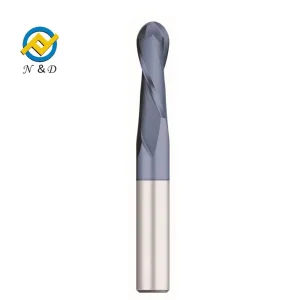
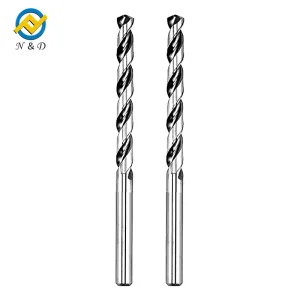
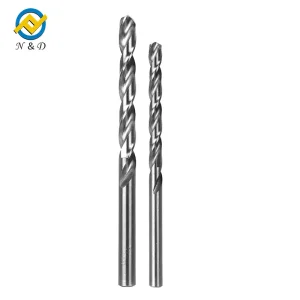
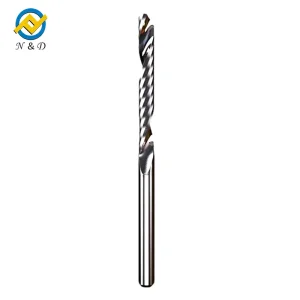
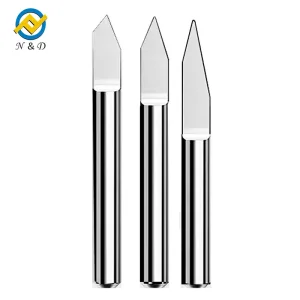
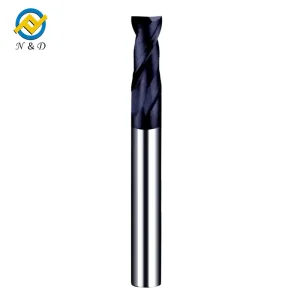
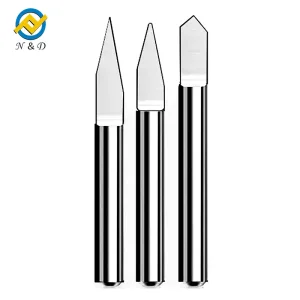
Explore our extended selection of precision end mills, specialized engraving cutters, and robust twist drill bits.
 N&D Carbide