Explore our foundational range of sub-micron tungsten carbide rotary burrs, solid carbide end mills, and precision-engineered drill bits, designed to endure severe mechanical stress in high-RPM operations.
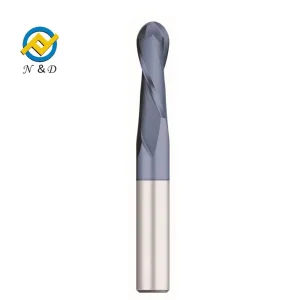
Crafted from premium sub-micron grade carbide substrates for complex 3D contour milling, ensuring supreme dimensional stability and micro-edge toughness.
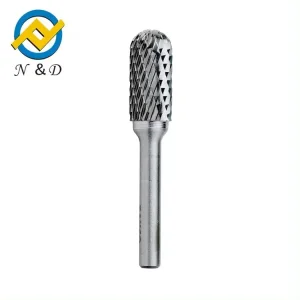
Optimized for intricate deburring and radius contouring in marine and aerospace tooling. Provides superior cutting control and thermal fatigue prevention.
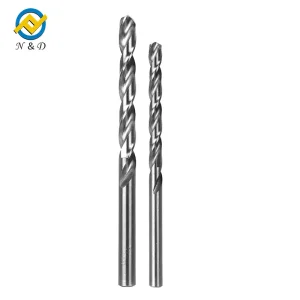
Engineered with sophisticated chip flute geometry to ease rapid heat evacuation and prevent work hardening in hard stainless steels and alloy elements.
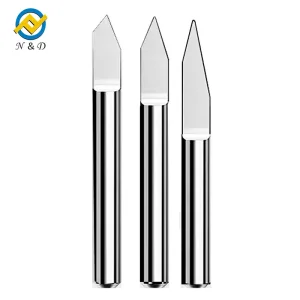
Features high-micro-precision ground tip design ideal for sharp line tracing, precision mold making, and advanced digital engraving protocols on diverse substrates.
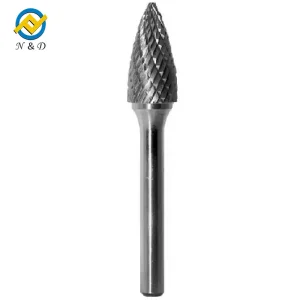
Standard F-type tree configuration, designed specifically for rapid material stripping in deep-seated, complex concave radii and narrow pockets.
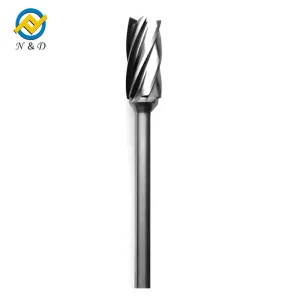
Proprietary wide flute geometries designed to prevent soft metal adhesion, chip packing, and clogging during intensive high-speed machining of aluminum alloys.
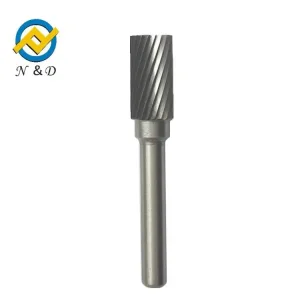
Straight end profile (Cylinder Type A) optimized for flat surface machining and rapid vertical face deburring. Built to withstand extensive lateral forces.
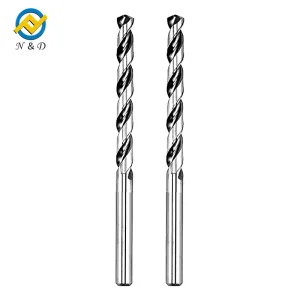
Infused with stabilized cobalt levels to maintain hardness at elevated structural temperatures. Specifically constructed for hard iron alloy profiling.
In high-speed abrasive tooling, tool degradation is primarily driven by three distinct mechanisms: thermal fatigue, edge micro-chipping, and mechanical deformation. Premium die grinder tungsten carbide bits solve these problems through optimized metallurgy. By blending pure sub-micron tungsten carbide (WC) grain particles with a refined cobalt (Co) matrix binder, our engineers create a material with a hardness rating of up to 92 HRA (Rockwell Hardness A).
Our micro-grain structures (0.5–0.8 µm) increase grain boundary density, which successfully stops micro-cracks from spreading. Standard coarse-grained carbide bits often suffer premature grain extraction under high shear stress. Our sub-micron material, however, ensures clean, sharp cuts over much longer periods, lowering the Total Cost of Ownership (TCO) for automated production lines.
Many buyers overlook the fact that the cobalt binder ratio directly determines how well a tool performs. For heavy-duty steel deburring, our bits feature a 6–8% cobalt ratio, maximizing hardness and wear resistance. For high-impact applications where chattering is common, we increase the cobalt ratio to 10–12%, enhancing impact toughness and preventing structural fracture.

Operating from our advanced facility in Guanghan, Sichuan Province, we utilize a fully integrated, six-stage production process. By combining automation with strict quality control, we ensure every batch meets rigorous global industrial standards.

Tungsten carbide powder, cobalt, rare alloying additives, and aviation gasoline are thoroughly mixed with precision alloy balls to create a highly uniform, ultra-fine slurry.

The mixture is spray-dried in a protective atmosphere, removing the organic solvents while adding binders like ginseng gum to form cohesive, ready-to-mold granules.

High-pressure mechanical molding shapes the prepared powder mix, producing pre-formed "green" carbide rods with high density and excellent geometric precision.

Sintering in a high-temperature Overpressure Sinter-HIP furnace at 1450°C under 100 bar pressure eliminates internal micro-voids, maximizing material density.

Advanced 5-axis CNC grinding machines ground the sharp teeth profile, keeping geometric tolerances within ±0.005mm for balanced, vibration-free high-RPM runout.

Advanced optical inspections check the tooth profile geometry, surface finish, and metallurgical structural density, ensuring every batch meets our zero-defect policy.
Procurement teams at international companies often face the challenge of balancing low unit costs with the need for high tool reliability. While cheap, unbranded die grinder bits may seem cost-effective initially, they often lead to hidden costs. Frequent tool failures force production shutdowns, increase operator downtime, and can even damage expensive workpieces.
Our Guanghan manufacturing base provides direct, factory-level sourcing with the quality of premium European brands. Since 2004, we have built a highly resilient supply chain that guarantees consistent material quality, regardless of market changes. This reliability has helped us earn the trust of procurement professionals in over 60 countries.
| Sourcing Challenge | Risks of Sub-Standard Bits | The N&D Factory Standard Advantage |
|---|---|---|
| Tolerances & Runout | Severe hand tool vibration, uneven surface finishes, early spindle damage. | Strict 5-axis CNC machining, ensuring runout under < 0.01mm. |
| Steel-to-Carbide Brazing | Dangerous tip separation during high-speed, high-RPM operation. | Premium silver-copper brazing layers with high shear resistance. |
| Batch-to-Batch Consistency | Unpredictable tool wear cycles in automated robotic setups. | Fully documented trace elements and computer-monitored Sinter-HIP cycles. |
As modern manufacturing shifts toward tougher workpiece materials like titanium alloys and carbon-fiber reinforced plastics, rotary cutting tools must also evolve. Our engineering roadmap focuses on three main technological innovations:
We are scaling up production of nano-grained tungsten carbide (less than 0.2 µm). This material offers high hardness and fracture toughness, ideal for clean cuts on heat-resistant superalloys.
Our custom high-performance coatings, such as AlTiN and multilayer TiAlN, form a protective ceramic layer at high temperatures, shielding the underlying carbide tool from extreme heat.
Our recycling programs help reclaim worn cobalt-cemented tungsten carbide tools. This circular manufacturing process reduces environmental impact while maintaining raw material purity.
Since 2004, we have expanded our capacity to meet the demands of global industries. By combining state-of-the-art production technology with regional shipping hubs, we ensure fast, reliable delivery to our customers worldwide.

Expert metallurgical advice and engineering solutions to help you select the right tools and optimize your automated production lines.
The optimal RPM depends on the burr's head diameter and the workpiece material. As a general guideline, smaller head diameters (e.g., 3mm or 1/8") operate best between 25,000 and 35,000 RPM. Larger head diameters (e.g., 12mm or 1/2") should run between 15,000 and 22,000 RPM. Exceeding recommended speeds can cause excessive heat, leading to premature tooth wear, while running too slowly can cause tool chatter and chipping.
The choice depends on your target material and desired finish. Single-cut burrs feature a single, right-handed spiral flute, ideal for fast material removal on soft metals like copper, brass, and aluminum. Double-cut burrs feature cross-flute geometry, which produces smaller chips, provides better operator control, and delivers a smoother finish on harder materials like cast iron, alloy steel, and stainless steel.
Standard atmospheric sintering can leave micro-porosities within the carbide material, which act as weak points and can cause the tool to break under heavy load. The Sinter-HIP (Hot Isostatic Pressing) process combines high heat (1450°C) with over 100 bar of pressurized argon gas. This high pressure compresses the material, eliminating internal micro-voids and increasing the overall fracture strength by up to 30%.
Robotic setups require strict dimensional consistency, as even minor tool variations can cause system errors. Our production process maintains consistency through several methods. First, we use fully automated 5-axis CNC grinding machines to maintain precise tooth geometry. Second, we verify dimensional accuracy using non-contact optical inspection systems. Finally, we document and trace all raw material batches to ensure consistent performance.
Explore our specialized range of custom-sized carbide tools, engineered to handle tough materials and complex geometries with high precision and durability.
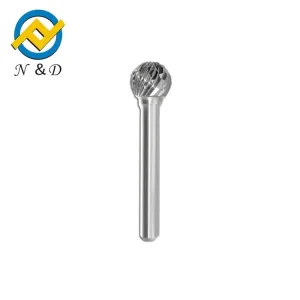
Spherical geometric design (Type D) optimized for pocket profiling and internal radius clearing. Highly wear-resistant and engineered for balanced operation at high RPM.
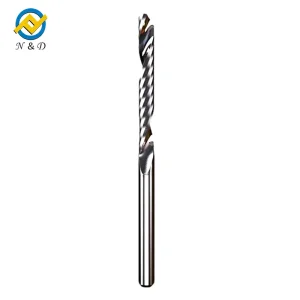
Featuring single-flute geometries for excellent chip clearing, making it ideal for rapid and clean cuts on softer materials like plastics and non-ferrous alloys.
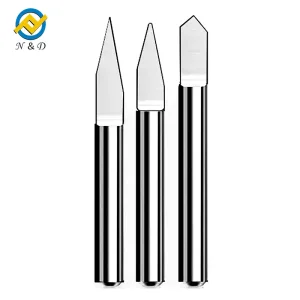
Engineered for precise CNC engraving, these bits maintain a sharp, stable cutting edge to ensure fine detail work on tough metal and composite workpieces.
Pointed tree configuration (Type G) designed for vertical access, narrow pockets, and deburring complex joint contours in heavy metal fabrication.
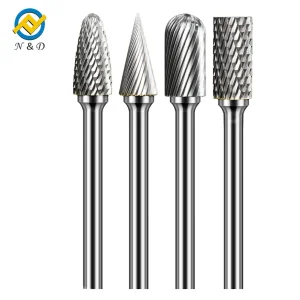
Versatile and highly durable, these bits are designed for heavy manual deburring and automated profiling, keeping down-time to an absolute minimum.
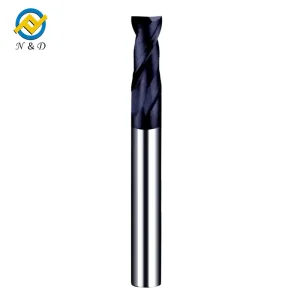
Optimized two-flute geometry designed for fast chip evacuation in slotting and profiling applications. Delivers high dimensional stability and precision finishes.
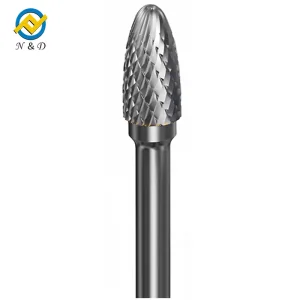
Oval shape geometry (Type E) designed to easily clear round edges, interior contours, and hard-to-reach areas in complex die and mold cavities.
Standard F-type tree configuration, designed specifically for rapid material stripping in deep-seated, complex concave radii and narrow pockets.
 N&D Carbide