Explore our foundational selection of tungsten carbide cutters designed for optimal chip evacuation, prolonged service cycles, and severe temperature applications.
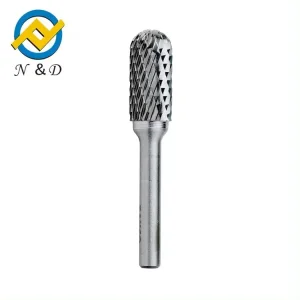
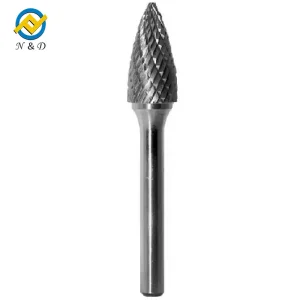
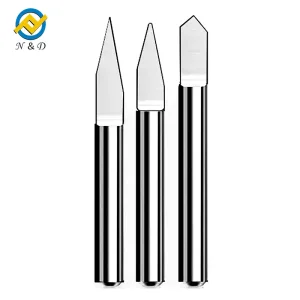
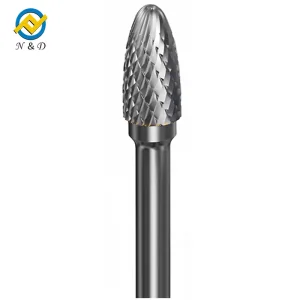
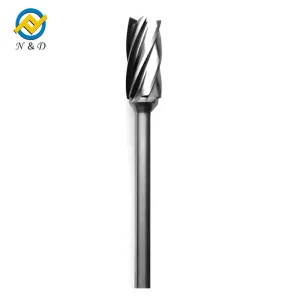
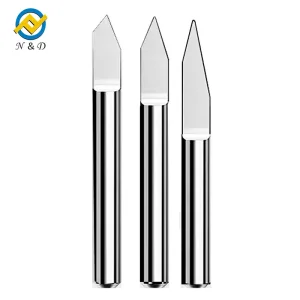
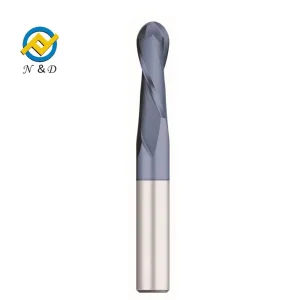
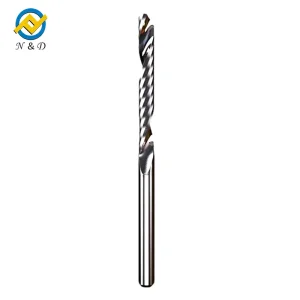
An in-depth evaluation of mechanical stress dispersion, chip thickness optimization, and thermodynamic stability in high-feed heavy roughing programs.
In modern precision machining, the selection of the cutting tool's geometry represents the difference between a high-efficiency milling cycle and catastrophic tool failure. Corner radius milling tools, commonly known in professional workshops as bull-nose end mills or radius end mills, utilize a ground radius on the outer edge corners of the tool teeth. Unlike a conventional square end mill that has a sharp 90-degree corner, the corner radius profile significantly reduces stress concentration ($K_t$) and helps prevent chip cracking and premature edge breakage.
By distributing the cutting forces over a broader, curved edge, these tools are highly resistant to impact wear. This geometric advantage is coupled with high-grade solid tungsten carbide substrates, typically composed of ultra-fine grain microstructures (ranging from 0.4μm to 0.8μm grain sizes). The inclusion of cobalt (typically 10% to 12% by weight) functions as the binder phase, striking the perfect structural balance between ultra-high hardness and high-impact fracture toughness.
During heavy peripheral milling and cavity roughing, the sharp corners of conventional square end mills act as stress concentrators. This causes micro-chipping under cyclic loads. Adding a defined corner radius (ranging from 0.2mm up to 6.0mm depending on tool diameter) shifts the primary mechanical strain away from the fragile tip. This geometry allows the tool to run at much higher feed-per-tooth values ($f_z$) and significantly increases structural metal removal rates (MRR) in tough materials like Titanium Gr. 5, Inconel 718, and hardened tool steels up to HRC 65.
| Substrate Grade | Co Composition (%) | Grain Size (μm) | Hardness (HV30) | TRS (MPa) | Primary Application Areas |
|---|---|---|---|---|---|
| ND-10F (Ultra-Fine) | 10.0% | 0.6 | 1650 | 3800 | Universal steel machining, titanium alloys, hard milling |
| ND-12F (High-Impact) | 12.0% | 0.8 | 1500 | 4100 | Heavy roughing, interrupted cuts, mold cavity roughing |
| ND-06U (Micro-Grain) | 6.0% | 0.4 | 1950 | 3200 | Graphite, fiberglass composites, aluminum profiling |

Founded in 2004, our company is a leading manufacturer of premium tungsten carbide products, specializing in the production of high-quality carbide materials and rotary tooling components. Headquartered in the industrial hub of Guanghan, Sichuan Province, China, we have become an industry leader, serving a wide range of industries including mining, construction, oil and gas, and aerospace manufacturing.
Our commitment to excellence and technological innovation allows us to expand our global business footprint and meet the demanding needs of our customers around the world. As a company with 120+ dedicated employees, we pride ourselves on providing highly customized products that meet the diverse needs of our clients. Our team consists of experienced metallurgists and engineering professionals who are well versed in the intricacies of tungsten carbide manufacturing, ensuring our products meet the highest international standards of precision and wear resistance.
Our strictly monitored 6-step manufacturing chain ensures that every tool blank exhibits consistent internal hardness, dimensional accuracy, and structural integrity.
We blend premium tungsten carbide powder, pure cobalt, rare earth additives, aviation gasoline, and carbide alloy milling balls to achieve absolute homogeneity in raw mixture slurry.
The wet-ground slurry undergoes high-pressure inert-gas spray drying. This process evaporates the volatile milling media, yielding free-flowing, spherical micro-granules.
Utilizing high-tonnage multi-axial powder presses, the dried powder is compressed under extreme loads to produce green tool blanks with highly uniform density profiles.
The green blanks are processed in computer-controlled Overpressure Sintering (Sinter-HIP) furnaces at up to 1450°C and 60 bar pressure. This process eliminates micro-porosity and maximizes material density.
Equipped with state-of-the-art 5-axis CNC tool grinding centers, we execute precise dimensional cuts, grinding the critical corner radius, helical flute geometry, and rake angles.
Every corner radius milling tool undergoes advanced metallurgical structure inspection, optical multi-sensor dimensional inspection, and structural finish tolerance checks.
Harnessing raw material cluster advantages, advanced engineering capabilities, and global trade compliance to deliver unmatched high-end tooling solutions.
Our manufacturing base in Sichuan, China, is situated close to the world's most concentrated tungsten ore deposits. This geographic advantage guarantees direct raw material access, protecting our clients from international mineral price fluctuations and keeping lead times short.
We provide full-spectrum OEM and ODM tool engineering services. From modifying helical flute angles for specific composite materials to designing proprietary multi-radius cutting edges, our design-to-delivery process is optimized for custom industrial orders.
Our production facilities operate strictly under ISO 9001:2015 quality management systems. All raw materials and processing oils are compliant with REACH and RoHS standards, assuring seamless entry and clearance in European and North American industrial zones.
By eliminating middleman logistics, we pass on direct manufacturer savings directly to industrial procurement buyers. This cost-competitiveness helps plant managers optimize their tooling cost-per-part ratios without compromising tool life.
How high-speed machining (HSM), advanced composite structures, and localized technical support networks are transforming manufacturing performance.
The manufacturing sector is undergoing a massive shift towards high-speed machining and hard-milling processes. As machine tools operate at spindle speeds exceeding 20,000 RPM, standard cutting geometries generate excessive heat, leading to premature thermal cracking. Corner radius end mills provide a highly effective solution by optimizing the tool-chip contact area. This design prevents thermal spikes and ensures stable heat dissipation away from the workpiece.
Modern high-feed machining requires advanced coatings. Standard TiAlN coatings are increasingly being replaced by multi-layer PVD nano-composite coatings, such as AlTiN, AlCrN, or silicon-doped structures. These coatings form a highly protective aluminum oxide layer at temperatures up to 1100°C, shielding the carbide core from wear and allowing dry-machining in hardened die steel.
To support global manufacturers, our distribution network offers localized inventory management and dedicated customer service channels. We work closely with regional distributors to maintain dedicated stock levels of standard and semi-custom corner radius tools, ensuring same-week delivery and minimizing factory downtime.
CAD/CAM software now regularly utilizes adaptive clearing toolpaths that maintain a constant tool engagement angle. Corner radius end mills are perfectly suited for these dynamic strategies, as their rounded edges can withstand constant lateral forces during continuous high-speed pocketing cuts.
Answers to common questions regarding grade selection, pricing structures, custom ordering, and performance optimization.
A ball nose end mill has a full hemispherical radius at its tip (radius equals half the tool diameter), making it ideal for 3D surfacing and complex mold cavities. A corner radius end mill features a flat bottom with small rounded corners, combining the flat-bottom finishing capabilities of a square end mill with the chip resistance and structural strength of a ball nose.
Our pricing structures are determined by order volume, raw material grade selection, and the complexity of the custom geometry (e.g., custom flute angles or proprietary coatings). We offer highly competitive, tier-based pricing for bulk procurement orders, which includes custom packaging and dedicated logistic channels for global OEMs.
For titanium and high-temp superalloys, we recommend an AlTiN (Aluminum Titanium Nitride) or AlCrN (Aluminum Chromium Nitride) nano-coating. These coatings have high hot-hardness and low thermal conductivity, which keeps the cutting heat directed into the chips rather than the tool body or workpiece.
Every production batch undergoes ultrasonic structural testing to check for internal micro-voids, cobalt magnetic testing to verify alloy distribution, and precise optical dimension measurements. These rigorous QA steps ensure that every tool blank meets high-impact safety and quality standards before leaving our facility.
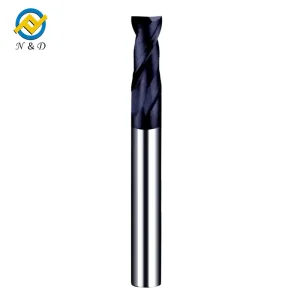
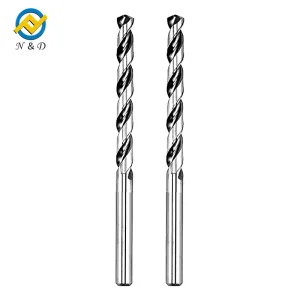
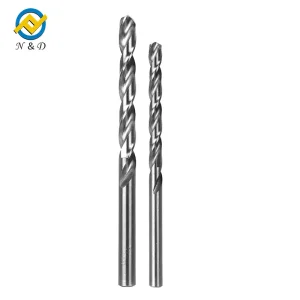
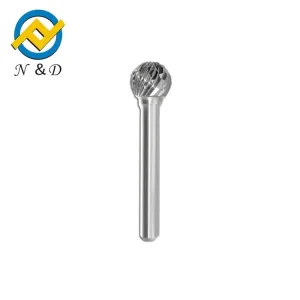
Explore our most popular carbide milling tools and twist drills, selected for high precision, excellent material removal rates, and long-lasting durability.
 N&D Carbide