Explore our standard line of high-durability tungsten carbide rotary tools engineered for precision machining, casting cleanups, mold cavities, and CNC milling applications globally.
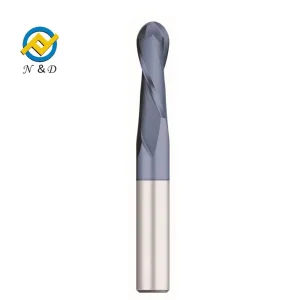
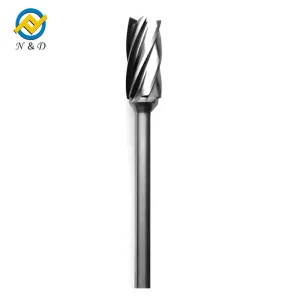
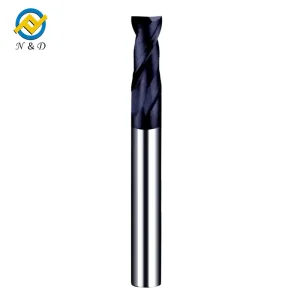
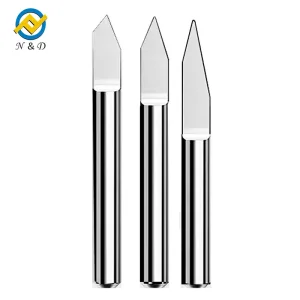
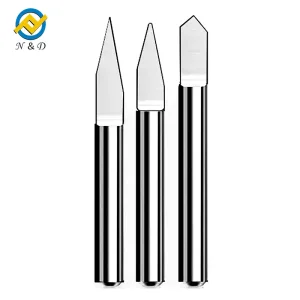
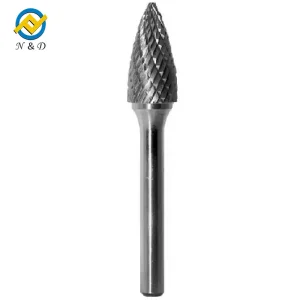
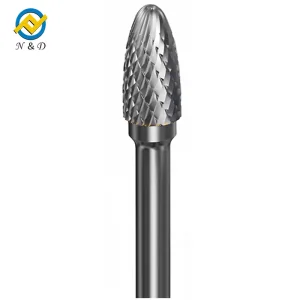
In modern subtractive manufacturing, the Conical Tapered End Mill represents a pinnacle of structural mechanics and shear optimization. Traditional cylindrical cutters suffer from deflection when operating with extended overhangs. A tapered profile radically overcomes this boundary of mechanics. By incorporating a progressive cross-sectional taper from the shank down to the cutting tip, tapered end mills maximize the tool's Moment of Inertia (I).
This progressive core thickening minimizes lateral deflection (bending stress) exponentially. Deflection is proportional to the cube of the overhang length and inversely proportional to the fourth power of the core diameter:
As a result, a 3-degree or 5-degree taper provides up to 300% greater rigidity compared to a straight counterpart of the same tip diameter. This mechanical advantage enables CNC operators to execute high-feed 3D profiling, deep pocket drafting, and intricate die-sink roughing without experiencing tool chatter, poor surface finishes, or micro-cracking at the carbide boundary.
Furthermore, when utilizing high-speed 5-axis CNC machining centers, the conical geometry maintains a constant radial engagement angle while executing complex toolpaths across contoured surfaces. This makes them indispensable for draft-angle machining in high-precision mold cavities, impellers, and custom orthotics.
The commercial demand for high-end solid carbide tooling has evolved beyond off-the-shelf standards. As global aerospace, automotive, medical, and semiconductor sectors require increasingly tight tolerances, factory-level custom engineering is critical.
Precision machining of complex components like Ti-6Al-4V titanium impellers, compressor blades, and heat-resistant superalloys (HRSA). Conical profiles allow deep-groove reach without compromising stability.
Delivering high-precision draft angles in hardened H13 hot-work tool steel (up to 55-62 HRC). Eliminates secondary hand-polishing stages by producing ultra-fine surface finishes (Ra < 0.2 μm).
Machining orthopedic joints, dental prosthetics, and micro-fluidic semiconductor mold cavities. Specialized micro-grain tungsten carbide matrices prevent boundary chipping under dynamic micro-loads.
From a global procurement standpoint, purchasing decisions are highly calculated. Procurement managers analyze the Total Cost of Ownership (TCO) rather than initial tool purchase price. An end mill that lasts 50% longer due to optimal cobalt binder balance and advanced physical vapor deposition (PVD) coatings reduces overall production cost by minimizing spindle downtime, cycle times, and scrap rates.
The performance of any high-quality conical tapered end mill depends heavily on its raw substrate material. As an authoritative manufacturer founded in 2004 with a facility in Sichuan Province, China, our specialized formulations balance ultra-fine micro-grain tungsten carbide (WC) with a precise cobalt (Co) content, typically between 8% to 12%.
| Grade Class | Average Grain Size (μm) | Cobalt (Co) % | Hardness (HV30) | Ideal Application Range |
|---|---|---|---|---|
| Submicron Class | 0.6 - 0.8 | 10% - 12% | 1600 - 1750 | General steels, cast iron, mild alloy systems |
| Ultra-Fine Nano-Grain | 0.2 - 0.4 | 8% - 10% | 1800 - 1980 | Hardened steels (up to 65 HRC), aerospace titanium |
| Cobalt-Rich Toughened | 0.8 - 1.0 | 12% - 15% | 1450 - 1550 | Heavy interrupted cut machining, structural roughing |
Substrate selection is only half the battle. High-temperature friction at the shear zone requires a sophisticated coating strategy. Our metallurgical research program optimizes tools with advanced physical vapor deposition (PVD) layers:
The manufacturing of our high-quality solid carbide tooling follows a rigorous, multi-stage workflow. Each step is fully managed at our production facility to guarantee the highest level of batch-to-batch consistency.
A key metallurgical step. We mix high-purity tungsten carbide powder, cobalt binder, rare metal dopants, aviation gasoline, and dense alloy balls to create a highly homogeneous compound.
The wet mixture undergoes controlled thermal drying, during which ginseng gum is added as a binding stabilizer while the aviation gasoline is carefully filtered out.
The dried, stabilized tungsten carbide powder is placed in custom high-pressure compaction molds, shaping the material into uniform, green-state carbide tool blanks.
Blanks are processed in advanced vacuum/HIP (Hot Isostatic Pressing) sintering furnaces at up to 1450°C. Sintering achieves complete metallurgical consolidation, maximizing structural density.
Sintered blanks are ground on state-of-the-art 5-axis CNC grinding machines (such as ANCA or Walter). Advanced algorithms precisely cut the helical flutes, relief angles, and specialized tip geometry.
Every single batch undergoes automated non-destructive optoelectronic inspections. We measure core runout, helical concentricity, surface roughness, and overall structural density.
Building long-term industrial partnerships requires strict adherence to international commercial standards and robust logistics structures. As an ISO 9001:2015 certified production facility, we maintain reliable quality systems across our entire product range.
Our international trade department offers customized solutions that simplify high-volume tooling imports for customers worldwide:
We verify that every consignment of raw materials and finished tools meets strict REACH, RoHS, and TSCA directives. This guarantees smooth customs clearance at European and North American ports.
Our CAD/CAM engineering team provides technical support for custom tool requests, delivering detailed blueprint variations and custom 3D step files within 48 business hours.
Partnering with top logistics networks like DHL, FedEx, and leading ocean freight operators allows us to support various shipment terms, including FOB, CIF, and DDP.
Here are detailed, practical answers to common technical and logistical questions about specifying, purchasing, and applying tapered carbide cutting tools.
Stay informed with the latest updates, engineering research, and manufacturing news from our international technical division.

Modern production facilities continue to incorporate eco-friendly practices into their development strategies. Our initiatives focus on reducing energy consumption during sintering and recycling used carbide tools.

The solid carbide industry operates in a dynamic landscape. Evolving global supply chains, resource availability, and the demand for higher tool durability drive ongoing innovation in micro-grain geometries.
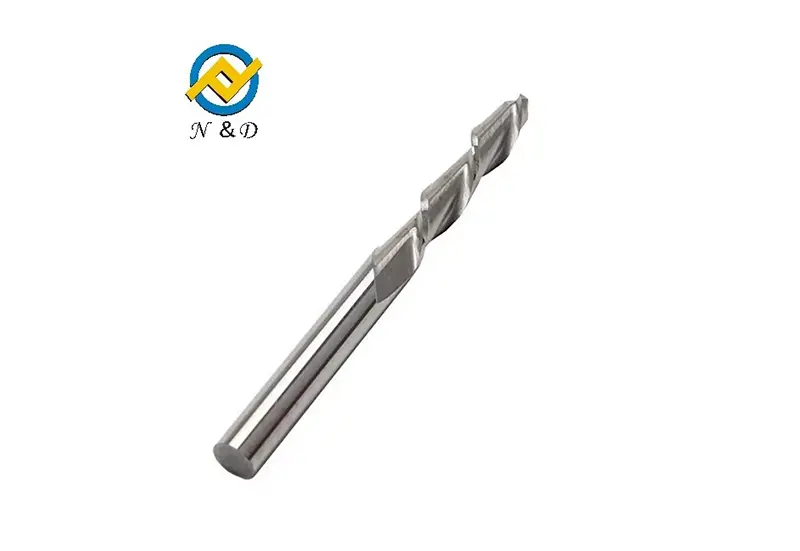
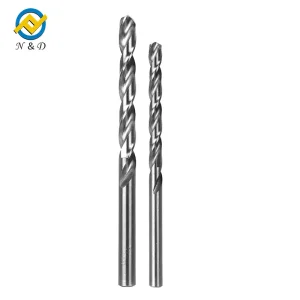
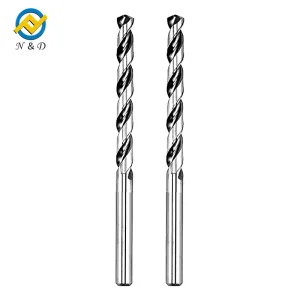
Drilling tough metals requires reliable cutting edges. Our solid carbide twist drills feature optimized geometry and durable coatings, delivering high feed rates and long service life.
Founded in 2004, our company is a leading manufacturer of tungsten carbide products, specializing in the production of high-quality carbide materials. Headquartered in Guanghan, Sichuan Province, China, we have become an industry leader, serving a wide range of sectors including mining, construction, oil and gas, and manufacturing.
Our commitment to excellence and continuous innovation allows us to expand our reach and meet the diverse needs of customers around the world. As a dedicated company with 120+ skilled professionals, we take pride in delivering reliable products that satisfy a wide variety of industrial requirements.
Our production team is well-versed in the intricacies of tungsten carbide manufacturing, ensuring our products meet high standards of precision and durability. Through ongoing investment in research and development, we strive to remain at the forefront of technological advancement, allowing us to provide our customers with high-quality, practical tooling solutions.

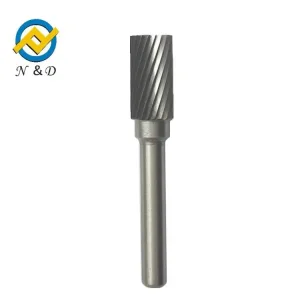
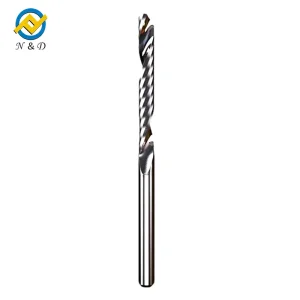
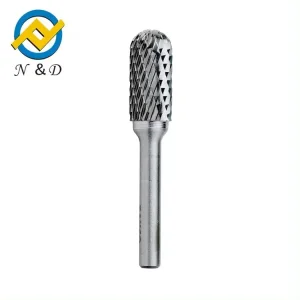
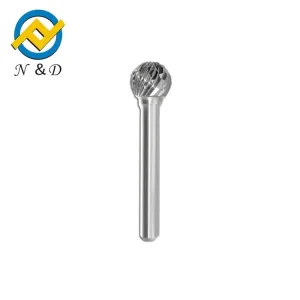
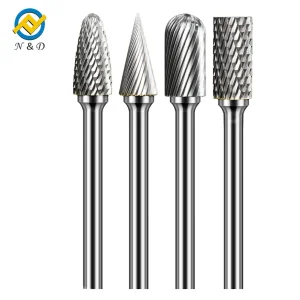
Explore our comprehensive range of high-performance tooling, including robust twist drills and custom rotary burrs designed for complex industrial applications.
 N&D Carbide