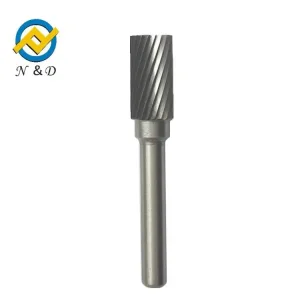
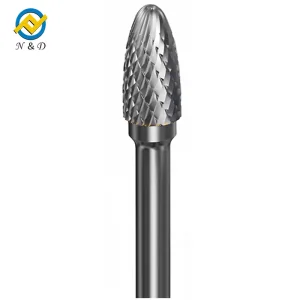
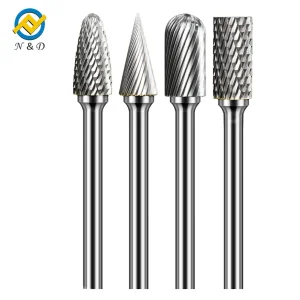
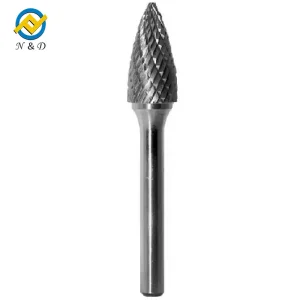
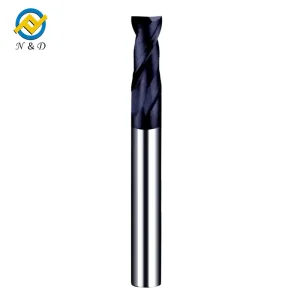
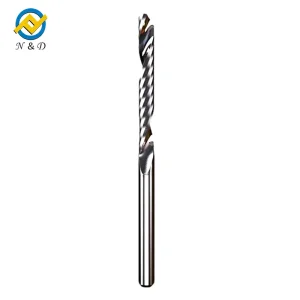
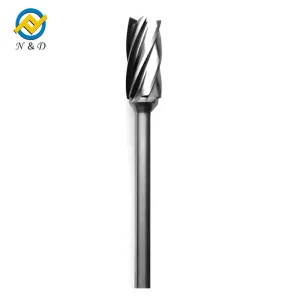
In the modern manufacturing theater, corner rounding is no longer treated merely as a secondary deburring step. It is recognized as a critical edge-preparation methodology that mitigates micro-crack propagation, enhances fatigue life of heavy-load structural components, and optimizes fluid-dynamic profiles in aerospace impellers and hydraulic manifolds. Traditionally, High-Speed Steel (HSS) dominated this domain. However, the rise of difficult-to-machine high-temperature superalloys (such as Inconel 718, Titanium Grade 5, and hardened tool steels exceeding 60 HRC) has exposed the thermodynamic limits of HSS.
Carbide tipped corner rounding end mills represent the optimal synthesis of structural cost-efficiency and high-velocity performance. By brazing or mechanically locking ultra-fine micro-grain tungsten carbide tips onto highly robust, shock-absorbing alloy steel shanks, engineers achieve the superior hot-hardness of carbide at the cutting interface, while maintaining the fracture toughness of structural steel at the core. This hybrid design actively dampens harmonics during high-speed machining (HSM) setups, allowing higher feed rates per tooth without risking catastrophic tool shank failure.
As sub-micron and nano-grain cemented carbide materials advance, the physical integrity of corner rounding cutters reaches unprecedented limits. High-purity cobalt binders integrated with cubic carbine structures (TaC, NbC) improve thermal-shock resistance during interrupted cuts. Modern aerospace and automotive shops are migrating to carbide tipped setups to reduce setup times, optimize floor cycle efficiency, and achieve mirror-like finishes directly from the CNC machining center.
Our carbide tips utilize a refined 0.5-0.8µm grain size matrix, offering a perfect equilibrium between extreme compression capability and transverse rupture strength. This directly prevents micro-chipping under cyclic loads.
Coated with Advanced AlTiN (Aluminum Titanium Nitride) or nACo nanocomposite coatings, ensuring a high thermal barrier (oxidation temperature up to 900°C) and exceptionally low friction coefficients.
Industrial procurement agents look beyond the initial purchase price. They evaluate "cost per edge". Our carbide tipped tools offer up to 4x the service life of HSS alternatives under equivalent working conditions, reducing direct machine downtime costs by over 35%.
Every machining setup has proprietary parameters. We provide robust options to customize radius sizes (from 0.5mm to 20mm), shank diameters, extended reach length for deep pocket profiles, and specialized flute geometries to prevent harmonic resonance in thin-wall components.
Each batch undergoes strict trace verification. We align with global ISO standards and provide full Material Test Reports (MTR) upon request. This ensures total predictability when processing structural titanium components in highly regulated sectors.


Operating out of our advanced industrial headquarters in Guanghan, Sichuan Province, China, we have built a vertically integrated production system that exemplifies the principles of Smart Factory 4.0. Sichuan is globally recognized for its extensive mineral reserves, providing direct and stable access to premium tungsten and cobalt resources. This geographical advantage isolates our global customers from raw material market fluctuations and ensures highly competitive pricing.
Our facility integrates state-of-the-art 5-axis CNC grinding machines (including top-tier Walter and Anca systems) with real-time digital monitoring. Our operations run on a closed-loop quality management system. From continuous automated mixing in wet grinding to computerized high-vacuum sintering, every phase of production is monitored by sensors to eliminate structural micro-porosity in the carbide blanks.
This high-tech infrastructure allows us to maintain a daily production volume capable of handling multi-thousand tool batches, while offering fast-turnaround prototyping for custom OEM tool geometries. By pairing automated manufacturing with a dedicated engineering team, we deliver high-performance cutting tools with unmatched efficiency.

We blend tungsten carbide, cobalt, vital micro-alloys, and liquid structural agents inside highly controlled ball mills to achieve a completely uniform metallurgical blend.

Using advanced nitrogen spray-drying towers, we remove volatile binding fluids to yield high-flow spherical granules that ensure highly consistent filling density in the subsequent steps.

High-tonnage hydraulic and isostatic presses mold the powder into highly dense green state carbide structures, configured to match the geometric profiles required for target tool tips.

Compacted tool blanks are treated in overpressure sintering (HIP) furnaces at up to 1500°C. Sintering under high pressure eliminates remaining voids, maximizing bulk density and toughness.

Sintered carbide tips are brazed onto shanks and ground using specialized diamond grinding wheels on 5-axis CNC grinding centers. This guarantees smooth flute transitions and tight radial tolerances.

Every tool undergoes 100% inspection using non-contact optical comparators and laser scanning systems. We verify radial runout, profile radius accuracy, and surface roughness (Ra) down to the sub-micron scale.
In aerospace hubs across North America and Western Europe, machining complex structural components from solid aluminum (e.g., 7075-T6) or titanium (e.g., Ti-6Al-4V) is a standard challenge. These parts require precise corner radii to reduce stress concentration points. Our custom carbide tipped tools perform corner-rounding profiles on deeply pocketed components, maintaining consistent radii without experiencing deflection or chatter.
Automotive production lines require high throughput. High-volume casting operations in regional centers like Germany, the US, and Japan rely on our carbide-tipped tools to process the outer profiles and casing edges of transmission housings. The superior thermal resistance of our carbide tips enables dry-machining or minimum quantity lubrication (MQL) setups, helping automotive plants reduce hazardous coolant waste.
Machining orthopedic implants (such as cobalt-chrome hip stems or titanium bone plates) demands impeccable surface finishes (Ra < 0.2µm) and no mechanical surface defects. Our ultra-precise, razor-sharp corner rounding profiles remove sharp edges cleanly, eliminating micro-burrs and preventing micro-cracking at the critical transition junctions of medical implants.
Die-casting and plastic injection mold makers regularly work with pre-hardened tool steels (such as H13 or P20, ranging from 45 to 55 HRC). Performing corner profiling on deep cavities requires a tool capable of resisting both extreme wear and high lateral cutting forces. Our robust carbide tipped corner rounding end mills deliver predictable, consistent performance, helping tool & die shops achieve precise geometry directly on hardened surfaces.
Ensure your toolholder radial runout is kept under 0.005mm (0.0002"). Excess runout causes uneven tooth loading, which is a primary cause of micro-chipping along the radius of carbide tipped cutting tools.
| Performance Metrics | High-Quality Carbide Tipped | Solid Tungsten Carbide | High-Speed Steel (HSS-Co) |
|---|---|---|---|
| Direct Material Core Cost | Highly Economical (Optimized structural steel shank) | Premium Price (Solid sub-micron carbide block) | Low Purchase Price (Standard steel-based alloys) |
| Maximum Flexural Deflection Limits | Excellent (Alloy steel shank absorbs high lateral force) | Moderate (Extremely rigid, susceptible to sudden shear) | Highest (High ductility, flexes without breaking) |
| Maximum Hot-Hardness Threshold | Up to 900°C (High-grade sub-micron carbide tips) | Up to 1100°C (Continuous solid micro-grain structure) | Up to 550°C (HSS alloy softens quickly at heat) |
| Dampening of Machine Vibrations | Superb (Hybrid metal assembly acts as a dampener) | Low (Vibrations transmit through the rigid tool body) | Moderate (Higher structural flexibility reduces chatter) |
| Long-Run Production Life Cycles | Excellent (Replaceable/re-ground brazed carbide inserts) | Exceptional (Extremely long life, high wear resistance) | Short (Requires frequent replacement or re-sharpening) |
We supply dynamic, built-to-order carbide tool modifications. This includes custom shank lengths, compound relief angles, and targeted flute configurations to optimize chip evacuation and cycle times.
Utilizing high-purity sub-micron tungsten carbide powder and automated vacuum sintering, we eliminate internal voids and variations, ensuring highly predictable tool life batch after batch.
By combining high-hardness carbide cutting edges with tough alloy steel bodies, our hybrid tool designs actively dampen vibrations, protecting the machine spindle and improving surface finishes.
Our application engineers assist with speed and feed calculations, tool life optimization, and matching coating options (such as TiAlN, DLC, or CrN) to your target workpiece materials.

Discover how modern recycling methods for scrap carbide and energy-efficient vacuum sintering furnaces are reducing the environmental impact of cutting tool production without sacrificing tool performance.

An in-depth analysis of cobalt price fluctuations, new alternative binder elements (such as nickel and iron matrices), and how smart manufacturing methods are shifting the economics of modern machine shops.
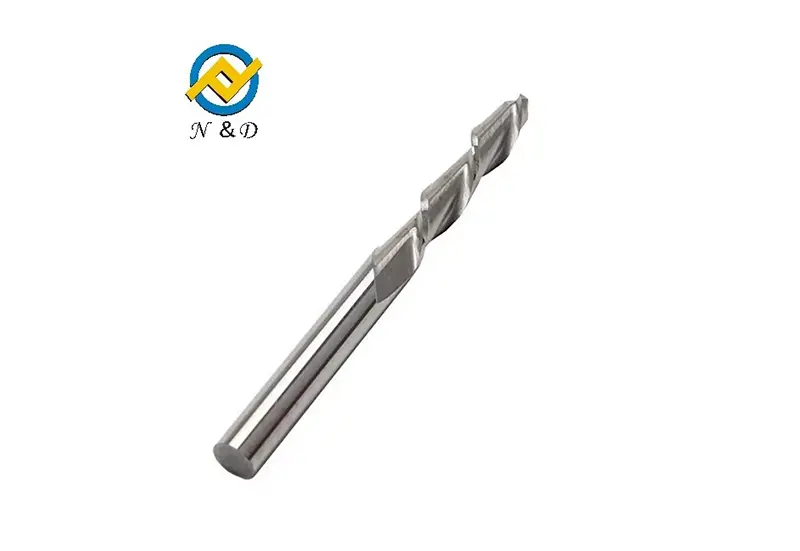
An analysis of deep-hole drilling physics, showing how optimized flute geometry and internal through-coolant channels help clear chips and prevent thermal fatigue in demanding high-feed applications.
Carbide tipped tools combine the high hardness and wear resistance of carbide with the vibration-dampening qualities of a tough steel body. This design reduces tool deflection under high lateral loads, dampens harmonic vibrations during deep-reach pocket milling, and lowers overall cost-per-tool, particularly for large radius sizes.
For hardened steels, we recommend high-performance AlTiN (Aluminum Titanium Nitride) or nACo nanocomposite coatings. These PVD coatings form a protective, high-hardness aluminum-oxide layer at elevated temperatures, maintaining tool integrity even during dry machining or when cooling is limited.
Micro-chipping is typically caused by excessive radial runout (which should be kept under 0.005mm), rigid mechanical vibrations, or insufficient chip clearance. To mitigate chipping, verify the rigidity of the setup, reduce the feed rate per tooth by 15-20% when entering cuts, and ensure complete chip removal via high-pressure air blast or coolant.
Because the active cutting diameter of a corner rounding end mill varies continuously along its radius profile, using the nominal outer diameter for speed calculations will result in incorrect values. Calculate effective speed based on the midpoint of the active rounding radius to ensure optimal RPM and feed rates.
Using automated 5-axis CNC grinding machines and laser verification systems, we regularly achieve custom radius tolerances as tight as ±0.005 mm (±0.0002"). We provide comprehensive quality reports detailing the dimensional measurements for critical applications.
Yes, our tools are highly suited for HSM in non-ferrous materials like aluminum and brass. For these materials, we provide uncoated tools with highly polished flutes to prevent material buildup (BUE) and ensure optimal chip flow.
 N&D Carbide