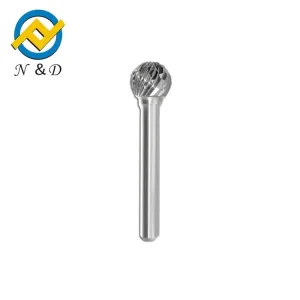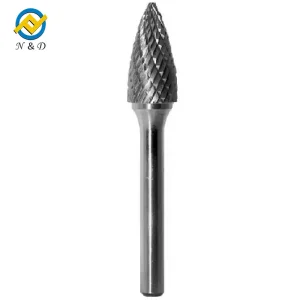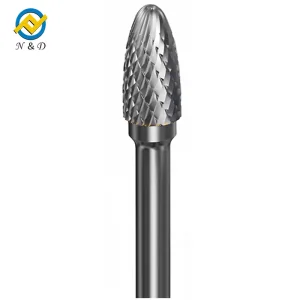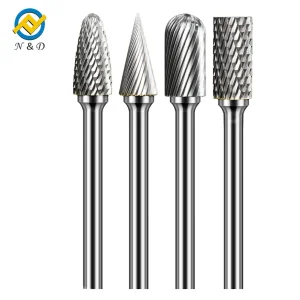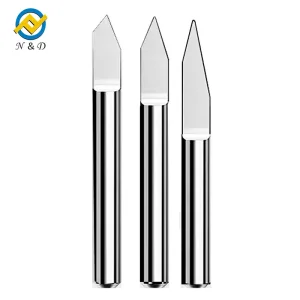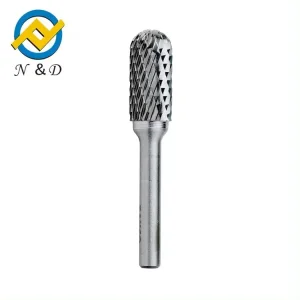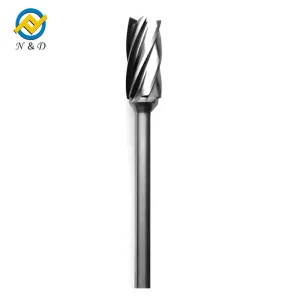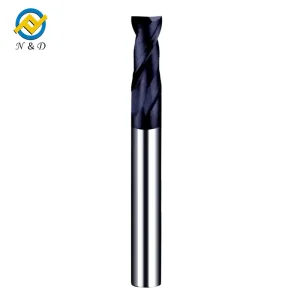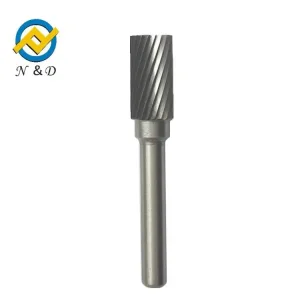
High-Quality Ball Nose End Mill Cutter Manufacturers & Factories

Premium Carbide Cutting Solutions & Global OEM/ODM Technical Whitepaper

1. Technical Taxonomy & Advanced Metallurgical Principles

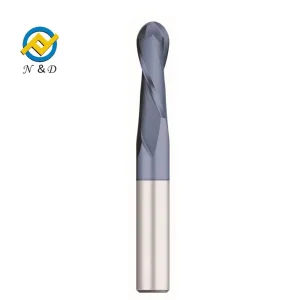
In high-speed precision manufacturing, the Ball Nose End Mill Cutter serves as the technological cornerstone for generating complex three-dimensional contours, curved surfaces, and intricate mold cavities. Unlike standard flat-bottom end mills, the ball nose configuration features a hemispherical cutting profile at its tip, which is engineered with sub-micron precision to maintain continuous contact across variable slope orientations. To truly understand why high-performance factories invest in premium sub-micron grade carbide substrates, we must explore the metallurgical equilibrium that governs industrial tool longevity.

The Triad of Performance: Sub-Micron Tungsten Carbide, Cobalt, and Coating

At the center of high-efficiency machining is the raw composition of the material. As a pioneer established in 2004, our production processes are rooted in formulating optimal Tungsten Carbide (WC) matrices blended with Cobalt (Co) binders. The micro-grain structure size of WC directly controls the tool’s fracture toughness and hardness thresholds:

  • Ultra-Fine Sub-Micron Grain Structures (0.4μm - 0.6μm): Offers high wear resistance at critical surface contact regions, preserving sharp cutting edges and preventing microscopic flaking under continuous mechanical shear.
  • Optimized Cobalt Phase (Typically 10% - 12% by weight): Functions as the supportive metal binder that absorbs high impact stresses, preventing sudden structural failures during high-speed feed rates.
  • Functional Nanostructured Coatings (nACo, AlTiN, TiAlN): Applied via physical vapor deposition (PVD) to form a thermal barrier. These coatings dynamically oxidize at temperatures exceeding 900°C to create a hard Aluminum Oxide (Al₂O₃) protective layer, shielding the carbide core from crater wear.

Our ball nose cutters balance structural toughness and thermal endurance, giving operators the reliability needed to handle difficult materials such as stainless steels, titanium alloys, Inconel, and highly abrasive graphite composites.

2. Macro Industry Solutions & Multi-Axis CNC Operations

Providing global engineering projects with high-efficiency profiling, finishing, and custom pocketing tools

Aerospace & Turbine Profile Milling

Enables ultra-precise profiling of impeller blades, blisks, and structural components. Our specialized multi-flute carbide geometries minimize deflection, ensuring smooth finishes on titanium and nickel alloys.

High-Precision Die & Mold Cavities

Delivers high contour accuracy for die casting, compression injection molds, and stamping tools. Our ball nose end mills feature tight radius tolerances of ±0.005mm to ensure consistent, highly detailed results.

Medical Implants & Orthopedic Prosthetics

Provides highly accurate machining of bio-compatible titanium and cobalt-chrome medical components. The polished flute surfaces ensure clean material extraction, preventing micro-burrs and surface contamination.

Automotive Power Trains & Engine Blocks

Optimized for continuous, high-volume production schedules. Our advanced cutting profiles reduce vibration, allowing machine operators to run faster feed rates and lower overall tool wear costs.

Custom OEM/ODM Prototyping

Tailored tooling configurations designed to meet specific target dimensions. We work closely with our partners to optimize tool geometries, flute lengths, and neck relief diameters to solve specialized machining challenges.

Complex 3D Surfacing & Fine Finishing

Optimizes the scallop height between step-overs in 3-axis and 5-axis CNC programming, minimizing manual bench-polishing time and helping you move parts from machining to assembly faster.

3. Global Business, Supply Chain, & Industrial Landscape

The global demand for high-performance carbide cutting tools is driven by the growth of precision-dependent industries such as automotive assembly, electronics, clean energy, and aerospace. High-Quality Ball Nose End Mill Cutters are critical assets for advanced manufacturing. Understanding the industrial supply chain allows purchasing managers, procurement officers, and lead engineers to mitigate risks and secure consistent tooling supplies.

Global Manufacturing Trends & Regional Centers

In the past, high-end precision tooling was concentrated primarily in Germany, Japan, and the United States. However, investments in CNC technology and advanced metallurgy have shifted the landscape. China has emerged as a major hub for tungsten carbide manufacturing, driven by strong domestic mineral resources and modernized fabrication factories. Our primary manufacturing facility is located in Guanghan, Sichuan Province, China, giving us access to excellent raw materials and highly skilled engineering talent.

Factory Integration and OEM/ODM Services

In today's fast-moving industrial environment, standard catalog tools do not always meet the needs of specialized manufacturing. We act as a integrated partner, providing comprehensive OEM/ODM customization services. We customize tools based on client drawing files, CAD models, and workpiece materials, offering personalized options for:

  • Variable Helix & Pitch Designs: Reduces harmonic resonance and vibration in high-load cutting environments.
  • Neck Reach & Under-Neck Relief Options: Provides optimal clearance when machining deep-reach pockets and intricate 3D cavities.
  • Targeted Shank Tolerances: Designed to meet precise h6 specifications, ensuring compatibility with hydraulic, shrink-fit, and high-precision collet chuck systems.
2004
Established Year
120+
Dedicated Employees
500+
Customer Praises
60+
Countries Served

4. The Tungsten Carbide Production Process

A step-by-step overview of our rigorous quality manufacturing flow, from powder to finished tool

01
Wet Grinding Process

Wet Grinding

Tungsten carbide powder, cobalt binder, rare metals, and alloy balls are mixed inside a protective aviation gasoline environment to ensure uniform blending.

02
Drying Process

Drying

The wet mixture is spray-dried to evaporate the gasoline solvent. We then introduce organic paraffin binders to improve structural handling during the forming phase.

03
Pressing Process

Extrusion Pressing

The formulated powders are hydraulically pressed and extruded through precise tooling dies to form structural carbide rods with uniform densities.

04
Sintering Process

Sinter-HIP Sintering

The pressed blanks undergo high-pressure Sinter-HIP treatment, heating up to 1450°C to eliminate micro-voids and solidify the structural density of the carbide.

05
CNC Gear Opening Cutting

5-Axis CNC Grinding

State-of-the-art 5-axis CNC grinding machines grind the flutes, outer diameters, ball nose profiles, and relief angles, ensuring consistent cutting geometry.

06
Inspection Process

100% Quality Inspection

Every tool undergoes comprehensive optical inspection, verifying tooth profiles, dimensional tolerances, and runout values to ensure dependable field performance.

5. Localization Support & Global Regulatory Compliance

Working with global supply chains requires rigorous compliance with international standards, quality certifications, and direct technical support. As an established, production-oriented factory, we maintain a complete quality management system that ensures our tools meet international performance benchmarks.

Strict Industrial Quality Management (ISO 9001)

Our manufacturing facility in Guanghan operates under a certified ISO 9001 quality system. Each batch of tungsten carbide raw material is analyzed with carbon balance controls, metallographic analysis, and magnetic saturation detectors to verify structural integrity before processing. This ensures that every tool delivered to clients in Europe, the Americas, or Southeast Asia performs consistently from batch to batch.

Trade Compliance, Logistics, & Technical Support

We work with international logistics providers to ensure clear documentation, export compliance, and fast customs processing, helping prevent project delays. To ensure seamless integration, we provide direct engineering support, detailed toolpath calculations, and recommendations for speed, feed, and depth of cut settings to help you get the most out of your tooling.

ND Tungsten Carbide Manufacturing Facility

About N&D Tungsten Carbide

Leading Manufacturer of Premium Tungsten Carbide Products Since 2004

Founded in 2004, our company is a leading manufacturer of tungsten carbide products, specializing in the production of high-quality carbide materials. Headquartered in Guanghan, Sichuan Province, China, we have become an industry leader, serving a wide range of industries including mining, construction, oil and gas, and manufacturing.

Our commitment to excellence and innovation allows us to expand our business and meet the needs of our customers around the world. As a company with 120+ dedicated employees, we pride ourselves on providing quality products that meet the diverse needs of our customers. Our team consists of experienced professionals who are well versed in the intricacies of tungsten carbide manufacturing, ensuring our products meet the highest standards of precision and durability.

Through continued investment in research and development, we strive to be at the forefront of technological advancement, allowing us to provide our customers with cutting-edge solutions.

6. Technological Roadmap & Future Tooling Innovations

Machining technology is evolving rapidly, driven by advanced high-speed CNC machinery, complex aerospace designs, and hard, heat-resistant superalloys. Our engineering division is focused on developing next-generation solutions to meet these demanding requirements.

Nanocrystalline Cemented Carbides

Our upcoming product roadmap includes the introduction of nanocrystalline tungsten carbide substrates with grain sizes below 0.2μm. These materials will allow us to manufacture ball nose end mills with high hardness thresholds and excellent edge sharpness, ideal for micro-machining dental parts, miniature electronics, and delicate medical components.

AI-Optimized Flute Geometries & High-Performance Coatings

Using CAD modeling and finite element analysis (FEA), we are designing variable-helix and variable-pitch flute configurations that minimize vibration and harmonics during operation. In addition, our ongoing research into advanced silicon-doped nanocomposite coatings (such as AlTiCrSiN) will provide the high thermal stability needed for dry, high-speed machining, helping you reduce coolant usage and environmental impact.

7. Deep Industry Q&A: Technical Troubleshooting Guide

Common questions answered by our application engineers to help you optimize your milling processes

Q1: How do I select the best coating for a Ball Nose End Mill when cutting hardened steel versus aluminum?
For hardened steels (over HRc 50), choose multi-layered thermal coatings like AlTiN or nACo. These coatings create a hard aluminum-oxide protective layer at high temperatures, shielding the carbide core from wear. For aluminum and non-ferrous alloys, choose an uncoated tool with polished flutes, or a Diamond-Like Carbon (DLC) coating. These options prevent material buildup and help maintain clean chip extraction.
Q2: What causes premature chipping on the ball nose tip, and how can it be avoided?
Chipping is typically caused by high spindle runout, tool deflection, or excessive vibration. To fix this, verify that your machine spindle and tool holder runout is below 0.005mm. Adjusting your CAM program to use climb milling and ensuring a stable, constant feed rate will also help protect the delicate tip of the cutter.
Q3: Why are 2-flute ball nose end mills preferred over 4-flute designs for certain pocketing operations?
A 2-flute design features larger flute pockets, which provide more space for chip evacuation during deep pocketing and roughing, especially in softer materials like aluminum. 4-flute designs offer more rigidity and are ideal for light finishing cuts, 3D profiling, and machining harder materials where smaller chips are generated.
Q4: What is the optimal cooling method for machining titanium alloys with carbide tools?
Titanium has low thermal conductivity, meaning heat builds up quickly at the cutting edge. We recommend using high-pressure flood coolant directed at the contact point, or through-coolant tools. This helps flush chips quickly and prevents thermal shock, extending your overall tool life.