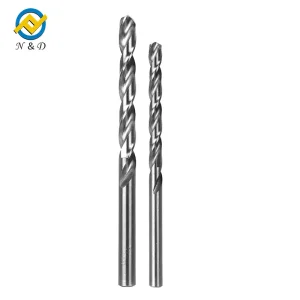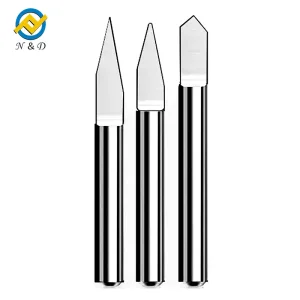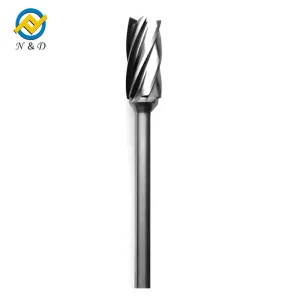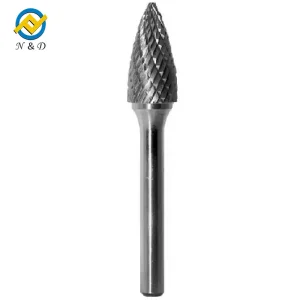
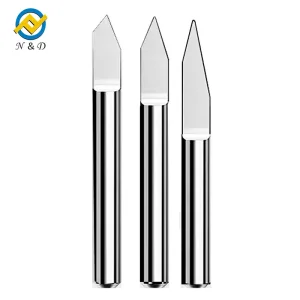
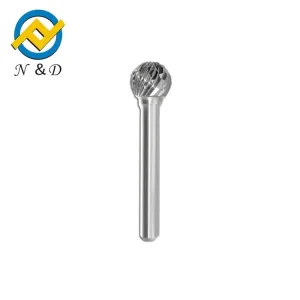
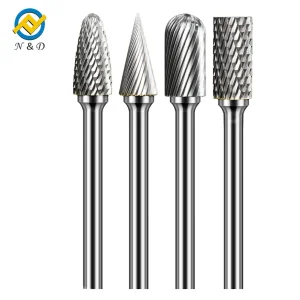
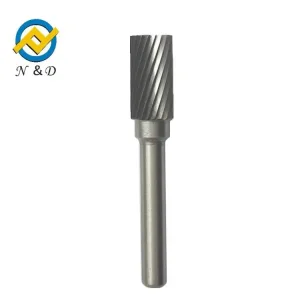
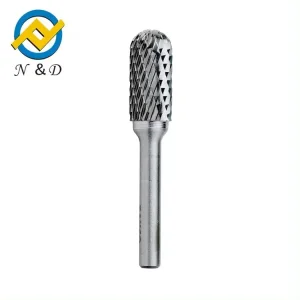
In high-precision machining, custom tungsten carbide milling bits stand as the gold standard of tool integrity. Unlike standard carbon or high-speed steel alternatives, cemented tungsten carbide is an engineered matrix combining hard transition metal carbide grains (Tungsten Carbide, WC) with a ductile metallic binder phase (typically Cobalt, Co). This specific combination forms a material class characterized by extreme hardness, immense compressive strength, and high thermal stability. The physical properties are regulated at the microscopic level: by reducing the average WC grain size to the sub-micron or ultra-fine regime (typically between 0.2 and 0.8 microns), we dramatically increase the available grain boundary area. According to the Hall-Petch relationship, this micro-structural refinement substantially enhances the hardness without degrading the transverse rupture strength (TRS).
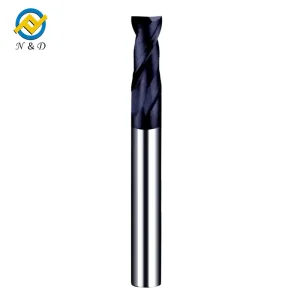
Beyond material composition, custom geometry acts as a major performance differentiator. CNC milling tools operate under violent mechanical forces and extreme heat generation. Advanced manufacturing techniques utilize unequal index spacing and variable helix designs. By fluctuating the helix angle from 35 degrees to 38 degrees across the flutes, we introduce phase-shifted force profiles during cutting. This configuration prevents structural harmonics—commonly known as chatter—from reaching the self-excitation frequency of the workpiece. Consequently, machining stability increases, allowing operators to scale up speeds, feeds, and depths of cut. Achieving this delicate structural balance requires a deep understanding of chip-formation mechanics, finite element analysis (FEA), and high-precision CNC tool geometry fabrication.
Utilizing WC grain matrices below 0.6 microns. This structure ensures maximum thermal resistance and edge retention during aggressive dry milling runs in hard metals.
Finely tuned cobalt concentrations (from 6% to 12%). This optimization balances core impact toughness with surface wear resistance for varying industrial applications.
Unequal flute divisions designed to disperse mechanical resonance, eliminating surface chatter and extending the structural lifespan of the tool and machine spindle.
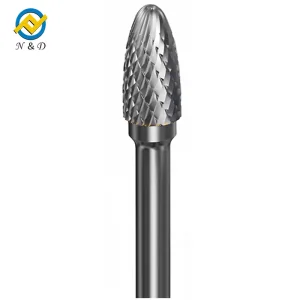
Modern global manufacturing demands supply chain networks that are highly responsive, resilient, and optimized for cost efficiency. Procurement of industrial tooling like solid carbide end mills, twist drills, and tree-shape rotary burrs is no longer treated as a simple operational expense. Instead, it is approached as a strategic initiative. As automotive production lines shift toward lightweight aluminum structures and high-strength steels, and aerospace factories scale up titanium machining, the physical consumption of rotary tooling has risen significantly. B2B procurement professionals must balance immediate cost containment with long-term operational performance.
By partnering directly with a primary manufacturer, global distributors and industrial end-users eliminate intermediary markups and gain access to dedicated engineering support. A direct-factory procurement model ensures strict control over chemical metallurgy, micrograin sizing, and spatial tolerances. Furthermore, direct manufacturing relationships provide supply security during raw material fluctuations. Tungsten ore reserves are concentrated in specific regions, making supply chains susceptible to disruptions. A stable factory partner with direct access to refined Ammonium Paratungstate (APT) ensures stable material pricing and uninterrupted production schedules for high-volume contracts.
Additionally, direct factory collaboration supports custom prototyping workflows. Instead of selecting standard catalog tooling that offers suboptimal performance, industrial buyers can supply CAD designs directly to our engineers. Within 48 hours, customized flute geometries, specialized PVD coatings (such as AlTiN or TiAlN), and modified shank tolerances can be engineered, tested, and pushed to active production. This agility is a significant advantage for Tier 1 aerospace suppliers, medical component manufacturers, and mold-making workshops operating under tight production schedules.
Solid carbide tooling must perform reliably across a wide range of industrial applications, each presenting its own mechanical and thermal challenges. Machining superalloys like Inconel or Hastelloy in aerospace applications generates intense heat at the cutting zone, requiring specialized tool geometries and advanced coatings. In automotive engine block production, tools must withstand continuous cyclic loads without suffering catastrophic failure. A one-size-fits-all approach is insufficient for modern high-performance manufacturing.
Our application engineering addresses these specific issues by developing customized tool solutions:
Features thick core geometries and high-helix configurations, combined with PVD AlTiN coatings, to maximize thermal insulation and ensure effective chip evacuation.
Utilizes ultra-smooth flutes and Diamond-Like Carbon (DLC) coatings to prevent workpiece material from adhering to the tool's cutting edge (built-up edge, BUE).
Designed with reinforced cutting edges and sub-micron carbide grades (hardness >65 HRC) to withstand abrasive wear during high-speed dry machining.
Every custom milling bit is manufactured to rigorous standards, utilizing advanced metallurgy and state-of-the-art multi-axis CNC grinding systems to ensure consistent performance.

Tungsten carbide, cobalt, and rare metal powders are mixed in an aviation gasoline medium to achieve a highly homogeneous distribution.

The slurry is dried in a controlled atmosphere, removing the solvent to produce highly uniform, spherical granules ready for pressing.

High-pressure uniaxial or isostatic pressing molds the powdered material into dimensionally precise green compact blanks.

Blanks undergo vacuum sintering combined with high pressure (Sinter-HIP) at temperatures up to 1450°C, eliminating micro-voids.

Using advanced 5-axis CNC grinding machines, the sintered rods are ground with high-precision diamond wheels to form custom geometries.

Every batch is subjected to rigorous laser inspection, assessing flute profiles, shank runout, and surface finish tolerances.

Founded in 2004, our company is a leading manufacturer of tungsten carbide products, specializing in the production of high-quality carbide materials. Headquartered in Guanghan, Sichuan Province, China, we have become an industry leader, serving a wide range of industries including mining, construction, oil and gas, and manufacturing. Our commitment to excellence and innovation allows us to expand our business and meet the needs of our customers around the world.
As a company with 120+ dedicated employees, we pride ourselves on providing quality products that meet the diverse needs of our customers. Our team consists of experienced professionals who are well versed in the intricacies of tungsten carbide manufacturing, ensuring our products meet the highest standards of precision and durability. Through continued investment in research and development, we strive to be at the forefront of technological advancement, allowing us to provide our customers with cutting-edge solutions.
The field of tungsten carbide tooling continues to evolve, driven by demands for higher machining efficiency and the challenges of newly developed composite materials. Our technical roadmap focuses on three main engineering initiatives: nanostructured carbide grains, advanced gradient sintering, and eco-friendly manufacturing.
Nanostructured carbide grains represent the next phase in carbide development. By reducing grain sizes to below 200 nanometers, we can produce tool substrates that offer both high mechanical hardness and excellent fracture toughness. This combination is particularly beneficial for micro-milling applications, such as those found in medical electronics and high-density semiconductor manufacturing, where traditional micrograin carbide is prone to edge chipping.
Gradient sintering technology is also changing how solid carbide tools are manufactured. By controlling carbon activity during the Sinter-HIP process, we can create a ductile, cobalt-rich outer layer on the tool's core while maintaining a hard, wear-resistant exterior. This structural design helps prevent cracks from propagating inward, extending tool life in demanding, high-impact milling operations.
Additionally, our development efforts focus on sustainable and eco-friendly manufacturing. Using energy-efficient vacuum furnaces and closed-loop recycling processes for cobalt and tungsten powders helps reduce the environmental footprint of our operations while maintaining consistent quality standards. This commitment aligns with our goals of delivering high-performance tooling that supports sustainable industrial manufacturing.
Operating as a global manufacturer requires strict adherence to international quality standards and robust compliance frameworks. Our manufacturing facility in Guanghan operates under a strict ISO 9001:2015 Quality Management System. We track every batch of raw material from the mine to the finished product, ensuring full traceability.
Our raw material sourcing complies with the Conflict-Free Smelter Program (CFSP), ensuring that all tungsten and cobalt are sourced from ethically verified mines. Furthermore, our finished tooling conforms to European REACH and RoHS regulations, certifying that they are free of hazardous substances.
To support our clients globally, we have established localized logistics and technical support channels. Our customer service teams assist B2B buyers with customs clearance, shipping documentation, and localized warehousing, helping to minimize lead times for critical tooling.
Standard carbide grades feature a larger grain size (typically 1.5 to 3.0 microns), offering good impact resistance but lower overall hardness. Micrograin and sub-micrograin carbides utilize grain sizes below 1.0 micron. This significantly increases hardness and edge retention, making them ideal for high-speed machining and working with hard materials.
Cobalt acts as the binder in tungsten carbide tooling. Lower cobalt content (around 6%) increases hardness and wear resistance but reduces impact toughness. Higher cobalt content (around 12%) improves structural toughness and shock resistance, making the tool less prone to chipping during interrupted cuts or heavy milling loads.
Sinter-HIP (Hot Isostatic Pressing) combines heat and high-pressure argon gas inside the sintering furnace. This process compresses the carbide matrix and eliminates internal micro-voids, increasing the Transverse Rupture Strength (TRS) by 20% to 30% compared to conventional vacuum sintering.
Yes. We offer customized PVD and CVD coatings tailored to specific workpiece materials. Options include AlTiN (Aluminum Titanium Nitride) for dry machining of steels, DLC (Diamond-Like Carbon) for non-ferrous metals like aluminum, and CrN (Chromium Nitride) for plastics and copper alloys.
Upon receiving your CAD drawings or workpiece specifications, our technical team evaluates the geometry and provides a tooling blueprint within 24 to 48 hours. Once the design is approved, custom manufacturing and coating are typically completed within 10 to 15 business days, depending on batch volume.
 N&D Carbide