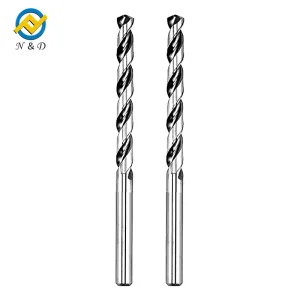
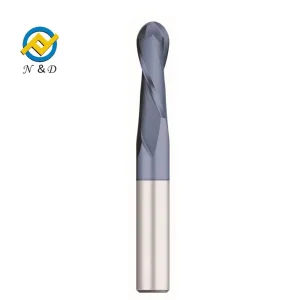
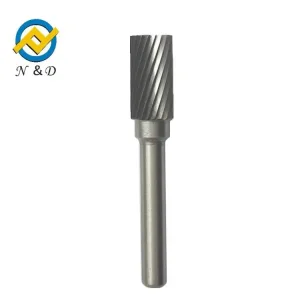
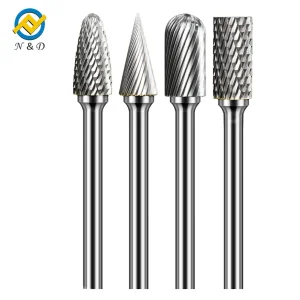
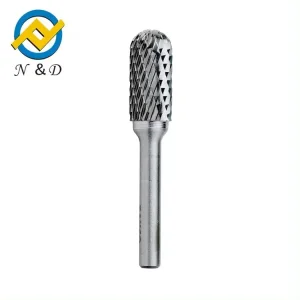
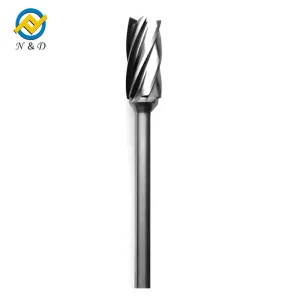
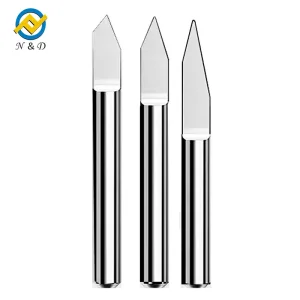
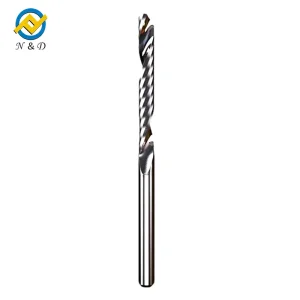
In modern industrial high-speed machining (HSM), tool failure is heavily driven by localized thermal load and stress concentration. While a classic sharp-edged square end mill provides clean 90-degree internal fillets, its sharp corners represent a classic geometric point of weakness. Under intense cutting forces, the sharp edge bears the brunt of mechanical shock, leading to micro-chipping, structural degradation, and catastrophic failure.
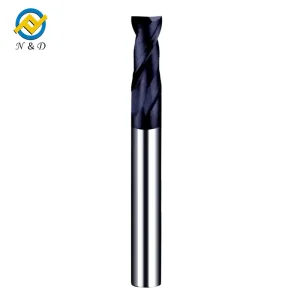
Introducing a precise Corner Radius (commonly designated as rϵ) distributes the cutting force along a toroidal arc rather than a singular focal point. This geometric transition diminishes the stress concentration factor (Kt) drastically. By dispersing heat generation and mechanical loading over a wider arc, custom square end mills with corner radii achieve up to 300% longer tool life while permitting significantly higher chip loads and feed rates in hardened steels, titanium alloys, and nickel-based superalloys.
For custom manufacturing facilities and global industrial buyers, seeking the optimal balance between a sharp shoulder requirement and maximum allowable tool radius is key to cost reduction. Working directly with custom factories allows companies to request accurate quotes on highly specialized corner radius end mills engineered for specific workpiece materials, hardness grades (ranging from HRC 45 to HRC 68), and chip evacuation profiles.
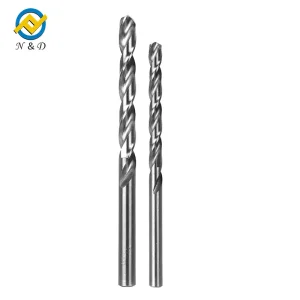
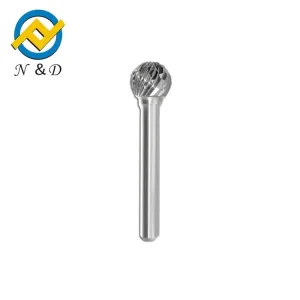
Tungsten carbide (WC-Co) continues to dominate the high-performance tooling industry due to its superior Young’s modulus, hardness, and thermal conductivity. The commercial demand for precision rotary burrs, twist drills, and solid carbide end mills is deeply tied to regional industrial clusters across North America, the European Union, and East Asia. Understanding supply chain dynamics and localized manufacturing nodes is essential for international procurement teams aiming to optimize their global tooling sourcing strategy.
Our production headquarters, located in the prominent industrial hub of Guanghan, Sichuan Province, China, benefits from the region's abundant natural mineral reserves and specialized technical talent pools. Sichuan and Hunan provinces together form one of the world's most advanced research and manufacturing ecosystems for tungsten carbide technologies. By integrating local metallurgy with modern CNC manufacturing, factories like ours deliver a highly optimized supply chain that seamlessly exports advanced solid carbide twist drills and custom corner radius end mills directly to partners worldwide.

We blend ultra-fine tungsten carbide powder, binder cobalt, specific rare metal dopants, and alloy grinding media in a protective environment of aviation gasoline. This ensures maximum homogeneity of the material matrix.

The homogenized slurry is spray-dried to evaporate the solvent carrier, adding a dynamic organic binder (ginseng gum) to construct ready-to-press granules with high density and excellent flowability.

Utilizing high-precision hydraulic molds, the powder is uniaxially or isostatically pressed into green blanks. Strict dimensional control is maintained to accommodate uniform shrinkage during sintering.

Blanks undergo hot isostatic pressing (HIP) sintering at temperatures above 1,400°C. The intense pressure removes residual micro-porosity, increasing density to near-theoretical levels and maximizing mechanical strength.

Sintered carbide blanks are ground using advanced 5-axis CNC grinding machines. We apply highly precise corner radius geometry and flawless tooth-opening cutting under continuous oil cooling.

We execute exhaustive quality inspection on every batch, verifying structural indicators, helical tooth profiles, and chemical compositions via laser scanners to guarantee 100% compliance with ISO standards.
The performance of a custom square end mill corner radius is deeply influenced by two fundamental elements: the microstructural grain size of the solid carbide substrate and the chemical formulation of its physical vapor deposition (PVD) wear-resistant coating.
Submicron and Ultrafine Grain Substrates (0.4μm - 0.8μm): Large grain structures exhibit high toughness but fail to maintain razor-sharp grinding precision along the corner radius. By deploying submicron particles, the tool retains immense structural toughness, preventing premature edge degradation under heavy shearing loads.
Cutting-Edge Protective Coating Technologies: Our custom end mills can be coated with advanced thin-films depending on application profiles:


Founded in 2004, our company has emerged as a premier globally integrated manufacturer of solid tungsten carbide tools. Headquartered in Guanghan, Sichuan Province, China, we operate state-of-the-art facilities dedicated to engineering high-precision solutions that empower sectors ranging from heavy mining, oil & gas, infrastructure development, to advanced aerospace manufacturing.
With an experienced workforce of over 120 dedicated tooling professionals, our engineering core centers on the synthesis and machining of tungsten carbide blanks and finished cutters. We prioritize research and development, routinely collaborating with materials science institutions to push the boundaries of extreme-wear resistance. Over the past two decades, we have established robust delivery channels across more than 60 countries, earning extensive praise for quality consistency and technical technical customer support.
Tooling requirements vary intensely depending on local industry setups. As a flexible custom factory, we analyze regional engineering challenges to offer optimized quotes tailored for direct localized use cases:
Large structural aircraft frames milled from solid titanium (Ti-6Al-4V) blocks generate immense heat. A custom 4-flute square end mill featuring a 1.5mm - 3.0mm corner radius distributes mechanical impact and thermal shock along a wider radius, preventing premature catastrophic tool breakage during complex deep pocketing operations.
Automotive hot stamping dies are crafted from hardened tool steels (H13, D2, HRC 55+). Standard sharp end mills wear instantly. Our specialized nACo-coated custom corner radius series handles high-feed roughing cycles efficiently, cutting cycle times by 35% and maintaining flawless dimensional accuracy across long production runs.
Small electronic enclosures and copper electrodes require extremely delicate micro-machining. We manufacture custom micro-diameter corner radius end mills down to 0.5mm with micro-radii (0.05mm - 0.2mm) to prevent burr formation while maintaining high surface finish quality (Ra < 0.2 μm).
Complete engineering freedom regarding dimensions, core flutes count (2-flutes to 8-flutes), custom helix angles (30°, 35°, 38°/41° variable helix), shank diameter variations, and unique corner radius geometries.
Sourcing ultra-pure cobalt and raw tungsten powders to maintain strict mechanical consistency. All materials comply with environmental regulations including REACH and RoHS directives.
Shorter lead times, professional technical guidance, and responsive after-sales consultations to ensure international buyers receive fast engineering solutions to streamline their assembly lines.
Secure export packaging utilizing anti-corrosive tool tubes, customized marking with individual laser etching, and dynamic multi-channel international freight coordination.
The next era of solid carbide end mills goes beyond simple structural dimensions. As automated machining systems evolve, custom tool manufacturers are adapting to support advanced cloud-connected factories. Two major technological trends are defining the future of industrial CNC tooling:
AI-Optimized Flute Dynamics and Simulation: Through generative design and finite element analysis (FEA), tools are designed with variable pitch and asymmetrical helixes to eliminate harmonic chatter. By adjusting flute spacing dynamically, cutting forces are balanced, allowing for unmatched surface finishes.
Tungsten and cobalt are critical global resources with limited geographical reserves. As a progressive manufacturer, we are integrating eco-friendly processes by establishing robust closed-loop recycling systems. Utilizing zinc-melt and chemical digestion recovery protocols, spent carbide tools are reprocessed back into high-grade powders, reducing emissions by 40% while preserving extreme physical properties.
Additionally, advanced physical vapor coatings are transitioning from standard PVD formulas to multi-layered nanocomposite architecture. By layering nanoscale films of variable hard/soft matrices, custom square end mills can self-dampen cutting vibrations, presenting unprecedented tool life and processing accuracy.
A ball nose end mill features a fully hemispherical tip (radius equals half the tool diameter) designed specifically for 3D contouring and surface finishing. A corner radius square end mill features flat bottom geometry with small radiused corners (e.g., 0.5mm, 1.0mm). The flat bottom design enables faster metal removal rates on vertical shoulders and flat floor surfaces, while the radiused corners protect the tips from structural chipping.
They perform exceptionally well in abrasive and high-hardness workpiece materials. This includes ISO P (Steels), ISO M (Stainless Steels), ISO K (Cast Iron), and ISO S (Superalloys and Titanium). For non-ferrous applications like ISO N (Aluminum and plastics), they are highly beneficial to prevent wall gouging while maintaining sharp slot cutting profiles.
To receive an accurate and timely quote, please specify: exact cutting diameter, shank diameter, overall length (OAL), flute length (LOC), exact corner radius requirement (e.g., 0.5mm, 1.0mm, 1.5mm), number of flutes, desired coating type (AlTiN, nACo, or uncoated), and details regarding your primary workpiece material and hardness level.
Traditional symmetrical end mills can experience harmonic resonance during heavy cuts, leading to significant chatter. A variable helix design (e.g. alternating between 35 and 38 degrees) disrupts these vibrational frequencies, resulting in smoother operation, improved surface finishes, and reduced stress on the corner radius.

Exploring environmentally conscious industrial production methods. Discover how modern factories are incorporating green energy and powder recovery solutions into their production lines.
2024-09-29
Evaluating raw material volatility, energy prices, and geopolitical considerations, while mapping effective strategies for supply chain resilience.
2024-09-29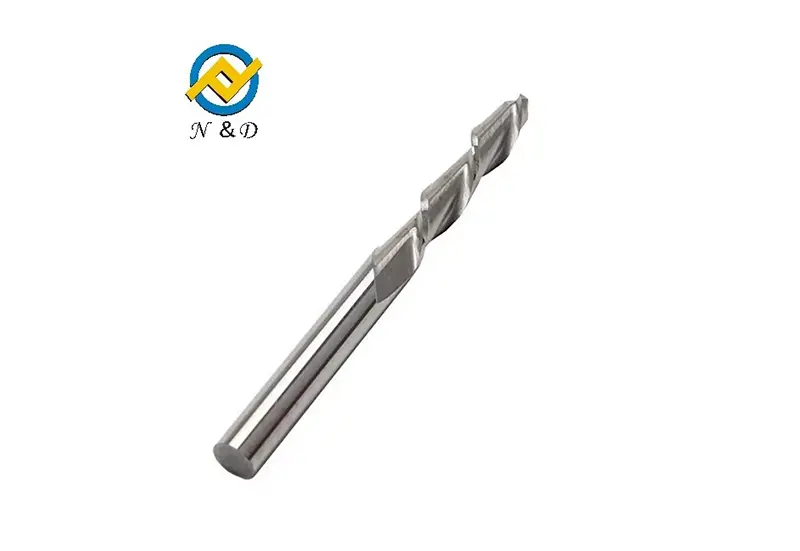
Analyzing how advanced tip geometries, micro-polishing, and multi-layered coatings are redefining drilling efficiency and chip removal speed.
2024-09-29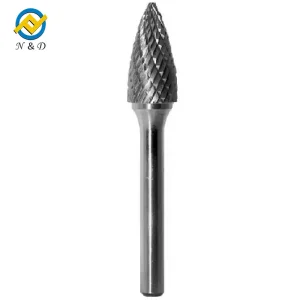
 N&D Carbide