Direct industrial solutions designed for ultra-high-speed material removal rates, extreme thermal resistance, and optimal geometry consistency.
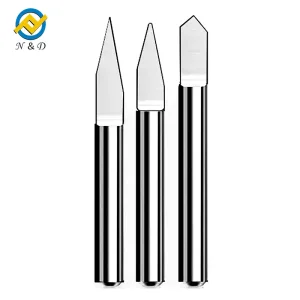
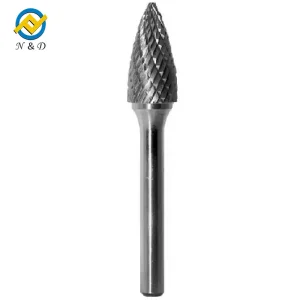
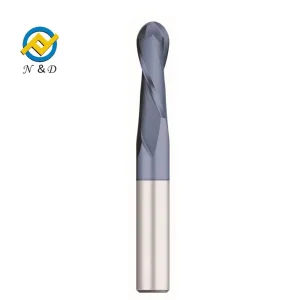
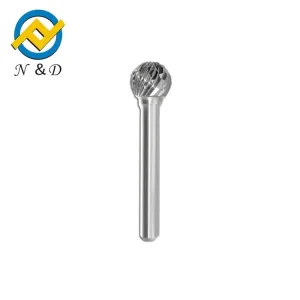
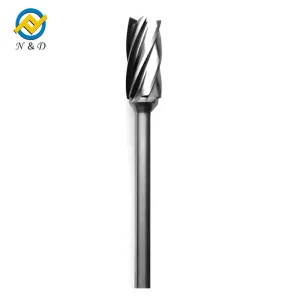
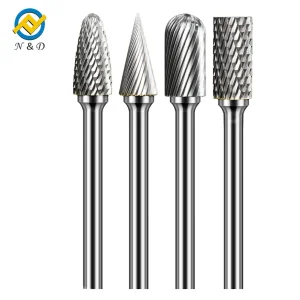
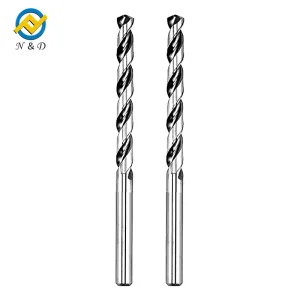
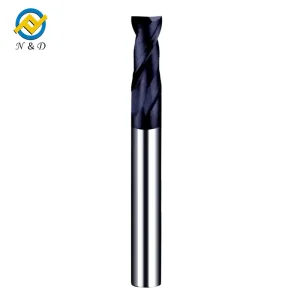
In modern high-speed machining (HSM) operations, tool deflection, high heat flux, and surface integrity represent the three critical failure vectors that engineers strive to mitigate. Solid Carbide Tapered End Mills stand out as the ideal geometric answer. Designed with a continuous taper that expands from the tip diameter to a robust shank size, these cutters provide unmatched stiffness. By optimizing the cross-sectional area dynamically towards the core, tapered mills reduce flexural strain by up to 60% compared to standard straight-shank variants under comparable side-load conditions.
As a leading custom developer and manufacturer, we recognize that standard off-the-shelf options rarely satisfy the exacting requirements of precision defense systems, high-temperature medical implants, or complex aerodynamic impellers. Through precise customization of the flute structure, helix angles, and substrate formulations, we provide critical *information gain* and structural solutions that optimize cycle times and drastically improve tool life.
Our tools utilize an ultra-fine grain tungsten carbide substrate (average grain size ≤ 0.5 μm) sintered with customized cobalt fractions. This molecular optimization creates an exceptional balance between high-temperature hardness and fracture toughness.
Advanced chemical vapor deposition (CVD) and physical vapor deposition (PVD) coatings, including customized AlTiN, AlTiCrN, and high-performance Diamond-Like Carbon (DLC) films, act as a defense layer against abrasive oxidation and heat conduction.
By altering variable helix designs and eccentric relief angles, we suppress regenerative chatter. This guarantees an exceptional surface finish and high geometric accuracy down to the micrometer level.
Custom solid carbide tapered end mills are key elements in complex industrial operations. High-precision industries rely on specific geometric configurations to process tough, exotic alloys without compromising dimensional tolerances.
In aerospace manufacturing, thin-walled structures and complex impellers machined from Ti-6Al-4V Titanium or Inconel require high-rigidity tooling. Our custom tapered end mills provide the structural strength needed to prevent deflection during deep pocketing and multi-axis blade profiling, protecting thin walls from vibration damage.
For high-volume sheet metal forming and die casting operations, tool-steel molds require draft angles to ensure clean part release. Standard straight end mills require secondary machining setups, but our custom tapered tools carve precise draft angles in a single pass. This directly cuts machining time by 30% to 50% and improves mold surface finish.
Biomedical components, such as orthopedic femoral components, bone plates, and custom prosthetics made of cobalt-chrome or PEEK, require tight dimensional control. Our miniature tapered end mills combine extreme core stability with sharp cutting edges to prevent micro-burrs and surface defects, ensuring compliance with strict healthcare requirements.
Through continuous innovation and rigorous quality control since 2004, we have established a reliable global supply network that delivers advanced carbide products to international markets.
The performance of any solid carbide end mill depends heavily on its raw tungsten carbide feedstocks. Our metallurgical facility, located in Guanghan, Sichuan Province, China, utilizes a highly controlled wet grinding and sintering process. By maintaining close ties with primary tungsten extraction networks, we ensure access to high-grade ammonium paratungstate (APT). This regional supply stability insulates our production lines from global commodity volatility, allowing us to offer consistent pricing, reliable delivery, and dependable custom manufacturing options to our clients worldwide.
To produce custom tools that meet strict international standards, we execute a comprehensive, 6-step manufacturing workflow under strict quality guidelines:
We blend raw tungsten carbide powder, cobalt binders, and micro-alloyed rare metals with aviation gasoline using heavy carbide ball mills. This process ensures absolute particle distribution and grain uniformity.
We dry the milled mixture under inert gas conditions, adding premium binders like ginseng gum while filtering out the aviation gasoline to prevent internal porosity and prepare a pressable powder.
The prepared powder is molded under high pressures inside specialized matrices, producing green state rods with a uniform density distribution that prevents cracking during subsequent stages.
The molded blanks undergo sintering in high-pressure vacuum ovens at temperatures up to 1450°C. The liquid cobalt phase binds the tungsten grains, achieving near-theoretical density and strength.
We utilize advanced 5-axis CNC grinding centers to shape the flutes, helix angles, and relief profiles. Continuous liquid coolant filtration keeps thermal stress to a minimum, ensuring sharp, crack-free edges.
Every batch undergoes strict inspection processes. We analyze mechanical properties, core concentricity, coating thickness, and edge radius down to the sub-micron level using advanced optical scanners.
To support global supply chains, our custom tooling services are fully aligned with localized industrial standards across North America, Europe, and Asia-Pacific. We guarantee that all customized carbide solutions meet strict safety, quality, and environmental regulations, ensuring smooth integration into your local production lines.
We strictly adhere to international environmental and safety standards, including EU REACH and RoHS regulations. By monitoring the extraction and processing of cobalt and tungsten, we guarantee that our products are free from conflict materials and hazardous substances. In addition, our manufacturing facilities operate under certified ISO 9001:2015 Quality Management Systems to ensure consistent traceability and reliable tool performance.
Tungsten and cobalt are valuable raw materials with a significant environmental footprint. To support modern ESG directives, we offer a dedicated carbide recycling and buyback program. We help our clients collect and return worn-out solid carbide tools to be processed in our recycling facility, reducing raw material waste and lowering carbon footprints without compromising product quality.
As manufacturing demands evolve towards higher automation and faster cycle times, solid carbide tooling must advance accordingly. Our engineering team is focused on developing next-generation solutions to meet these challenges:
We are integrating advanced finite element analysis (FEA) and machine learning models to simulate chip evacuation, thermal distribution, and structural stress. This allows us to optimize tool geometries for specific materials before producing physical blanks, minimizing trial-and-error cycles for our customers.
Our research into next-generation multi-layer nano-crystalline coatings aims to improve tool performance in dry machining environments. By alternating nanometer-scale layers of high-hardness nitrides, we are creating barriers that can withstand working temperatures up to 1100°C.
To reduce vibrations during high-depth milling of hard alloys, we are designing tapered end mills with variable-index flute spacing and variable-helix geometry. These advanced designs break up harmonic vibrations, providing excellent surface finishes even on complex 5-axis aerospace cuts.
Below, our technical team answers key questions about selecting, optimizing, and utilizing tapered cutting tools in high-performance machining environments:
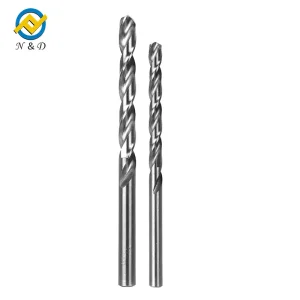
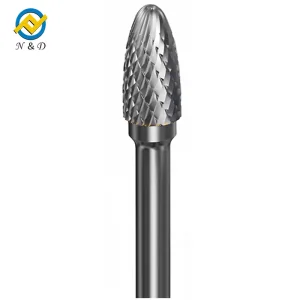
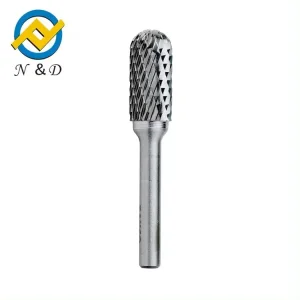
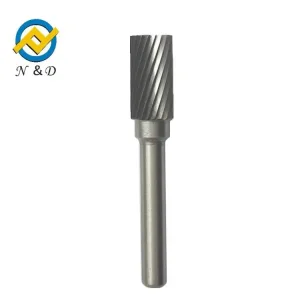
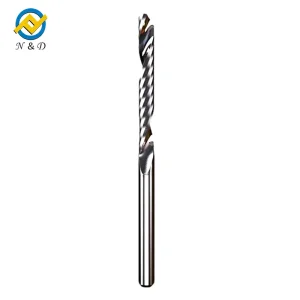
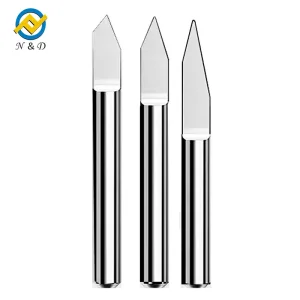
Discover our full line of high-performance tooling options, including rotary burrs, twist drills, and engraving tools designed for modern industrial manufacturing.
 N&D Carbide