The Evolution of Subtractive CNC Machining and Precision Solid Carbide Technologies.
In today's hyper-competitive global manufacturing landscape, precision is no longer a luxury; it is the fundamental benchmark of viability. As a premier Custom Slot Drills And End Mills Manufacturer & Factory, our company stands at the intersection of material science breakthroughs and cutting-edge industrial execution. With high-speed machining (HSM) pushing CNC mills to their mechanical limits, the requirements for tools that can resist extreme thermal stress, prevent premature chipping, and achieve unparalleled surface finish have grown exponentially.
This engineering whitepaper covers the comprehensive dynamics of tungsten carbide slot drills and end mills, tracing how micro-grain substrates, cobalt binder optimizations, and sophisticated geometry customisation redefine productivity. Our manufacturing plant in Guanghan, Sichuan Province, leverages over two decades of metallurgical research to deliver cutting-edge products that mitigate tool deflection, reduce thermal degradation, and optimize chip removal rates across challenging alloys globally.
Decoding geometric design variations for axial plunging, ramping, and peripheral milling operations.
While often grouped under the umbrella term of "milling cutters," slot drills and end mills serve highly distinct architectural and kinematic purposes within a computer numerical control (CNC) environment. Understanding these differences is paramount to avoiding tool failure and maximizing operational throughput.
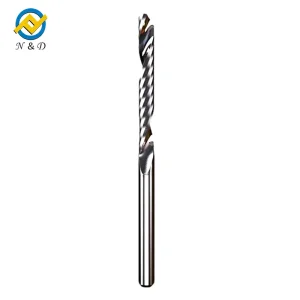
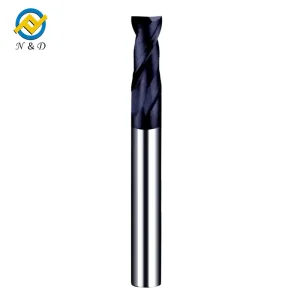
Slot drills are characterized primarily by having exactly two flutes. Crucially, the cutting edges of a slot drill are designed to meet at the center of the tool's face. This allows the tool to drill directly downward (axially plunge) into the solid workpiece material without requiring a pre-drilled pilot hole. Once the desired depth is reached, the tool can then transition immediately into lateral milling to carve out a keyway or slot. This dual-purpose mechanism is critical for machining pockets and keyways.
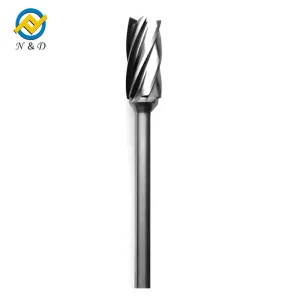
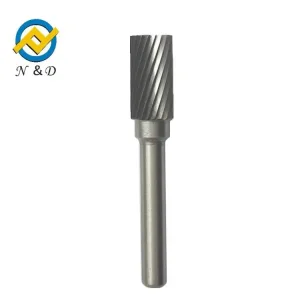
Standard end mills generally feature three, four, or more flutes. In typical configurations, their end-cutting teeth do not extend fully to the center axis of the tool. Consequently, they cannot plunge vertically into material. Instead, they require ramping, helical interpolation, or pre-drilled entry points. The multi-flute architecture significantly increases the core thickness of the tool, providing vastly superior structural rigidity. This allows for rapid material removal rates (MRR) during peripheral milling, profiling, and finishing operations.
Choosing the optimal configuration requires analyzing the specific mechanical properties of the target workpiece. Factors such as tensile strength, thermal conductivity, and hardness index (measured in HRC) dictate the ideal combination of flutes, helix angles, and substrate formulations to ensure optimal cutting performance.
Enabling complex manufacturing processes across aerospace, automotive, energy, and medical device fields.
Industrial manufacturing across the globe is undergoing rapid structural evolution. The growth of new-energy vehicles (EVs), next-generation commercial aircraft, and highly complex medical implants demands a revolution in tooling capabilities.
Machining tough superalloys such as Titanium (Ti-6Al-4V) and Inconel 718 requires carbide tooling with high thermal stability. Our custom tools feature specialized geometry to combat work hardening and minimize heat transfer, protecting critical spindle mechanisms from premature wear.
The mass production of complex EV motor enclosures and high-silicon aluminum castings requires optimized high-efficiency cutters. Specialized flute geometries prevent gumming, while single-flute and multi-flute carbide configurations maintain strict dimensional repeatability over millions of cycles.
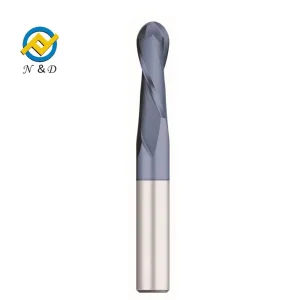
Creating bone plates, hip joints, and custom surgical instruments from biocompatible cobalt-chromium and 316L stainless steel demands ultra-precise ball-nose end mills. These tools must deliver a mirror-like surface finish directly from the CNC to reduce secondary hand-polishing requirements.
Globally, the consumption of solid carbide raw material has steadily risen. This shift reflects a move away from High-Speed Steel (HSS) tools and toward cobalt-reinforced tungsten carbide substrates, capable of operating at cutting speeds 3x to 5x higher than traditional steel alloys.
Ensuring microscopic homogeneity, uniform dimensional stability, and flawless cutting edge geometry in every batch.
Exploring how sub-micron grain sizing and advanced coatings enhance tool life and performance.
At the heart of every custom end mill is its metallurgical makeup. We utilize micro-grain and sub-micron tungsten carbide substrates (averaging grain sizes from 0.4μm to 0.8μm) with a highly optimized cobalt binder phase (ranging between 6% and 12%). This specific concentration delivers an optimal balance of hardness (measured in HV) and transverse rupture strength (TRS).
Without a high-performance coating, even the best carbide tools can degrade quickly under high speeds. We offer custom, advanced Physical Vapor Deposition (PVD) coatings designed to protect the underlying tool substrate:
Navigating global supply chain demands with strict regulatory compliance and regional engineering support.
Our global footprint is backed by localized technical support designed to keep your production lines running smoothly. We recognize that regional standards (such as **ANSI** in North America, **DIN** in Europe, and **JIS** in Asia) require strict adherence to dimensional and performance specifications.
To guarantee reliable supply chains, we maintain critical quality certifications:
Our manufacturing facility follows strict quality management systems, ensuring traceability from raw powder to the finished custom end mill.
We source non-conflict minerals, ensuring all materials used in production meet stringent environmental and safety regulations globally.
Our global sales and engineering departments provide prompt support to optimize your feed rates, speed settings, and custom tool profiles.
AI-driven tool design and sustainable closed-loop recycling systems.
The future of machining is defined by automation, smart tool tracking, and sustainable production. We are investing heavily in research and development to align our product roadmap with these emerging global trends:
Direct technical insights addressing key user queries, machining challenges, and application advice.
 N&D Carbide