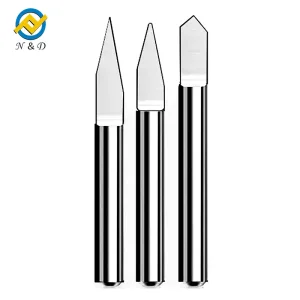
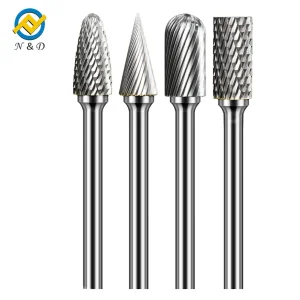
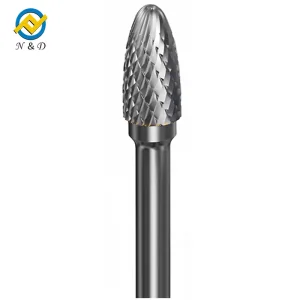
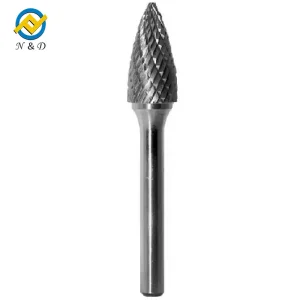
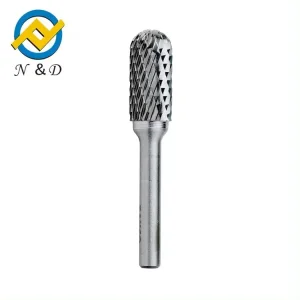
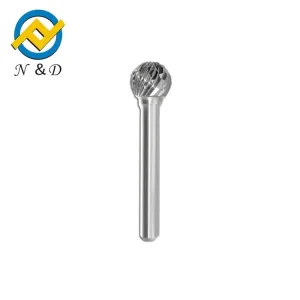
In the rapidly evolving landscape of advanced subtractive manufacturing, the Round Tungsten Carbide Bur (historically categorized as the Shape D sphere/ball geometry) represents a cornerstone for finishing, deburring, and volumetric micro-machining. Across high-stakes sectors such as aerospace engineering, medical implant processing, heavy automotive tool & die manufacturing, and global shipbuilding, the requirements for tolerances and material removal rates have transitioned from general standard tools to specialized micro-grain solutions.
Historically, general metal finishing relied heavily on standard high-speed steel (HSS) tools. However, modern metallurgical standards demand materials capable of sustaining structural rigidity under temperatures exceeding 1000°C. Cemented tungsten carbide (WC-Co) solves this challenge by blending ultra-hard tungsten carbide particles with a ductile cobalt matrix, resulting in a composite material that achieves Mohs hardness values next only to diamond. As a leading manufacturer based in Guanghan, Sichuan Province, China, we produce optimized geometries designed to reduce vibrational harmonics, improve chip evacuation, and maximize runout accuracy down to the sub-micron level.
According to recent global tool-holder and machine intelligence reports, the global market for customized tungsten carbide rotary burrs is witnessing a CAGR growth of 6.2%, driven primarily by the transition toward automated robotic deburring workcells. Robotic operations demand tools of extreme geometric consistency; manual hand-deburring allows for human compensation of vibration and tool drift, whereas automated multi-axis industrial robots require perfect concentricity and predictable wear behavior. Custom round burrs must be manufactured with specialized brazing layers, high-density grain sizes, and tailored coatings (such as AlCrN or TiAlN) to meet these rigorous mechanical constraints.

Our raw material formulas utilize ultra-pure, sub-micron tungsten carbide grains (0.4μm to 0.8μm size range). This tight micro-structural matrix prevents micro-chipping along the primary and secondary cutting edges, extending service life by up to 250% over standard commercial alternatives.
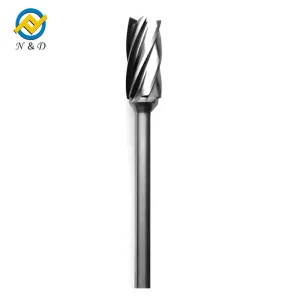
We tailor the helix angles and flute depths to match localized performance metrics: Double-Cut (Diamond Cut) styles for high-strength steel finishing, Single-Cut styles for rapid chip clearance on ductile alloys, and aggressive Alu-Cut geometries for non-ferrous applications.
Unlike lower-tier options prone to dangerous head-detachment, our proprietary copper-silver vacuum brazing process handles continuous thermal stress exceeding 750°C. This maintains perfect runout tolerances under maximum spindle loads.
When utilizing round carbide burs, the geometric shape presents a major technical challenge: rotational speed varies from the maximum diameter at the equator down to zero at the absolute pole of the sphere. This means cutting speed drops as you approach the tip.
Our design incorporates specialized variable-depth fluting toward the apex. This enables smooth chip flow even at slow linear cutting velocities, eliminating localized packing, which is the primary cause of bur cracking and early tool failure.
Modern CNC tool holding demands strict runout thresholds. Our custom-manufactured round burs undergo automatic laser concentricity checks to guarantee a runout metric under 0.02mm along the entire shank. This prevents excessive wear on expensive spindle bearings and ensures high, predictable feed rates in automated systems.

Blending tungsten carbide, cobalt, binder metals, and solvent with alloy media to create a homogeneous slurry.

Applying spray-drying and specialized filtering to isolate the custom binder powder before molding.

Compacting the fine powders under high-pressure die presses to form high-density green compact inserts.

Sintering the blank at temperatures up to 1500°C in HIP furnaces to achieve structural density.

Using advanced 5-axis CNC grinding machines to cut ultra-sharp teeth with dynamic geometric relief.

Testing with automatic optical sorting machines to verify tooth pitch, concentricity, and raw carbide composition.

At our Guanghan-based production plant, we recognize that every industrial project demands specialized cutting tools. Standard solutions often compromise cycle times and risk tool breakage when working with advanced aerospace superalloys or heavy weldments. We provide full-scope custom engineering, offering customized shank lengths (up to 300mm), special impact-resistant carbide grades, and high-performance PVD coatings.
By managing the entire supply chain internally—from raw material wet grinding to the final dynamic balancing checks—we give our OEM and distribution partners a competitive edge. Our tools deliver consistent material removal, high dimensional accuracy, and reliable quality batch after batch. Contact our application engineering team today to review your custom blueprints or optimize your tool geometries.
Titanium and nickel-based superalloys (such as Inconel) suffer from rapid work-hardening and chemical reactivity with standard cutting tools. This creates high heat at the tool-workpiece interface, causing standard rotary burrs to quickly wear down.
Our Solution: We supply a customized round burr with an optimized positive rake angle and a specialized multi-layered TiAlN coating. This coating forms a protective aluminum oxide layer at high temperatures, shielding the carbide core and ensuring stable tool life in automated deburring cells.
Soft, ductile metals like structural aluminum and copper are highly prone to "built-up edge" (BUE). The metal chips cold-weld inside the tool's flutes, rendering the cutting edges useless and leading to tool breakage.
Our Solution: We engineer high-clearance, single-flute aluminum-cut round burs. These tools feature mirror-polished flute faces and a wide helix angle, which ejects soft chips smoothly at speeds up to 35,000 RPM, preventing built-up edge and surface scoring.
The optimal operating speed depends on the bur's diameter and the hardness of the workpiece material. Typically, for a standard 12mm (1/2") round carbide bur, the recommended operating range is between 15,000 and 25,000 RPM. Operating below the recommended threshold will cause micro-chipping and vibration, while exceeding it creates excessive heat. For smaller diameters, such as 3mm (1/8") shanks, operating speeds can reach up to 35,000 RPM.
For stainless steel, a Double-Cut (diamond cut) round burr is highly recommended. The cross-cut fluting produces smaller, manageable chips and provides better operator control by minimizing tool pull. This configuration delivers an excellent surface finish on hard materials. Single-cut burs are better suited for rapid material removal on softer materials like brass, copper, or aluminum.
We ensure dynamic balance through three critical steps: First, our shanks are ground using Swiss-made CNC equipment to keep the runout below 0.02mm. Second, we use a high-temperature silver-copper vacuum braze joint that is verified by ultrasonic testing. Third, every batch undergoes strict rotational testing to ensure balance up to 40,000 RPM, preventing tool failure in demanding applications.
Yes. As a direct-to-market manufacturer, we supply custom shanks ranging from 50mm up to 300mm in length. We also design custom diameters and internal geometries to fit standard robotic tooling blocks and CNC tool holders, helping you optimize automated production lines.
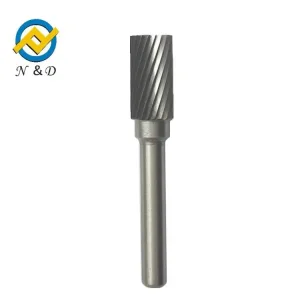
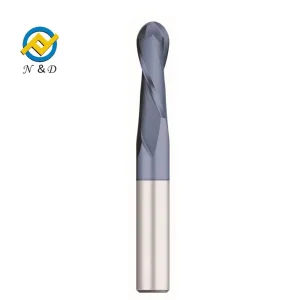
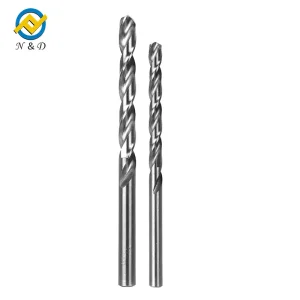

Sustainable development is reshaping heavy metallurgy. Discover how our new closed-loop powder recycling process minimizes raw ore dependencies while maintaining strict metallurgical purity and performance standards.

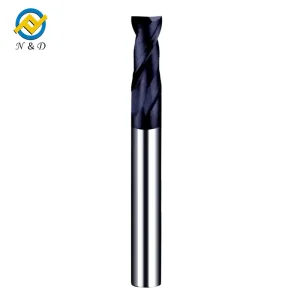
A detailed technical review of how sub-micron grain structures and cobalt binder ratios are evolving to meet the demands of aerospace titanium alloys and high-hardness tool steels.
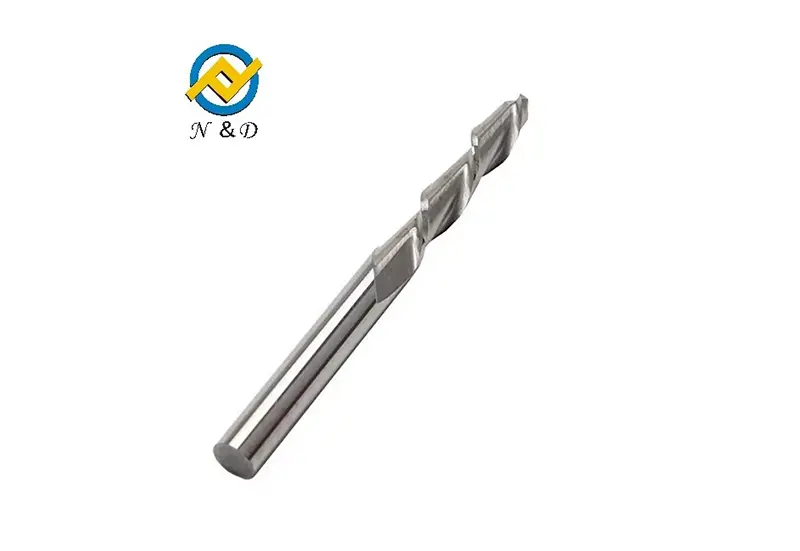
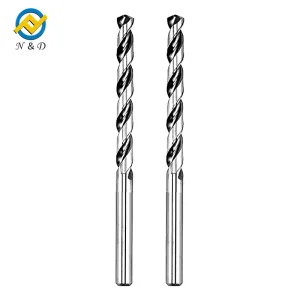
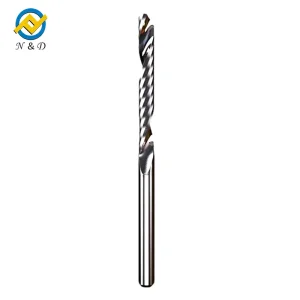
An in-depth look at how advanced point geometries and dynamic flute configurations improve high-speed steel drilling, delivering cleaner holes and faster cycle times.
 N&D Carbide