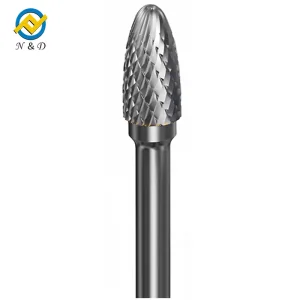
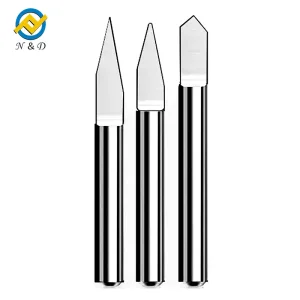
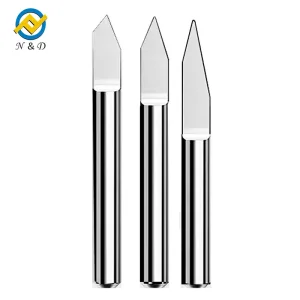
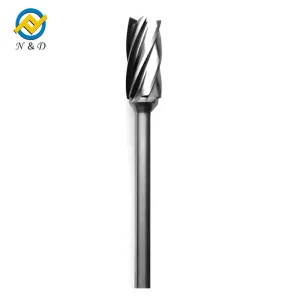
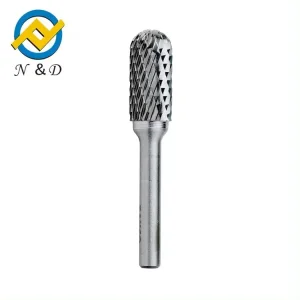
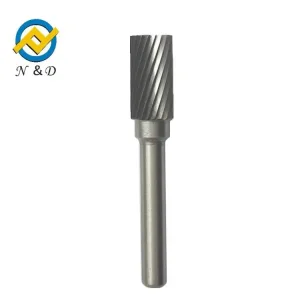
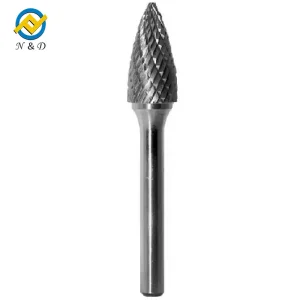
Explore our premium product series including Ball Nose End Mills, high-performance Twist Drills, Rotary Burrs, and precise CNC engraving cutters.
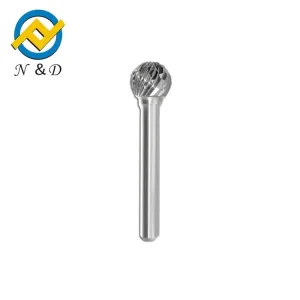
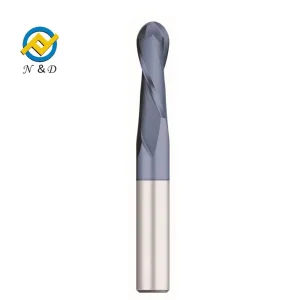
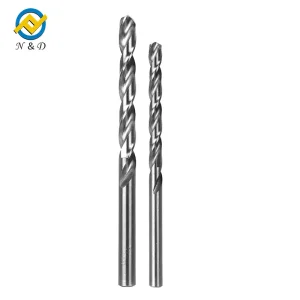
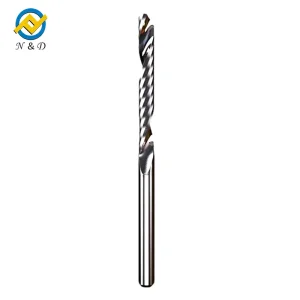
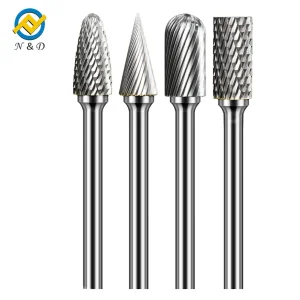
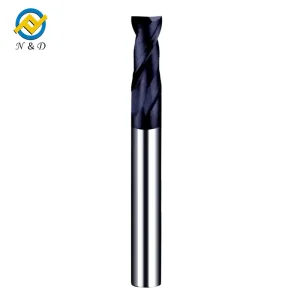
In modern industrial manufacturing, the pursuit of extreme productivity and precision has made custom solid carbide milling tools an absolute necessity. As global aerospace, automotive, die & mold, and heavy-machining fields demand tighter tolerances and faster cycle times, tool wear and structural deformation must be proactively minimized. Finding the ultimate balance between roughing end mills (designed for massive metal removal rates) and finishing end mills (engineered for flawless surface qualities) represents one of the most critical engineering challenges today.
At the center of high-performance milling is the material chemistry itself. Standard sub-micron tungsten carbide blanks no longer suffice when machining exotic superalloys or hardened structural steel. For this reason, professional manufacturing setups must leverage optimized carbide binders and advanced geometrical structures—such as variable-helix configurations and unequal flute indexing—to counteract vibration and harmonic resonance at extreme cutting speeds.
Unlike standard off-the-shelf tooling, Custom Roughing And Finishing End Mills provide unique, industry-specific value. They allow CNC operators to program deeper axial depths of cut ($a_p$) and radial width of cut ($a_e$) during roughing stages while facilitating micro-finishing passes with nominal tool deflection during final machining cycles. Incorporating specialized tool coatings (such as AlTiN, TiAlN, and Nanocrystalline Diamond) significantly lowers the friction coefficient at the interface, ensuring efficient chip evacuation and delaying the onset of crater and flank wear.
Standard rotary tools struggle with varying thermal stresses across different machining environments. Different industries require highly specialized cutting-edge geometries to guarantee performance and reliability:
Utilizing premium, sub-micron grade carbide blanks processed through hot-isostatic pressing (Sinter-HIP) to eliminate microscopic voids, ensuring consistent cobalt distribution.
Unequal indexing of the flutes dynamically shifts harmonic frequencies during high-speed machining, dramatically reducing tool chatter and improving surface finishes.
Utilizing high-performance multilayer coatings such as AlTiN or TiSiN to form a protective heat barrier, extending tool life at high-temperature processing zones.

Founded in 2004, our company is a leading manufacturer of tungsten carbide products, specializing in the production of high-quality carbide materials. Headquartered in Guanghan, Sichuan Province, China, we have become an industry leader, serving a wide range of industries including mining, construction, oil and gas, and manufacturing. Our commitment to excellence and innovation allows us to expand our business and meet the needs of our customers around the world.
As a company with 120+ dedicated employees, we pride ourselves on providing quality products that meet the diverse needs of our customers. Our team consists of experienced professionals who are well versed in the intricacies of tungsten carbide manufacturing, ensuring our products meet the highest standards of precision and durability. Through continued investment in research and development, we strive to be at the forefront of technological advancement, allowing us to provide our customers with cutting-edge solutions.
More About UsCombining Sichuan's rich raw material supply chain with German and Swiss five-axis precision grinding equipment, we run a tight, error-free manufacturing cycle.

Mix tungsten carbide, cobalt, rare metals, aviation gasoline and alloy balls under strictly regulated conditions.

Dry the mixture, add premium ginseng gum as a cohesive binder, and extract the aviation gasoline.

Precisely mold the formulated tungsten carbide powder using hydraulic compaction presses.

Sinter the tungsten carbide blanks inside computer-controlled high-pressure Sinter-HIP furnaces.

Employ advanced 5-axis CNC grinding centers to cut the precise flute and tooth patterns.

Perform strict inspections covering dimensions, runout, micro-hardness, and structural integrity.
As smart manufacturing takes hold, the global industrial sector is undergoing a transformation driven by high-speed, high-feed machining and additive manufacturing. Traditional carbide tooling must evolve to handle complex operations and adapt to changing environments. The tooling technologies of tomorrow are being designed and developed around three core technical milestones:
Future production lines will benefit from smart rotary tools embedded with micro-sensors. These sensors monitor temperature, torque, and vibration in real-time, feeding data directly to the CNC machine to adjust feeds and speeds dynamically, preventing catastrophic tool failure before it occurs.
Standard monolithic coatings are being replaced by multilayer nanocomposite structures. These coatings form an external layer that dynamically oxidizes into a stable lubricant film during high-speed machining, protecting the substrate against extreme friction and heat.
Advanced tool geometric designs are optimized to accommodate cryogenic cooling techniques (liquid nitrogen or high-pressure CO2). This cooling method enables dry or near-dry machining (Minimum Quantity Lubrication - MQL), offering environmentally friendly, cost-effective production without compromising tool life.
Purchasing managers at global engineering firms are shifting focus from the initial tool acquisition price to the total cost of ownership (TCO). A lower-cost end mill that fails early or causes workpiece damage increases the overall cost per component. A resilient, highly optimized supply chain is built on several key factors:
Discover the core competitive advantages that make us a trusted manufacturing partner for global engineering and procurement divisions.
We provide full-service customization support, from customized geometric drawings and material grade selection to exclusive laser engraving and branded packaging.
Our raw materials possess high hardness and red-hardness, retaining their structure and cutting edges under heavy heat loads and extreme cutting conditions.
We help CNC facilities minimize cycle times and tool swap intervals, directly reducing tool expenditure per machined component.
We provide full customs compliance documentation, robust logistics options, and dedicated technical customer service to ensure smooth cross-border shipments to Europe, North America, and Southeast Asia.
Get answers to common technical and operational questions regarding custom roughing and finishing end mill applications.
Browse our complete line of CNC cutting, drilling, and finishing solutions, all manufactured to strict international quality standards.
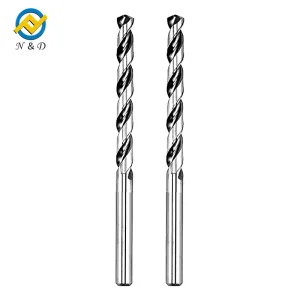
 N&D Carbide