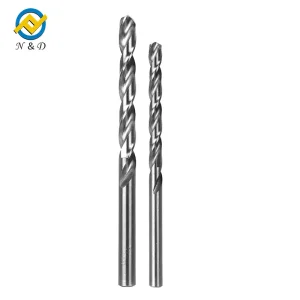
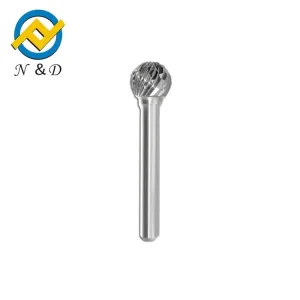
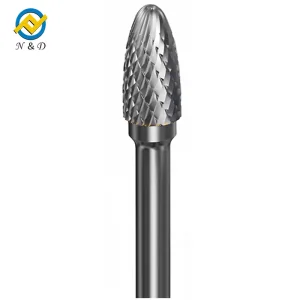
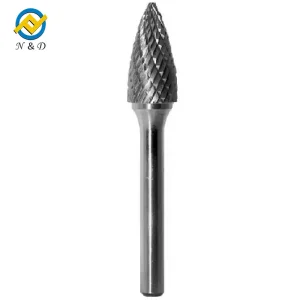
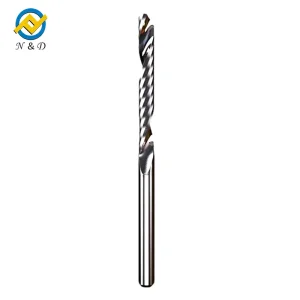
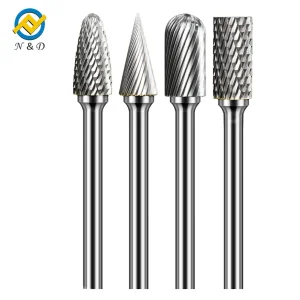
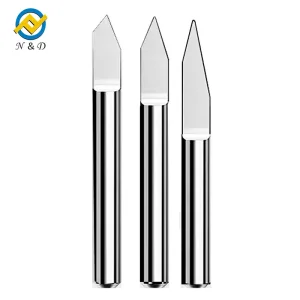
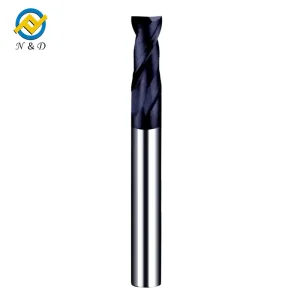
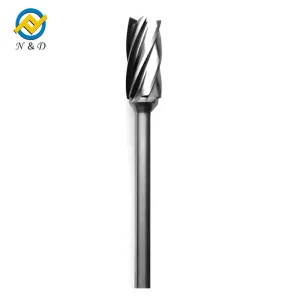
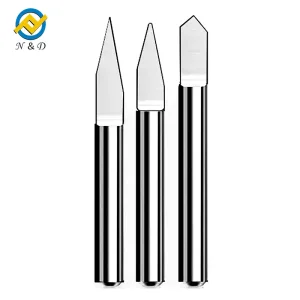
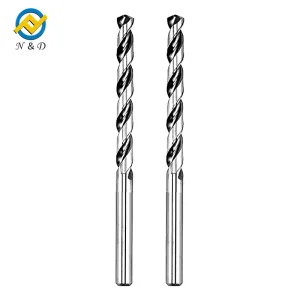
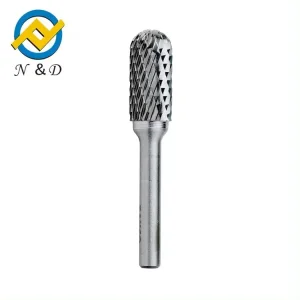
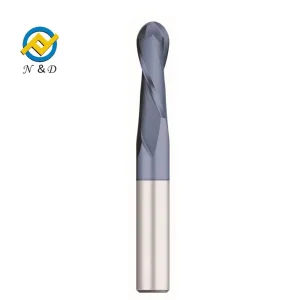
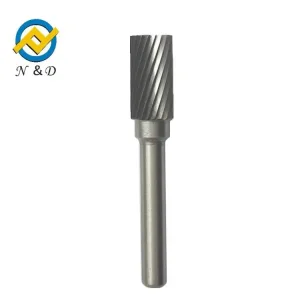
In the evolving landscape of global industrial manufacturing, Reduced Shank Carbide End Mills have transitioned from specialty tools to essential assets in high-precision workshops. A reduced shank design—where the shank diameter is smaller than the cutting diameter—allows machinists to use larger diameter cutters in standard tool holders or collets that would otherwise be too small. This geometric innovation provides an "Information Gain" in production efficiency, enabling more aggressive material removal rates without requiring expensive machine upgrades.
Global enterprises are increasingly seeking "Custom Reduced Shank" solutions to bridge the gap between heavy-duty milling and machine spindle limitations. This trend is particularly evident in the European and North American markets, where "Lights Out" manufacturing and high-speed machining (HSM) demand tools that offer both versatility and extreme durability.
Founded in 2004, our facility in Guanghan, Sichuan Province, leverages China's most robust tungsten supply chain. Sichuan is a hub for rare metal processing, allowing us to source premium sub-micrograin carbide rods at optimized costs. Our factory efficiency isn't just about speed; it's about integrated precision.


Mixing tungsten carbide, cobalt, and rare metals with aviation gasoline for molecular homogeneity.

Controlled evaporation and filtering to prepare the alloy mixture for molding.

High-pressure molding of the tungsten carbide powder into tool blanks.

HIP (Hot Isostatic Press) sintering to eliminate porosity and maximize density.

Advanced 5-axis CNC gear grinding for precise flute and shank geometry.

Comprehensive laser and ultrasonic inspection for tooth profile and content accuracy.
The procurement needs of global enterprises are shifting toward Total Cost of Ownership (TCO) rather than just the initial price. Reduced shank carbide end mills are now localized for specific industrial clusters:
Focus on high-cycle durability for engine block milling and transmission components.
Requirement for AlTiN coatings to handle high heat during Titanium alloy machining.
Need for micro-diameter reduced shank tools for surgical grade stainless steel.
Our Custom Pricelist service accounts for these variables, providing quotes based on grain size (0.4μm - 0.8μm), coating type, and custom shank-to-cutter ratios. This ensure that global purchasers receive a product that is perfectly tuned to their local machine fleet.
The primary advantage is the ability to use a larger cutting head with a smaller collet size, providing greater reach in deep cavity milling and allowing for the use of high-diameter tools on smaller CNC machines.
We use a combination of premium tungsten carbide blanks and 5-axis CNC grinding technology. Every tool undergoes a strict inspection process that covers tooth profile opening, carbide content, and surface finish (Ra) measurements.
Yes. As an OEM & ODM specialist, we provide tiered pricing based on annual volume, material specification, and custom geometry requirements. Contact our sales team for a formal quote.
Our carbide end mills are designed for high-performance cutting in stainless steel, alloy steel, titanium alloys, and high-hardness molds (up to 65 HRC depending on the series).
As a leading Reduced Shank Carbide End Mills Factory, we are committed to sustainable innovation. The evolution of tungsten carbide is not just about hardness; it is about addressing the challenges of environmental impact and resource scarcity. We are currently implementing recycling programs for used carbide tools and optimizing our sintering processes to reduce energy consumption by 15%.
Choosing the right manufacturer means choosing a partner who understands the intricacies of precision engineering. With over 20 years of experience and a global footprint, N&D Tungsten Carbide continues to set the standard for quality, durability, and technical superiority in the global cutting tool market.
 N&D Carbide