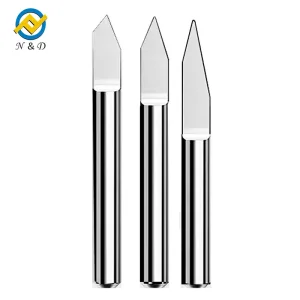
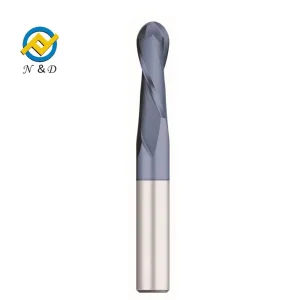
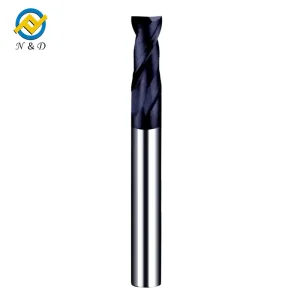
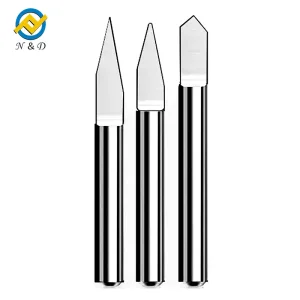
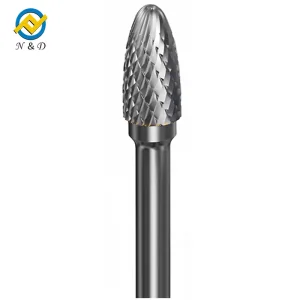
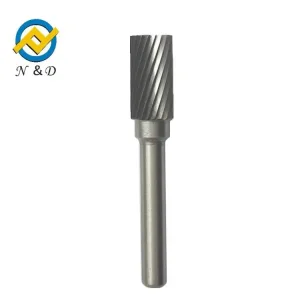
In the contemporary landscape of subtractive manufacturing, the demand for Miniature Ball End Mills has surged, driven by the rapid miniaturization of components in electronics, aerospace, and medical sectors. As a leading manufacturer, we recognize that micro-machining is not simply "machining made smaller"—it is a distinct engineering discipline requiring sub-micron grain tungsten carbide and specialized geometries to overcome the challenges of chip evacuation and tool deflection at high RPMs.
Traditional procurement often focuses solely on diameter and price. However, true Information Gain for engineers lies in understanding the synergy between substrate cobalt content and coating morphology. Our miniature tools utilize a nano-grain structure (typically 0.4μm to 0.6μm) which provides the necessary edge toughness to maintain a radius tolerance within ±0.002mm—a critical factor for mold and die finishing where surface integrity is paramount.
From Sichuan-based tungsten ore processing to final 5-axis CNC grinding, our supply chain ensures 100% material traceability and cost-efficiency.
We leverage German-imported WALTER and ANCA grinding machines to ensure that every miniature ball end mill meets global ISO standards for concentricity.
Our localized engineering team can move from custom design CAD to physical tool testing within 48-72 hours, significantly faster than Western competitors.
With 120+ dedicated employees and a massive production capacity, we offer tiered pricing that remains competitive without compromising high-precious quality.
The global cutting tool market is shifting towards High-Speed Machining (HSM) and Smart Manufacturing. Miniature ball end mills are at the forefront of this transition. Current trends include:
Machining complex cooling holes and turbine blade micro-geometries in Inconel and Titanium alloys using high-cobalt ball end mills.
Creating biocompatible surfaces on surgical instruments and implants where burr-free finishing is a non-negotiable requirement.
Finishing hardened steel molds (HRC 50-65) for lighting components and interior trim with superior surface Ra values.
Precision blending of tungsten carbide, cobalt, and rare earth metals in aviation gasoline to create a homogenous alloy base.
Advanced sintering at high pressure to eliminate micro-porosity, ensuring the highest transverse rupture strength (TRS).
Utilizing nano-precision grinding wheels to define the ball nose radius and helical flutes with micron-level accuracy.
Micro-honing and drag finishing to stabilize the cutting edge, preventing premature chipping during high-speed engagement.
Applying AlTiN, TiSiN, or DLC coatings via PVD (Physical Vapor Deposition) to enhance thermal resistance and tool life.
Using Zoller Genius 3 or Keyence digital microscopes to verify tooth profile, run-out, and coating thickness.
For procurement managers at Fortune 500 companies, reliability and "Information Gain" are key. You are not just buying a tool; you are buying a Machining Solution. We provide comprehensive documentation, including material safety data sheets (MSDS), certificates of compliance, and detailed tool-life expectancy data based on specific workpiece materials.
Whether you require a custom neck length for deep-cavity milling or a specific helix angle to manage chip flow in sticky materials like aluminum or copper, our ODM services provide the technical depth required to optimize your production floor.
Contact our engineering team today for technical support and personalized quotes for your unique machining challenges.
Request A Quote N&D Carbide