High-grade CNC tooling optimized for superior surface finish, longevity, and high speed machining operations.
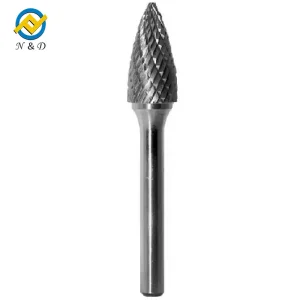
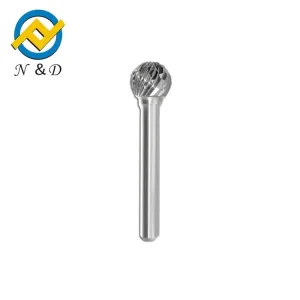
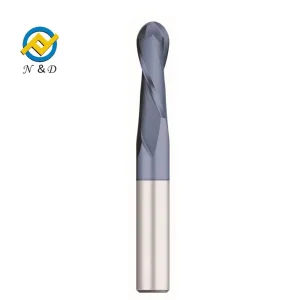
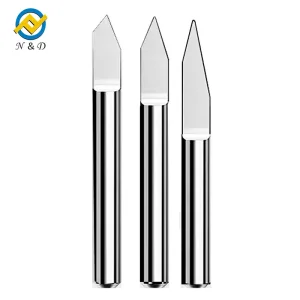
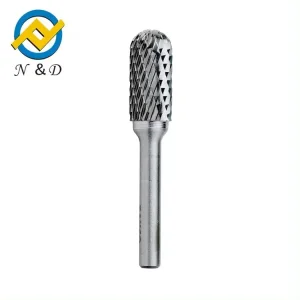
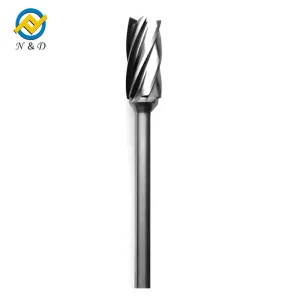
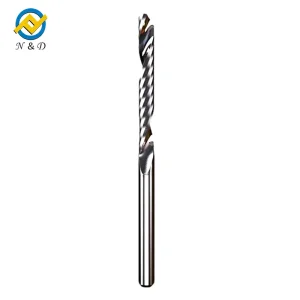
Executive Summary: As modern subtractive manufacturing processes shift toward high-efficiency, multi-axis, and ultra-precise deep cavity milling, standard end mills fail to meet structural stability demands. High L/D (Length-to-Diameter) ratios alter tool mechanics. Understanding deflection dynamics, variable core tapers, and premium submicron carbide substrates is crucial. This document serves as an engineering blueprint for procuring high-stability long reach milling cutters from China's advanced manufacturing clusters.
In deep cavity profile machining, tool deflection is the primary limiting factor for material removal rates (MRR) and surface integrity. Long reach milling cutters, defined as having an L/D ratio exceeding 5:1 (extending up to 20:1 in custom aerospace and mold-making applications), are subject to extreme bending moments. Deflection increases exponentially according to Euler-Bernoulli beam theory: deflection is proportional to the cube of the overhang length (L³).
To mitigate this deflection, custom long reach milling cutters utilize optimized core diameters, tapered necks, and premium micrograin tungsten carbide matrices. Under high-speed machining (HSM) conditions, a standard straight-neck tool will experience harmonic vibrations and chatter. Tapered necks distribute stress along the shank rather than concentrating it at the neck transition zone, increasing rigidity by up to 200%.
The global market for custom long reach cutting tools is experiencing rapid growth, driven by key manufacturing developments:
Aerospace Components: Modern airframes rely on monolithic structural components milled from single blocks of aerospace-grade titanium (Ti-6Al-4V) or aluminum (7075-T6). Accessing deep structural pockets without sacrificing tool rigidity is a common challenge. Custom long reach end mills with variable pitch and optimized clearance necks are essential for these operations.
Automotive & Injection Molds: The automotive sector requires complex injection molds for instrument panels, bumpers, and structural components. These molds feature deep ribs, steep draft angles, and complex cooling lines. Standard tools cannot reach the bottom of these cavities without interference from the tool holder, making long reach ball nose and bull nose end mills necessary.
Medical Industry: Precision tooling is required for machining high-alloy bone screws, knee joint prostheses, and cobalt-chrome dental implants. Long reach tools used in this segment must possess excellent submicron geometries and biocompatible coatings (such as DLC or CrN) to maintain sterile, burr-free surfaces.
The performance of long reach end mills is largely determined by their metallurgical composition. At our state-of-the-art facility in Guanghan, Sichuan Province, China, we use ultra-fine and submicron tungsten carbide powders with cobalt content ranging from 10% to 12%, depending on the target hardness.
A high-cobalt matrix provides the fracture toughness required to absorb high cyclic loads and shocks encountered during deep cavity milling, preventing sudden micro-chipping at the cutting edges. Conversely, submicron grain structures (< 0.6 μm) improve overall hardness and thermal resistance. When combined with modern multi-layer coating systems (such as AlTiN, nACo, or Titanium Silicon Nitride - TiSiN), these tools maintain their sharp cutting edge even at temperatures up to 900°C.
| Substrate Grade | Grain Size (μm) | Cobalt Content (%) | Hardness (HV30) | Transverse Rupture Strength (TRS) | Primary Application |
|---|---|---|---|---|---|
| Fine Grain (Standard) | 0.8 – 1.0 | 10% | 1600 | 3500 MPa | General carbon steels, alloy steels |
| Submicron Grain | 0.5 – 0.7 | 12% | 1750 | 4000 MPa | Stainless steel, titanium, aerospace components |
| Ultra-Fine Nano Grain | 0.2 – 0.4 | 10% | 1900 | 4200 MPa | Hardened die steel (>55 HRC), high-speed dry machining |
How specialized engineering choices solve deep-pocket clearance issues without causing vibration or tool breakage.
Standard helix angles generate uniform cutting harmonics that can lead to severe chatter. By varying the helix and index angle of each flute, the vibration frequencies are disrupted, allowing for stable machining even with large overhang lengths.
Tapering the neck of the cutter increases structural rigidity compared to standard straight-neck tools. The continuous, rigid taper neck shifts bending strain away from the cutting tip, maintaining tool runout within <0.003mm.
Balancing core thickness against chip evacuation room is critical. A thick core maximizes rigidity but restricts chip flow, while thin cores are prone to snapping. Our advanced CNC grinding profiles strike the perfect balance for deep-pocket applications.
Specialized physical vapor deposition (PVD) micro-coatings create an extremely hard barrier (up to 3300 HV) with high thermal stability, protecting the carbide tip from high-temperature friction and abrasive wear during high-speed machining.
Need a precise reach depth, special corner radius, or custom neck diameter to clear an obstruction? Our engineering department builds tailored tooling with custom neck drops matching your CAD/CAM cavity geometries.
Serving high-precision industrial sectors worldwide from our advanced production center in Guanghan, Sichuan Province, China.
Founded in 2004, our company has established itself as a leading manufacturer of high-quality tungsten carbide products. We specialize in producing carbide materials that deliver consistent performance under demanding operating conditions. Our headquarters are located in Guanghan, Sichuan Province, China, an area known for its strong industrial infrastructure and access to premium raw materials. From this location, we serve customers worldwide in the mining, construction, oil and gas, and aerospace manufacturing sectors.
Our team of over 120 dedicated professionals includes experienced engineers and metallurgy specialists who understand the complexities of tungsten carbide manufacturing. Through continuous investment in research and development and the implementation of advanced Swiss and German 5-axis CNC grinding systems, we deliver reliable solutions that help our customers maximize their machining efficiency.
Every long reach cutter goes through a rigorous six-stage production process to ensure high wear resistance and structural integrity.

Mixing tungsten carbide, cobalt, aviation gasoline, and alloy balls.

Drying the mixture, adding binder, and filtering out gasoline.

Molding the high-purity tungsten carbide powder under pressure.

Sintering the raw blank in HIP furnaces to achieve maximum density.

Precision flute cutting via state-of-the-art 5-axis CNC grinding machines.

Comprehensive laser and ultrasonic inspection of geometries and micro-hardness.
China's advanced CNC cutting tool sector relies on concentrated industrial clusters. Our factory in Sichuan Province benefits from geographic proximity to major raw material deposits and processing facilities, which reduces transport times and raw material costs.
This localized supply chain, combined with automated manufacturing techniques, allows us to maintain consistent product quality while reducing overall production lead times. Procurement teams benefit from streamlined logistics, reliable raw material sourcing, and competitive bulk pricing on custom tools.
Deep cavity milling applications are rarely identical, and standard catalog solutions can often lead to premature tool wear. Our OEM and ODM workflows are designed to address this by providing custom tool profiles tailored to specific application requirements:
Step 1: Application Analysis: Customers share their workpiece CAD files, material specifications (e.g., HRC hardness), and depth requirements.
Step 2: Simulation and Modeling: Our engineering team uses simulation software to design a matching tool profile, optimizing the taper neck, flute profile, and core diameter.
Step 3: Precision Grinding: Once approved, the tools are ground on our Swiss Rollomatic and German Walter 5-axis CNC machines.
Step 4: Advanced Coating: PVD coatings are selected to match the workpiece material, providing optimal heat resistance and tool life.
Stay informed about emerging manufacturing technologies, sustainable practices, and market dynamics.

As global demand for sustainable industrial manufacturing grows, our facility continues to incorporate energy-efficient processes and raw material recycling programs into our daily operations.

Review how modern tool manufacturers are addressing raw material cost fluctuations, global supply chain variations, and the increasing demand for ultra-precise micro-machining.
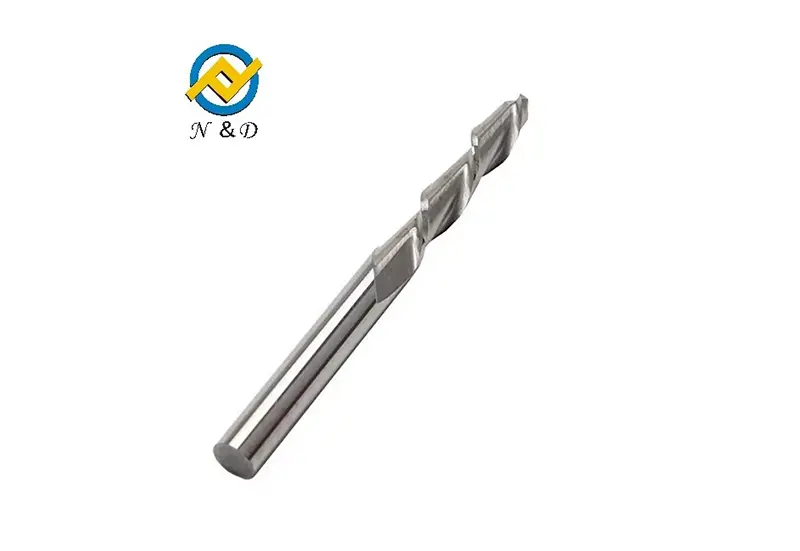
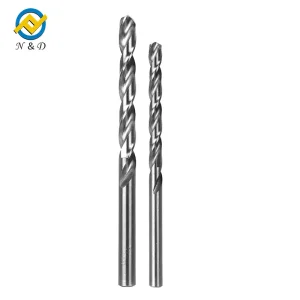
Modern tooling advancements have allowed us to design solid carbide twist drills with optimized chip flute geometries, helping operators improve throughput and cycle times.
Detailed engineering answers to help you select, configure, and operate long reach milling tools in deep cavity applications.
Precision carbide tools manufactured to strict dimensional tolerances, designed to deliver consistent performance across various CNC applications.
 N&D Carbide