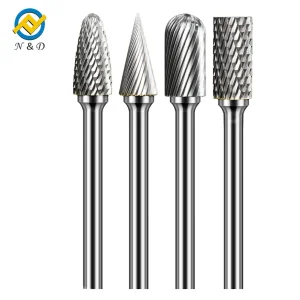
Custom Extra Long Carbide Burrs Manufacturer & Factory

High-Precision Rotary Tools Built for Demanding Deep-Cavity Machining, Aerospace Engineering, and Advanced Heavy Industry Solutions.

Product Showcase

Precision Solid Carbide Machining Solutions

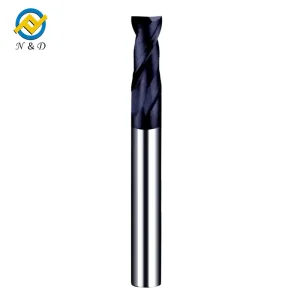
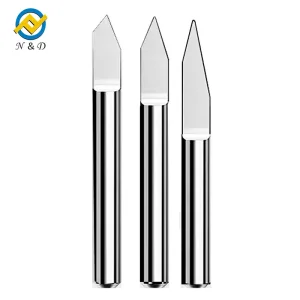
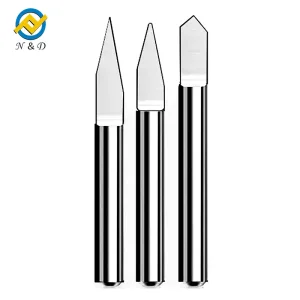
High-Quality Carbide CNC Cutter Engraving Tools

High-Quality Carbide CNC Cutter Engraving Tools

View Technical Details
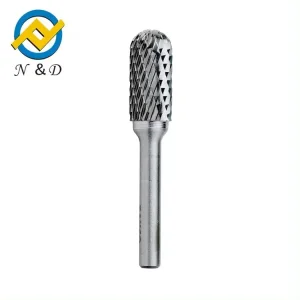
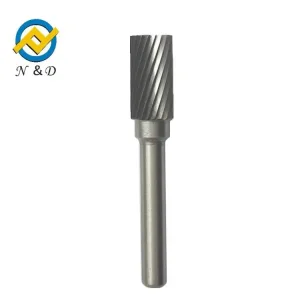
High-Quality N&D Tungsten Carbide Type A Cylinder Shape Rotary Burrs

High-Quality N&D Tungsten Carbide Cylinder Shape Rotary Burrs

View Technical Details
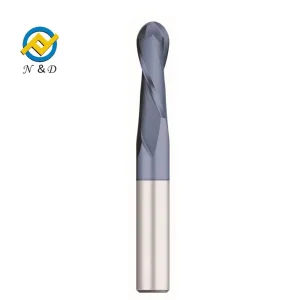
High-Quality Tungsten Carbide Ball Nose End Mill

High-Quality Tungsten Carbide Ball Nose End Mill

View Technical Details
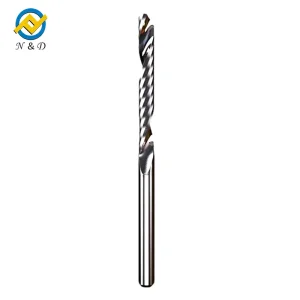
High-Quality N&D Tungsten Carbide Single Flute Spiral End Mill

High-Quality N&D Tungsten Carbide Single Flute Spiral End Mill

View Technical Details
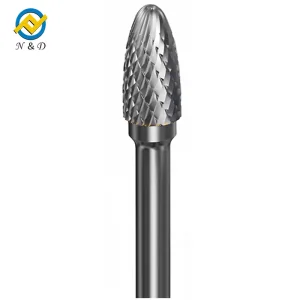
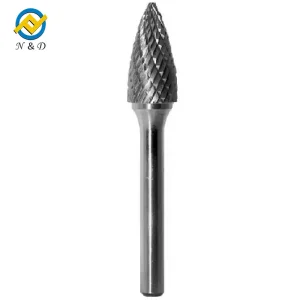
Tungsten Carbide Ball Nosed Tree Shape Rotary Burr Type F

Tungsten Carbide Ball Nosed Tree Shape Rotary Burr Type F

View Technical Details
Custom Tungsten Carbide Cutting Tool Engraving Bit for CNC

Custom Tungsten Carbide Cutting Tool Engraving Bit for CNC

View Technical Details
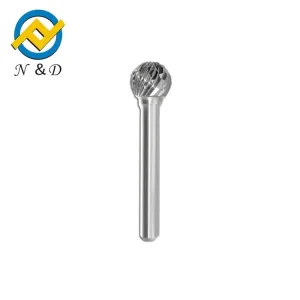
Custom Introducing N&D Tungsten Carbide Ball Shape Rotary Burrs

Custom N&D Tungsten Carbide Ball Shape Rotary Burrs

View Technical Details
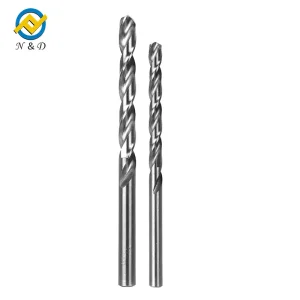
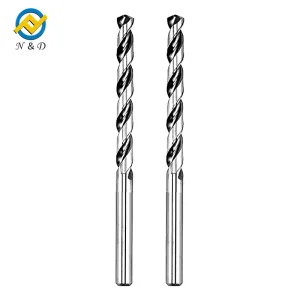
Solid Carbide Twist Drill Manufacturers

Precision Drilling Solution: Solid Carbide Twist Drill

View Technical Details

Understanding Extra Long Carbide Burrs: Technical Specifications & Industrial Value

In modern high-speed metalworking and mold manufacturing, access to deep cavities and complex internal geometries poses a persistent challenge. Standard-length rotary burrs often fail to reach difficult internal interfaces without putting operators at risk or causing significant machine chatter. Custom extra long carbide burrs provide the necessary solution, combining extended reach (often up to 150mm to 300mm or more) with the structural integrity required to perform grinding, deburring, and slotting tasks under intense mechanical loads.

The manufacturing process of extra long tungsten carbide burrs requires precise engineering. Standard carbide burrs rely on a standardized balance of shank diameter and head size. When extending the shank length, the lateral deflection (runout) increases exponentially. This issue can cause premature breakage or rough surface finishes. To counter this, specialized manufacturers implement dynamic shank balancing, dual-material brazing technology, and precision-engineered vibration-damping steel shanks. These adjustments ensure that the burr head operates smoothly at rotational speeds up to 25,000 RPM, even with extended reach.

Why Length-to-Diameter (L/D) Ratio Matters: An extended shank increases the flexibility of the tool. Without proper metallurgical bonding and heat treatment of the carbon steel or carbide shank, the tool faces high risk of micro-cracks. Our engineering department uses a proprietary silver-copper brazing process that guarantees a tensile strength interface capable of withstanding extreme torsional stress.

Why Choose Custom Extra Long Carbide Burrs from a Chinese Factory?

China is home to some of the world's most advanced tungsten raw material supply chains and processing plants. Purchasing custom extra long carbide burrs from a specialized Chinese factory offers several strategic advantages for global industrial buyers:

  • Direct Access to High-Grade Tungsten Ore: China possesses the largest reserves of tungsten worldwide. This geographical advantage ensures a stable supply of raw Ammonium Paratungstate (APT). Global manufacturers benefit from consistent material quality and resistance to global market price fluctuations.
  • Advanced CNC Grinding Infrastructure: Modern factories in China, including our facilities in Guanghan, Sichuan Province, utilize advanced 5-axis CNC grinding centers. These machines allow us to produce complex flute shapes and long tools with minimal concentricity deviation.
  • Highly Cost-Effective Customization: Engineering custom tools typically requires high tooling and setup fees. Thanks to specialized local tooling ecosystems, Chinese factories can offer small-to-medium batch runs of custom shanks, profiles, and coatings at competitive price points.
  • Rapid Prototyping and Scaling: Experienced engineering teams can transform technical drawings (CAD/DXF) into working physical samples in as little as 7 to 10 working days, helping clients accelerate project timelines.

Premium Material Matrix

Utilizing micro-grain tungsten carbide powder mixed with cobalt binder (typically 6% to 10%) to achieve hardness ratings up to HRA 91-92, ensuring long tool life.

Engineered Vibration Dampening

Shank materials undergo thermal stabilization to reduce harmonics, providing smooth, operator-friendly control and preventing micro-fractures in deep cavities.

Coating Innovation

Options for advanced PVD coatings including TiAlN, TiN, and AlCrN to enhance thermal barrier performance when machining difficult metals.

Key Global Trends in Carbide Rotary Tools (2024–2030)

The industrial tooling market is moving toward high-efficiency, multi-axis machining and automated deburring. Several trends are shaping the future of custom carbide burrs:

1. Growth of Robotic and Automated Deburring Systems: Manual grinding is increasingly replaced by robotic arms in high-volume production lines. Automated deburring requires high consistency in tool dimensions. Extra long burrs utilized in robotic tooling cells must maintain tight manufacturing tolerances (typically under 0.005mm radial runout) to prevent collision issues and maintain consistent contact pressure.

2. Superalloy Processing for Aerospace and Clean Energy: Materials like Inconel, titanium alloys, and high-nickel stainless steels are becoming more common in aerospace turbine housings and green energy generation systems. These materials work-harden rapidly, requiring specialized tooth geometries (such as dual-flute structures and high rake angles) to optimize chip evacuation and prevent heat build-up.

3. Advanced Wear-Resistant Coatings: Uncoated carbide tools can suffer from thermal degradation at high cutting speeds. Advanced coatings like titanium aluminum nitride (TiAlN) and diamond-like carbon (DLC) are increasingly used to extend tool life by 3 to 5 times compared to uncoated alternatives, particularly in high-temperature machining applications.

About N&D Tungsten Carbide

Leading the Industry in Custom Industrial Solutions

Founded in 2004, our company is a leading manufacturer of tungsten carbide products, specializing in the production of high-quality carbide materials. Headquartered in Guanghan, Sichuan Province, China, we have become an industry leader, serving a wide range of industries including mining, construction, oil and gas, and manufacturing.

Our commitment to excellence and innovation allows us to expand our business and meet the needs of our customers around the world. As a company with 120+ dedicated employees, we pride ourselves on providing quality products that meet the diverse needs of our customers. Our team consists of experienced professionals who are well versed in the intricacies of tungsten carbide manufacturing, ensuring our products meet the highest standards of precision and durability. Through continued investment in research and development, we strive to be at the forefront of technological advancement, allowing us to provide our customers with cutting-edge solutions.

N&D Carbide Production Facility
2004
Established
120+
Dedicated Employees
500+
Customer Praises
60+
Export Countries

Macro Solutions: Extended Reach Applications in Critical Industries

Standard rotary burrs are often limited to surface work. When industrial tasks require work within complex geometry, custom extra long carbide burrs are essential. Below are key applications for extended-reach rotary tools:

1. Deep Cavity Die and Mold Processing

Modern plastic injection molds and die-casting cavities require deep channels for internal cooling and complex parting lines. Standard tools cannot reach the bottom of these deep cavities, forcing manufacturers to disassemble complex structures. Extra long carbide burrs allow machinists to perform mold modifications, smoothing, and detail grinding directly on the assembled die, saving time and reducing downtime.

2. Aerospace and Gas Turbine Engine Overhaul

Aerospace turbine blades and combustor chambers feature intricate flow paths and cooling holes that must remain free of carbon buildup and surface defects. Accessing these narrow, internal areas requires burrs with shanks up to 12 inches (300mm). Extended-reach burrs with specialized coatings allow technicians to work within these tight tolerances without damaging surrounding components.

3. Shipbuilding and Heavy Pipe Fabrication

In maritime vessel construction and large-scale pipeline assembly, weld lines inside pipes often require smoothing. Extended shanks allow operators to reach inside pipes, tanks, and valves. This ensures smooth fluid flow and prevents stress corrosion cracking at the weld joints.

Important Safety Warning: Operating extra long carbide burrs requires careful attention to tool limits. To prevent shank bending, operators must start the tool only after placing it inside the workpiece. High rotational speeds should be avoided before the tool tip makes contact with the material.

Procurement Strategy for Global Buyers

Procuring custom industrial tooling requires careful planning. Buyers should evaluate potential manufacturing partners based on the following criteria:

  • Concentricity and Runout Tolerances: Request details on the maximum runout deviation. For extra long burrs, runout should not exceed 0.02mm to prevent excessive tool wear.
  • Raw Material Traceability: Ensure the factory provides material certificates detailing the chemical composition and grain size of the tungsten carbide raw material.
  • Brazing Joint Quality Control: Ask about the manufacturer's testing protocols. Non-destructive ultrasonic testing or high-load torsional testing is recommended to verify the strength of the brazing joint before shipment.
Under the Hood

How We Manufacture Premium Tungsten Carbide Products

01 Wet Grinding Process

Wet Grinding

Mix tungsten carbide, cobalt, rare metals, aviation gasoline, and alloy balls under controlled temperatures to achieve structural uniformity.

02 Drying Process

Drying & Filtering

Dry the raw mixture, add binding agents like ginseng gum, and filter out the aviation gasoline to prepare the powder for pressing.

03 Pressing Process

Compaction & Pressing

Press the prepared tungsten carbide powder into high-density blanks using precision molds configured to the required dimensions.

04 Sintering Process

HIP Sintering

Sinter the blanks in a Hot Isostatic Pressing (HIP) furnace at temperatures up to 1450°C, removing porosity and achieving high density.

05 Gear Cutting Process

5-Axis CNC Grinding

Grind the flute patterns and shape profiles using 5-axis CNC grinding centers to ensure accurate geometries and sharp edges.

06 Inspection Quality Assurance

Quality Inspection

Conduct runout testing, dimensional verification, and metallurgical analysis to ensure every tool meets industrial specifications.
Technical FAQ

Frequently Asked Questions

What is the maximum shank length available for custom extra long carbide burrs?
We can customize carbide burrs with shank lengths up to 300mm (12 inches) or longer, depending on the application and shank diameter. For extra long shanks, we recommend using a thicker shank diameter (such as 6mm or 8mm) to maintain structural stability and minimize deflection.
How do you prevent extended shanks from bending or vibrating during operation?
We use high-tensile, heat-treated carbon steel or solid carbide for the shanks. In addition, our manufacturing process maintains tight concentricity limits (under 0.015mm), which reduces resonance and vibration when the tool is run at appropriate operational speeds.
What RPM speeds do you recommend for extra long carbide rotary burrs?
Extra long burrs should be run at lower speeds than standard burrs. Typically, we recommend operational speeds between 10,000 RPM and 15,000 RPM, depending on the tool diameter and workpiece material. Operators should start the tool only after inserting the burr head into the cavity.
What cutting geometries are best for machining aluminum vs. stainless steel?
For aluminum and other non-ferrous metals, we recommend a single-flute "Alu Cut" design, which features large gullets for fast chip evacuation. For stainless steel, high-carbon steel, and cast iron, we recommend a double-cut (diamond cut) geometry. This design produces smaller chips and offers improved operator control in tight spots.
What is your minimum order quantity (MOQ) for custom-engineered shanks?
Our standard minimum order quantity for custom dimensions starts at 50 units per specification. However, we can accommodate smaller quantities for early-stage prototyping and testing depending on production schedules. Please contact our engineering department to discuss your requirements.
Catalog Selection

High-Efficiency Rotary Burrs & End Mills

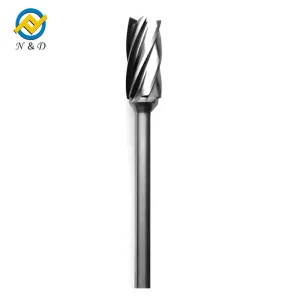
High-Quality Tungsten Carbide Aluminum Rotary Burr

High-Quality Tungsten Carbide Aluminum Rotary Burr

View Technical Details
Custom Cobalt Twist Drill

Cobalt Twist Drill: High-Precision Engineering

View Technical Details
Custom Precision Engineering Tungsten Carbide End Mill 2 Flute Milling Cutter

Precision Tungsten Carbide End Mill 2 Flute Milling Cutter

View Technical Details
Tungsten carbide ball nosed cylindrical burr

Tungsten Carbide Ball Nosed Cylindrical Burr

View Technical Details
Type G Tungsten Carbide Tree Shape Rotary Burr

Type G Tungsten Carbide Tree Shape Rotary Burr

View Technical Details
High Quality Tungsten Carbide Rotary Burrs for Precision Cutting

Tungsten Carbide Rotary Burrs for Precision Machining

View Technical Details
Custom Tungsten Carbide Oval Shape Rotary Burrs

Custom Tungsten Carbide Oval Shape Rotary Burrs

View Technical Details
High-Quality N&D Tungsten Carbide Single Flute End Mill

N&D Tungsten Carbide Single Flute Spiral End Mill

View Technical Details