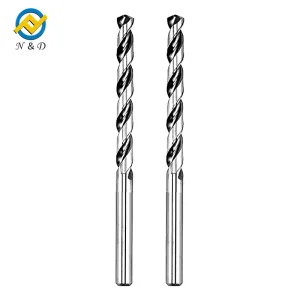
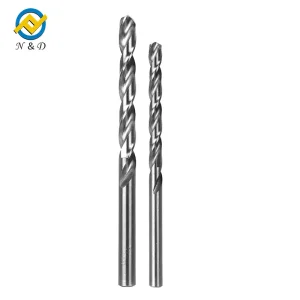
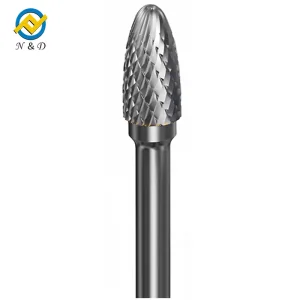
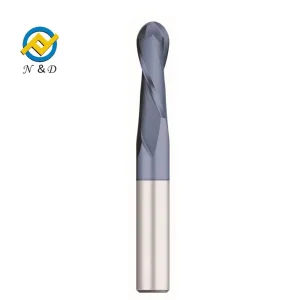
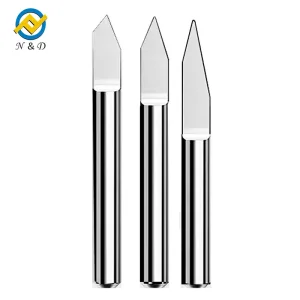
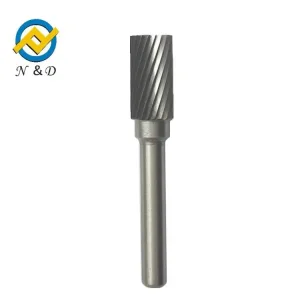
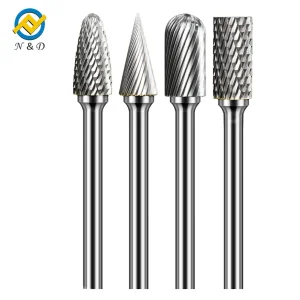
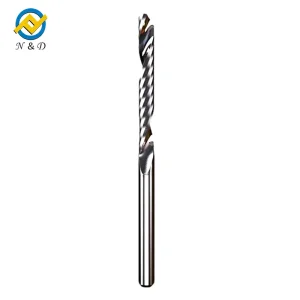
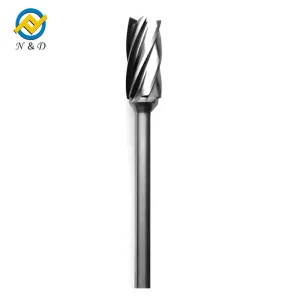
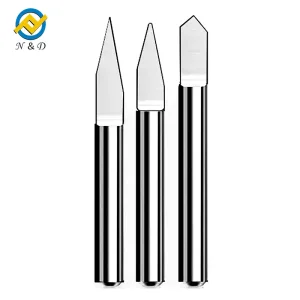
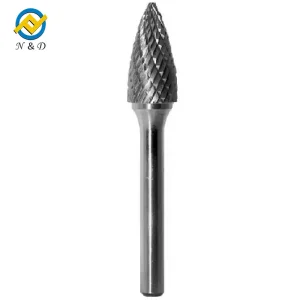
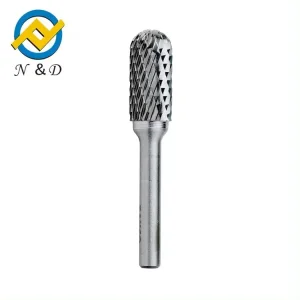
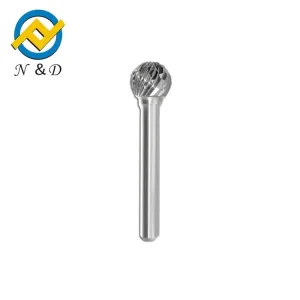
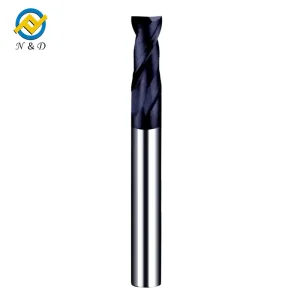
In the high-stakes arena of Precision CNC Machining, the choice between a custom drill bit and an end mill is not merely a matter of geometry; it is a strategic decision impacting throughput, surface integrity, and operational cost. While both tools are foundational to subtractive manufacturing, their thermodynamic behaviors and mechanical stress distribution patterns vary significantly.
A Drill Bit is engineered for axial penetration. Its primary function is the creation of cylindrical orifices by applying torque and axial force. Conversely, an End Mill—especially a Solid Carbide End Mill—is designed for multi-directional versatility. It excels in lateral cutting (milling), profiling, and slotting, thanks to its peripheral cutting edges and sophisticated flute geometries.
For global procurement officers, the "Custom Drill Bit vs End Mill Pricelist" is influenced by material grade (ISO K10-K40), coating technologies (AlTiN, TiSiN), and the complexity of the custom geometry required for specific alloys like Titanium or Inconel.
Modern tungsten carbide tools are now integrated with "Digital Twin" technology. Our 2025 roadmap includes embedding RFID chips in tool shanks for real-time wear tracking and predictive maintenance in automated smart factories.
Moving beyond standard TiN, we are implementing DLC (Diamond-Like Carbon) and multi-layered AlCrN coatings that reduce friction coefficients by 40% in high-speed dry machining applications.
We've pioneered a "Green Carbide" initiative, recycling up to 70% of scrap tungsten to produce high-performance secondary-grade tools without compromising structural integrity or hardness (HRA 92+).
| Parameter | Custom Twist Drill Bit | High-Performance End Mill |
|---|---|---|
| Primary Movement | Axial (Plunging) only | Axial, Lateral, and Transversal |
| Tip Geometry | Conical (typically 118° or 135°) | Flat, Ball Nose, or Corner Radius |
| Material Options | Cobalt HSS, Solid Carbide | Micro-grain Tungsten Carbide |
| Surface Finish | Functional (Rough to Semi-finish) | High-Precision (Polished/Mirror finish) |
| Price Factor | Lower (Standard), Medium (Custom) | Higher due to Flute Complexity |
Specialized Cobalt Twist Drills are essential for airframe assembly involving CFRP (Carbon Fiber Reinforced Polymers) and Titanium stacks, where heat dissipation is critical to prevent delamination.
The shift to Electric Vehicles requires high-volume machining of aluminum battery housings. Our 3-flute carbide end mills offer the high feed rates necessary for high-cycle production lines.
Surgical implants demand sub-micron tolerances. We provide custom ball nose end mills used in 5-axis Swiss-turning centers to create complex bone screw geometries and orthopedic joints.

Scientific blending of Tungsten Carbide, Cobalt, and rare aviation-grade metals to ensure isotopic homogeneity.

Removal of solvents and addition of organic binders to prepare the metallurgical powder for high-pressure molding.

Utilizing high-tonnage hydraulic systems to mold the powder into high-density "green" carbide blanks.

Hot Isostatic Pressing at 1400°C+ to fuse the particles into a solid, near-indestructible lattice structure.

State-of-the-art gear and flute cutting using advanced 5-axis machinery for extreme geometric precision.

Comprehensive analysis of tooth profiles, coating thickness, and carbide cobalt concentration (Co%).
As a leading exporter to 60+ countries, we understand that "Custom Quotes" are not just about price, but about Compliance. Our products adhere to:
When requesting a Pricelist, always specify your "Workpiece Material" (Hardness HRC) and "Coolant Method". This allows our engineers to suggest Information Gain in tool life—potentially reducing your cost-per-part by up to 25% through optimized coating selection.
Technically, yes, if it is a "center-cutting" end mill. However, it is inefficient for deep holes. End mills lack the specialized flutes of a twist drill designed for clearing chips from deep cavities, which can lead to tool breakage due to chip packing.
The three main drivers are: 1) The current market price of Tungsten powder; 2) The complexity of the custom geometry (e.g., step drills or variable helix end mills); 3) The batch size—larger OEM orders significantly reduce the unit price through setup cost amortization.
Solid carbide offers significantly higher red-hardness, allowing for 3x to 5x higher cutting speeds. While HSS-Co is tougher and more resistant to vibration, Carbide is the superior choice for high-precision, high-volume CNC production where tool life is paramount.
All our products come with a certified metallurgical analysis report and are laser-etched with batch numbers for full traceability from the raw material stage to the finished tool.
Don't see your specific requirement? Our engineering team specializes in 100% custom blueprint manufacturing for unique industrial applications.
Get a Custom Quote Now N&D Carbide