Explore our premium selection of industrial-grade solid tungsten carbide milling cutters, rotary burrs, and engraving bits designed for elite manufacturing tolerances.
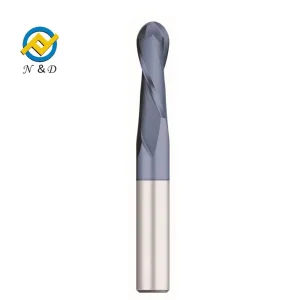
Designed for premium mold finishing and multi-axis contoured surfacing with exceptional tool life and rigidity.
View Details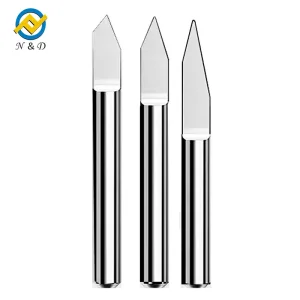
Engineered for fine-detail graphic detailing and dimensional routing on composites, plastics, and non-ferrous alloys.
View Details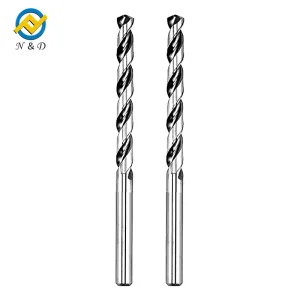
Heavy-duty cobalt-alloy construction designed specifically for deep drilling through tough hardened stainless steel.
View Details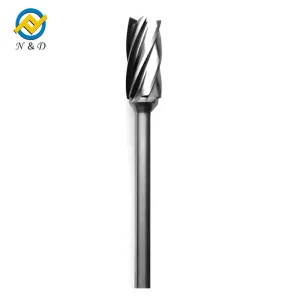
Features high-flute spacing optimized for rapid metal extraction without loading when working with aluminum.
View Details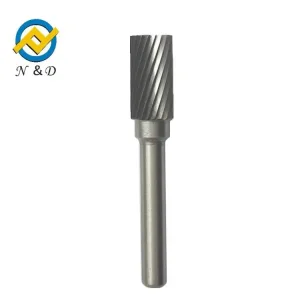
Delivers aggressive stock removal and precise deburring action across all flat metal surfaces and weld lines.
View Details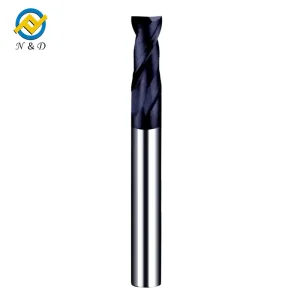
Expertly designed 2-flute architecture optimizing chip pocket geometry for deep slotting and complex profile routing.
View Details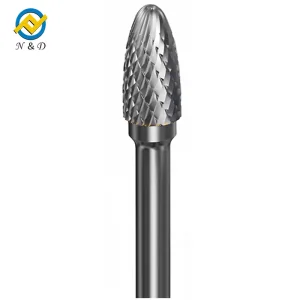
Tailored oval profile configured to streamline contour matching, blend joints, and debur irregular cavities.
View Details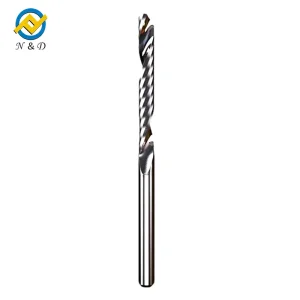
Ideal for high-speed machining of acrylics, polymers, and aluminum, maintaining thermal stability at high RPMs.
View DetailsIn the modern paradigm of subtractive manufacturing, the carbide tapered end mill is an indispensable component. As aerospace, automotive, die and mold, and medical technology sectors push the envelope of structural miniaturization and geometric complexity, standard parallel-flute end mills often fail under high-deflection stresses. Industrial buyers worldwide face the critical challenge of sourcing high-rigidity cutting systems capable of machining narrow draft angles, deep ribs, and complex curved surfaces without sacrificing dimensional accuracy.
Purchasing departments must reconcile micro-tolerances with cost efficiency. The procurement of solid tungsten carbide tools requires deep technical understanding. Factors such as carbide grade sub-micron grain sizing (ranging from ultra-fine to nano-grain structures), cobalt concentration matrix distribution, and physical vapor deposition (PVD) coating resilience are central in determining operational ROI. Our strategic guide acts as an industrial whitepaper to support tooling engineers and procurement officers in optimizing their supply chain for solid carbide taper end mills.
The core advantage of a tapered end mill is the gradual increase in core diameter from the tip toward the shank. This gradient increases cross-sectional stiffness exponentially, reducing tool deflection. A common point of failure for long-reach micro-tools is catastrophic fracture caused by harmonic resonance and bending moments. By adopting a precise taper angle (typically ranging from 0.5° to 15° or more), manufacturers achieve a massive increase in rigid stability. Consequently, CNC feeds and speeds can be substantially boosted, accelerating cycle times while delivering a flawless surface finish on intricate molds and complex industrial parts.
Carbide tapered end mills are key elements in complex manufacturing strategies. Let us look at how different industries leverage these high-tech tools to overcome mechanical design constraints:
Forging, casting, and injection mold cavities require specific draft angles to facilitate clean part ejection. Tapered end mills allow direct machining of these draft angles without 3D profiling step-overs, reducing cycle times by up to 70% and minimizing manual bench polishing.
Machining complex parts like impellers, blisks, and pocketed structures from tough superalloys (such as Titanium Ti-6Al-4V or Inconel) requires high tool rigidity. Tapered tools resist deflection, ensuring thin walls meet strict aerospace structural tolerances.
Orthopedic implants and dental prosthetics present complex geometries. Micro tapered ball nose and square end mills generate smooth finishes on biocompatible materials like cobalt-chrome, PEEK, and titanium.
Our facility in Guanghan, Sichuan Province, China utilizes advanced technological workflows to guarantee tool consistency and performance.

Tungsten carbide powder, cobalt binders, and rare earth elements are mixed under liquid aviation gasoline. This ensures uniform elemental distribution, eliminating microscopic voids.

The slurry undergoes a high-temperature spray drying process to extract gasoline solvents. It is then combined with proprietary organic gums to prepare the powder for structural molding.

High-pressure uniaxial compacting presses the dry-engineered carbide matrix powder into custom structural blanks, ensuring uniform density distributions prior to thermal sintering.

Blanks undergo Hot Isostatic Pressing (HIP) sintering at temperatures up to 1500°C. High pressure eliminates micro-porosity, producing dense solid carbide structures.

We use automated 5-axis CNC grinding machines to cut tool geometries, maintaining precise clearances, helix angles, and micron-level dimensional tolerances.

Laser and optical metrology systems verify concentricity, flute consistency, and coating thickness, ensuring every tool meets our quality standards.
For custom carbide tapered end mills, tool life and performance depend on key material specifications. Sourcing agents should evaluate the following structural parameters:


Founded in 2004, our company is a leading manufacturer of tungsten carbide products, specializing in the production of high-quality carbide materials. Headquartered in Guanghan, Sichuan Province, China, we have become an industry leader, serving a wide range of industries including mining, construction, oil and gas, and manufacturing.
Our commitment to excellence and innovation allows us to expand our business and meet the needs of our customers around the world. As a company with 120+ dedicated employees, we pride ourselves on providing quality products that meet the diverse needs of our customers. Our team consists of experienced professionals who are well versed in the intricacies of tungsten carbide manufacturing, ensuring our products meet the highest standards of precision and durability.
Sourcing carbide tapered end mills requires evaluating variables beyond basic piece rates. The unit cost of a custom cutting tool is influenced by several factors:
The price varies depending on the raw material's country of origin, grain size classification, and cobalt concentration. Premium sub-micron substrates offer high quality and stability but command a higher raw material price.
More complex tool geometries require longer cycle times on 5-axis CNC grinding machines. Tight angle tolerances (within ±0.05°) require additional metrology inspections, which is reflected in the final tooling cost.
Standard coatings (AlTiN) are suitable for general milling. Advanced multi-layer coatings, such as silicon-doped nano-coatings or CVD diamond layers for composite carbon materials, increase tool longevity and overall unit cost.
Setting up a CNC batch run involves programming, calibration, and alignment. High-volume runs amortize these setup fees, lowering the unit price of custom tools significantly.
Technical answers to key questions about custom solid carbide tapered end mill procurement and application performance.
The taper angle increases the tool's core diameter toward the shank, which increases its bending stiffness. The deflection of a cylindrical cantilever beam under load is inversely proportional to the fourth power of its diameter. By incorporating a small taper angle (e.g., 3° to 5°), the tool's resistance to deflection is greatly increased, reducing the risk of fracture, chatter, and dimensional inaccuracies.
For machining stainless steels and hard superalloys, a cobalt concentration of 10% to 12% is recommended. This level provides the toughness required to absorb high thermal shocks and mechanical loads. For cutting extremely hard metals (above 55 HRC), a lower cobalt content (6% to 8%) combined with a sub-micron grain matrix increases hardness and thermal deformation resistance.
For custom tool configurations requiring unique taper geometries or specialized coatings, the standard production lead time is typically 15 to 25 working days. This includes drawing approval, CNC programming, high-pressure sintering of blanks, CNC grinding, coating application, and quality control. Standard catalog items are shipped from stock within 3 to 5 business days.
For titanium alloys, nACo (nanocomposite AlTiN + Si3N4) or high-aluminum AlTiN coatings are highly recommended. These coatings create a stable oxide layer when exposed to heat, maintaining their hardness at high temperatures (up to 950°C). For aluminum alloys, DLC (Diamond-Like Carbon) coatings are preferred to prevent material adhesion and tool clogging.
Complete your tooling inventory with our high-durability tungsten carbide rotary burrs, engraving bits, and twist drills designed for industrial metalworking.
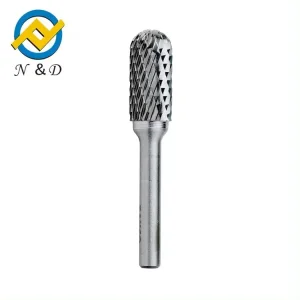
Offers outstanding material removal rates when blending internal radiuses and cleaning weld lines.
View Details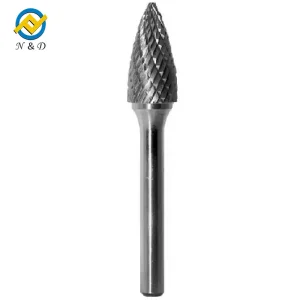
The pointed tree-shape tip allows easy access to tight geometries and sharp corners in molding blocks.
View Details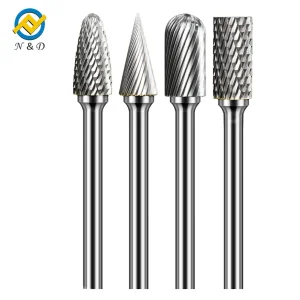
A comprehensive set of carbide burrs in various geometries for fast stock removal and profiling.
View Details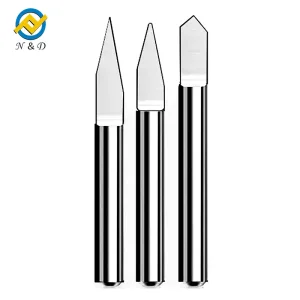
Provides precise cutting margins and clean bottom finishes during intricate CNC carving operations.
View Details
Optimized tree structure featuring a round nose, ideal for polishing complex contours and deep-seated joints.
View Details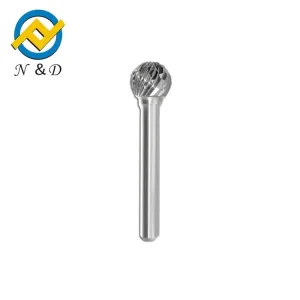
Designed for internal pocket profiling, deep slot clearing, and spherical cavity finishing in hardened metals.
View Details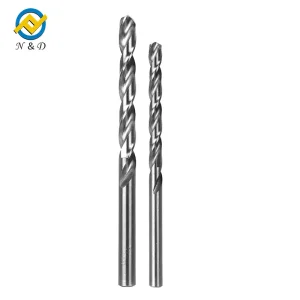
High-performance twist drill with specialized flutes for smooth chip evacuation and precise deep-hole drilling.
View Details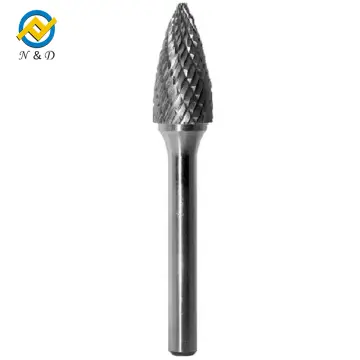
A versatile selection of premium cutting tools, engineered for long tool life and high dimensional stability.
View Details N&D Carbide