Explore our high-precision milling, cutting, and grinding tools manufactured under rigorous ISO standards.
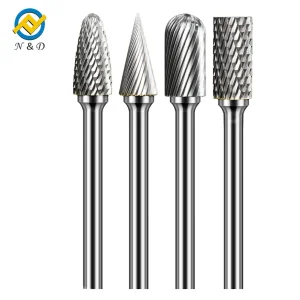
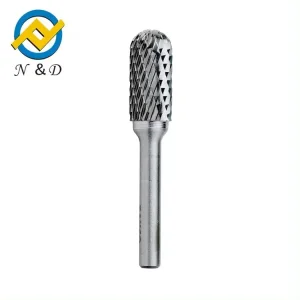
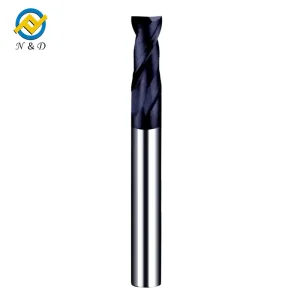
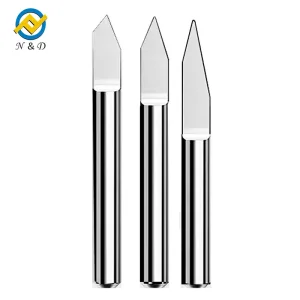
A B2B Engineering Perspective on Advanced Cutting Dynamics and Micro-Grain Metallurgy
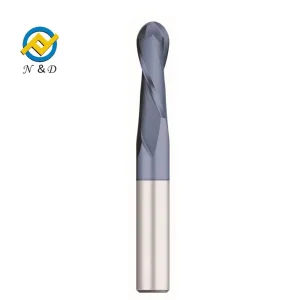
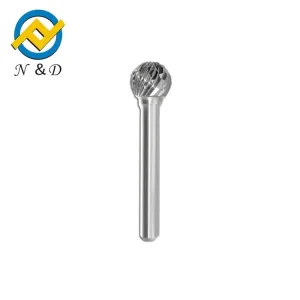
In high-speed machining (HSM) setups, particularly when generating intricate 3D contoured profiles in injection molds or titanium aerospace structural elements, the tool tip is subjected to intense stress. Standard flat end mills fail in maintaining profile consistency along complex spatial geometries. This is where the Carbide Ball Nose End Mill acts as an irreplaceable asset. Its hemispherical geometry allows continuous contour tracking and distributes mechanical stress uniformly across the cutting edge, minimizing chipping and prolonging operational lifespan.
As a professional, direct-to-factory manufacturer, our manufacturing process works within sub-micron grain boundaries. Reducing the average tungsten carbide (WC) grain size to under 0.5 microns significantly expands the overall interface density between carbide particles and the Cobalt (Co) binder matrix. The result is a substantial increase in both material hardness (often exceeding 92 HRA) and transverse rupture strength (TRS). This ensures that under high-feed radial engagements, the cutting edge retains sharp profile definition without suffering localized micro-fracturing.
Utilizing high-purity virgin tungsten powder combined with custom-formulated cobalt matrices. The resulting grain refinement suppresses internal stress points, offering superb micro-crack propagation resistance during intense continuous machining processes.
Our custom coatings (AlTiN, TiAlN, TiSiN) form a specialized aluminum oxide (alumina) passivation boundary under elevated heat conditions. This provides a thermal shield that allows dry machining and handles severe heat generation up to 1000°C.
Configured with customized helix variations (typically 30°, 35°, or 45°) to prevent harmonics. The expanded core diameter minimizes structural deflection under deep shoulder cavity milling, keeping profile tolerances tight.
Understanding Modern Buyer Metrics: Total Cost of Ownership (TCO) and High-Volume Manufacturing Quality
Sourcing departments in international manufacturing sectors—spanning North America, Western Europe, and high-precision Asian technology hubs—are pivoting from focusing solely on individual tool cost to looking at the Total Cost of Ownership (TCO). In automated, continuous operations, tool failure does not just mean replacing the cutter; it can lead to unscheduled down-time, component rework, and sometimes catastrophic spindle damage. Consequently, corporate procurement standards require reliable quality, strict structural tolerance limits, and traceable material origins.
Furthermore, global demand shows an increasing need for personalized geometry optimizations. Generic, off-the-shelf end mills often fail when machining newer aerospace superalloys (such as Inconel 718 or Hastelloy) or medical-grade titanium (Ti-6Al-4V). Buyers actively seek direct-to-factory supply partners who can tweak radius tolerances to ±0.005mm, configure neck clearance configurations, and apply custom edge-honing treatments designed for specific workpiece materials.
| Procurement Challenge | Impact on Production Efficiency | Our Direct-Factory Custom Solution |
|---|---|---|
| Batch-to-Batch Variance | Causes variations in surface finish, requiring manual machine resets and raising defect rates. | Fully automated 5-axis Walter and ANCA grinding lines that deliver sub-micron repeatability across batches. |
| Premature Cutting Edge Chipping | Shortens tool life, resulting in unexpected downtime and high tool consumption. | Edge-preparation (honing) protocols that eliminate micro-burrs, reinforcing structural strength. |
| Chip Evacuation Cluttering | Causes tool breakage in deep cavities due to chip re-cutting. | High-polished, parabolic flute geometries paired with customized chip-pocket structures. |
| Delayed Lead Times | Delays prototype validation steps and key B2B production rollouts. | Streamlined production cycles with reliable, end-to-end supply chains and fast worldwide delivery. |
Providing Optimized Solutions Across Key B2B Manufacturing Domains
Complex 3D molds require exceptionally smooth finishes to minimize manual polishing. Our custom carbide ball nose end mills offer excellent concentricity and profile stability, yielding Ra surface values below 0.2μm even on hardened tool steels (exceeding 60 HRC).
Machining Inconel, Monel, and Titanium structures generates massive heat and severe mechanical strain. Our high-performance tools rely on elevated cobalt content and specialized, heat-resistant PVD coating combinations to limit thermal transfer into the cutting tool core.
Surgical implants, joint prosthetics, and precision micro-medical housings require immaculate cleanliness, tight tolerances, and zero material contamination. We offer sub-micron solid carbide micro-end mills that meet these demanding medical standards.
How We Deliver Zero-Defect Custom Tooling from Raw Powder to Finished Edge
Every custom carbide tool we manufacture in our advanced production facilities undergoes a systematic, multi-stage processing routine. This ensures that the metallurgical structure, core strength, geometric accuracy, and surface properties are optimized for their intended applications.

We blend high-purity tungsten carbide powder, cobalt binders, rare metal additives, aviation gasoline, and carbide grinding balls to form a highly uniform slurry.

The slurry is carefully dried using vacuum spray systems to remove the aviation gasoline, then combined with bonding agents to ensure smooth molding properties.

The dry powder is compacted under high pressure in specialized molds, creating highly dense green blanks with uniform structural properties.

Blanks undergo hot isostatic pressing (HIP) sintering at temperatures reaching 1450°C. This eliminates internal voids and bonds the cobalt binder and carbide crystals.

Advanced 5-axis CNC grinding machines (including Walter and ANCA) form the exact flute design, radius tolerance, and clear edge relief angles.

Each cutting tool undergoes optical profile projection, concentricity checks, coating thickness analysis, and micro-defect inspections.
Pioneering Trends in Machining and Tool Design
As machining centers evolve to support faster speeds, high-pressure coolant channels, and hybrid additive-subtractive procedures, cutting tool design must advance in parallel. Our technical team works continuously with leading research institutions to refine and update our technological capabilities. The roadmap below highlights the core areas shaping our manufacturing approach:
Variable helix and pitch configurations distribute harmonic frequencies unevenly during cutting. This suppresses tool chatter, increases material removal rates (MRR), and helps maintain stable cutting conditions.
By incorporating silicon into multilayer coatings, we produce a nanocomposite structure (nc-AlTiN/a-Si3N4). Under intense heat, this creates a protective glass-like phase that provides excellent shield protection and hardness up to 40 GPa.
Integrating real-time laser measurement on our CNC lines ensures instant detection of wheel wear. This automated correction process guarantees that every ball nose end mill produced meets consistent structural specs.
Founded in 2004, our company has grown into a leading manufacturer of premium tungsten carbide products. Headquartered in Guanghan, Sichuan Province, China, we serve demanding sectors like mining, construction, oil and gas, and advanced high-precision manufacturing.
Our dedication to quality and technological innovation has allowed us to extend our reach globally. Supported by a dedicated team of over 120 professionals, we are deeply familiar with the nuances of tungsten carbide metallurgy, ensuring every tool delivers consistent reliability and precision.
Through continuous investments in R&D and advanced production machinery, we deliver state-of-the-art tooling solutions that help B2B buyers achieve better efficiency, reduce cycle times, and maximize profitability.


Rigorous manufacturing compliance and physical trace-checking protocols.
Enabling Custom Geometry Configurations and Private Label Packaging for B2B Clients
We modify carbide formulation parameters—such as varying cobalt ratios between 6% and 12%—to match specific impact and toughness requirements for different workpiece profiles.
Tailored configurations including custom neck lengths, eccentric relief angles, multi-flute variations (2-flute, 3-flute, 4-flute), and custom shank types to fit special tooling setups.
We provide clear laser shank marking, personalized labels, and protective individual packaging solutions designed to preserve edge sharpness during global shipping.
Addressing Common Engineering Queries and Sourcing Requirements
Engineered to handle high-feed, multi-axis machining applications with stable performance.
 N&D Carbide